


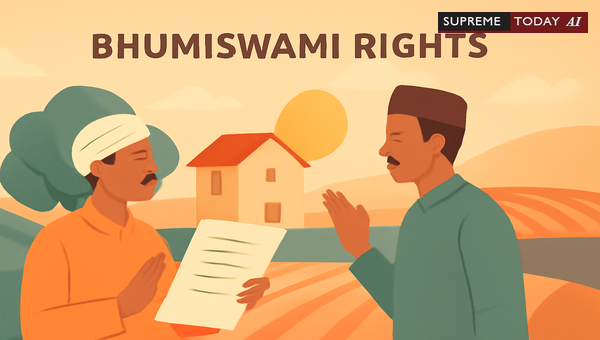
Lessee Does Not Acquire in India
Introduction
In the complex landscape of Indian land laws, particularly under the , understanding tenure rights is crucial for landowners, tenants, and lessees alike. A common question arises: Lessee does Not Acquire – but why? represent a superior form of land tenure, often conferring near-proprietorial status. However, lessees or those in possession under lease agreements or loan arrangements typically do not qualify. This blog post delves into the legal analysis, key case laws, statutory conditions, and practical implications, drawing from authoritative judgments and provisions. Note: This is general information and not specific legal advice. Consult a qualified lawyer for your situation.
What Are ?
are a statutory status under the , granting holders a title akin to ownership, though ultimate ownership vests in the State. These rights are transferable, heritable, and protected against wrongful dispossession, except through . As clarified in Ram Gopal v. Chetu, Bhumiswami is not a mere lessee and that their rights are higher and akin to , but they do not include 1999 0 Supreme(MP) 534 1999 0 Supreme(MP) 531.
The Full Bench emphasized the distinction: Bhumiswami status is superior to ordinary tenancy or 1999 0 Supreme(MP) 534 1999 0 Supreme(MP) 531. Typically, these rights are conferred on persons belonging to specific classes at the Code's enforcement, such as certain tenants or cultivators in possession as of key cutoff dates like 2024 0 Supreme(MP) 501.
Why Lessees Do Not Automatically Acquire
A core principle is that mere possession as a lessee, , or under a does not elevate one to Bhumiswami status. In Nanda v. Chhotekhan, the judgment holds that possession in lieu of interest over a loan creates a , not a landlord-tenant relationship, hence do not accrue 1992 0 Supreme(MP) 335.
The distinction between tenancy and Bhumiswami is clear: the distinction between tenancy rights and is emphasized, with Bhumiswami being a separate and superior status, not akin to a tenant or lessee 2000 0 Supreme(MP) 897. Lessees, especially , fall short unless specific statutory criteria are met.
From additional precedents:- Therefore, in view of the aforesaid discussions it is clear that the appellant/defendant did not acquire any under as he was not holding the land and the lands in dispute did not remain in possession upto 2.10.1959 2024 0 Supreme(MP) 704.- A tenant or government lessee does not automatically qualify; for instance, a subtenant may become an under , but only if the Bhumiswami fails to apply under , leading to rights under 2024 0 Supreme(MP) 501.
Even post- amendments including lessees under , prior title acquisition is required, and transfers before that date do not confer rights if conditions like possession until are unmet 2024 Supreme(Online)(MP) 9148.
Key Case Laws Reinforcing the Position
Several judgments solidify this:1. Nanda v. Chhotekhan1992 0 Supreme(MP) 335: Possession under loan does not create tenancy, barring .2. Ram Gopal v. Chetu1999 0 Supreme(MP) 534 1999 0 Supreme(MP) 531: Bhumiswami > lessee; proprietorial but not full ownership.3. In cases involving for mining, The lessee, that is Respondent No.8 Company, has to acquire in the land from the land owners 2018 0 Supreme(Ker) 622 2018 0 Supreme(Ker) 641 2018 0 Supreme(Ker) 640, indicating lessees must separately secure underlying rights.
Further, Conferral of on occupancy tenants under specific sections like 169 and 168 may occur upon lease violations, but not automatically for lessees 2024 0 Supreme(MP) 374. Patta grants post-cutoff do not retroactively confer rights if possession lapsed 2024 0 Supreme(MP) 704.
Conditions for Acquiring or Losing
Acquisition generally requires:- Belonging to enumerated classes at Code's commencement 2024 0 Supreme(MP) 501.- Continuous possession until 2024 0 Supreme(MP) 704.- Proper applications under sections like 185, 189, or 190 2024 0 Supreme(MP) 501.
Loss occurs under strict conditions:- Ceasing cultivation for two years.- Non-payment of land revenue.- Abandoning residence – all co-existing, with Tahsildar notice and enquiry 1996 0 Supreme(MP) 1014.
can be lost if certain conditions are met, such as ceasing cultivation for two years, not paying land revenue, or leaving the residence, provided these conditions co-exist and proper legal procedures are followed 1996 0 Supreme(MP) 1014. No arbitrary deprivation.
Special cases:- Pujaris: Rights on are distinct, not as ordinary tenants 2024 0 Supreme(MP) 501.- : May acquire under 2021 0 Supreme(MP) 603.- Transfers restricted without Revenue Officer permission 2024 0 Supreme(MP) 374 2024 0 Supreme(MP) 413 2024 0 Supreme(MP) 222.
Implications for Lessees and Tenants
For lessees:- No automatic Bhumiswami status via lease or loan possession 1992 0 Supreme(MP) 335 2000 0 Supreme(MP) 897.- need compliance with amendments like Act 15 of 1980, but pre-amendment leases confer no rights 2024 Supreme(Online)(MP) 9148 2021 0 Supreme(MP) 425.- Post-lease grants or void sales do not vest rights if foundational possession is absent 2021 0 Supreme(MP) 425.
Practical advice:- Verify possession history against cutoff dates.- File requisite applications.- Ensure compliance with revenue payments and cultivation.
A lessee or person in possession under a lease or loan arrangement does not automatically acquire . The legal framework and case law indicate that such possession does not confer the statutory Bhumiswami status unless the person meets the specific criteria 1992 0 Supreme(MP) 335 2000 0 Supreme(MP) 897.
Conclusion and Key Takeaways
Generally, a lessee does not acquire under Indian law, particularly the Madhya Pradesh framework. These are a distinct statutory category requiring specific possession, class membership, and procedural compliance – not mere leasehold. Claims based solely on leases or creditor ties are unlikely to succeed per precedents.
Key Takeaways:- Bhumiswami > tenancy/lease; akin to proprietorship 1999 0 Supreme(MP) 534.- Cutoff: Possession till essential 2024 0 Supreme(MP) 704.- Loss only via 1996 0 Supreme(MP) 1014.- Lessees: Seek underlying rights separately 2018 0 Supreme(Ker) 622.
For tailored guidance, consult legal experts. Stay informed on land tenures to protect your interests.
#BhumiswamiRights, #LandLawIndia, #LeaseRights















