


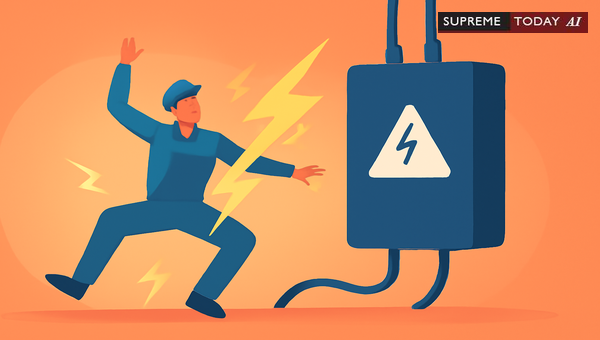
Liability for Cleaner's Electrocution Death
Imagine a dedicated cleaner going about their daily tasks, only to meet a tragic end from an electrocution shock caused by a live wire. The Cleaner Died Due to Electrocution Shock – this harrowing scenario raises critical questions about legal responsibility and compensation. In such cases, who bears the liability? Is it the electricity supplier, the employer, or someone else? This blog post delves into the legal principles governing these incidents, drawing from established precedents and real-world cases to provide clarity.
While this information is for educational purposes and reflects general legal positions, it is not a substitute for professional legal advice. Consult a qualified attorney for advice specific to your situation.
Understanding in Electrocution Cases
The cornerstone of liability in electrocution deaths, particularly involving cleaners or workers near electrical infrastructure, is the . This principle holds the electricity supplier or responsible authority accountable even without proving negligence, due to the inherently hazardous nature of electricity. As outlined in key judgments, the law imposes in cases involving hazardous activities such as electricity supply 2002 1 Supreme 98.
Electricity is treated as a dangerous commodity, imposing a high duty of care on suppliers. Courts have applied the rule from , making suppliers liable for injuries or deaths from escaped electricity if safety measures fail 2002 1 Supreme 98 2023 0 Supreme(J&K) 730. For a cleaner electrocuted by a fallen live wire, the primary liability typically rests with the electricity authority.
Key Responsibilities of Electricity Suppliers
Suppliers must ensure:- Proper maintenance of electrical lines.- Regular inspections to detect weaknesses.- Installation of safety devices to prevent live wires from falling or causing harm 2002 1 Supreme 98 2021 0 Supreme(Ori) 5 2000 3 Supreme 673.
Failure in these areas constitutes a breach. For instance, in cases like , courts ruled that neglecting to replace mechanically weak conductors or prevent live wires from falling amounts to negligence leading to liability 2021 0 Supreme(Ori) 5 2000 3 Supreme 673.
Application to the Cleaner's Death
In the scenario where the cleaner died due to electrocution shock, evidence often points to lapses in safety protocols. Post-mortem reports and eyewitness accounts frequently confirm electrocution as the cause, with phrases like the death was due to electrocution, shock and haemorrhage 2012 0 Supreme(Pat) 1468 or he categorically stated that the deceased died due to electric shock/electrocution 2012 0 Supreme(MP) 918.
Real cases mirror this tragedy:- A cleaner employed in a vehicle died from accidental electrocution, with the witness admitting the employment and lack of documents, yet highlighting the incident's circumstances 2022 0 Supreme(UK) 73.- Another cleaner, instructed by a Junior Engineer, died on the spot while cleaning a drain near live wires: During such cleaning, he suddenly came in contact with the live electric wire and died at the spot due to electrocution 2017 0 Supreme(Ori) 298.
These examples underscore how cleaners, often working in proximity to electrical lines, become victims of poor maintenance.
Evidence of Negligence and Proving Liability
To establish liability, investigators look for:- Faulty infrastructure: Cut neutral wires, unpermitted fencing, or mechanically weak conductors
2023 0 Supreme(AP) 1388.- Lack of safety measures: No periodic inspections or protective devices 2021 0 Supreme(Ori) 5.- Expert confirmation: Autopsy reports stating the deceased died due to electric shock/electrocution, supported by police inquests 2012 0 Supreme(MP) 918 2024 0 Supreme(Gau) 1483.
Courts rely on such evidence to award compensation. Families have successfully claimed damages when negligence by electricity departments is proven, as in multiple suits affirming liability for deaths from charged wires or faulty installations 2023 0 Supreme(Mad) 1098 2024 Supreme(Online)(TS) 11375.
Exceptions: or
Liability isn't absolute. Exceptions include:- : Natural forces beyond control, like unprecedented storms, but narrowly interpreted. The supplier must prove all reasonable safety measures were in place 2002 1 Supreme 98 2021 0 Supreme(Ori) 5.- : Third-party interference, such as sabotage, but again, the burden is on the defendant to show it was the sole cause 2002 1 Supreme 98.
Mere accident occurrence doesn't exempt liability; due diligence is required. In cleaner cases, if maintenance lapses contributed, exceptions rarely apply.
Compensation and Legal Proceedings
Victims' families typically file claims under or statutory provisions. Courts direct compensation from the liable authority if negligence or applies. Examples include:- Awards upheld based on post-mortem evidence and negligence findings 2023 0 Supreme(AP) 1474 2023 0 Supreme(Mad) 1098.- Ex gratia payments by authorities, like a mayor's visit post-incident, though full compensation requires legal action 2017 0 Supreme(Ori) 298.
Note: One case differentiated cardiac arrest from electrocution, denying certain claims, emphasizing accurate cause determination 2012 0 Supreme(Mad) 138.
Broader Insights from Similar Incidents
Electrocution deaths extend beyond cleaners:- Children contacting charged wires 2023 0 Supreme(J&K) 173.- Workers with electrical equipment 2023 0 Supreme(Mad) 1095.- Illegal fencing causing shocks 2025 0 Supreme(MP) 277.
Collectively, these highlight systemic issues: negligence by electricity providers or unauthorized electrical installations contributed to the deaths
. Courts stress accountability, with evidence from police reports, eyewitnesses, and experts 2023 0 Supreme(AP) 1474 2024 Supreme(Online)(Telangana) 49248.
Recommendations for Prevention and Action
To mitigate risks and pursue justice:1. Investigate thoroughly: Check maintenance records, inspections, and safety devices.2. Gather evidence: Secure post-mortem reports, photos, and witness statements.3. File claims promptly: Against the electricity supplier if lapses are evident.4. Promote safety: Authorities should prioritize insulated lines and warnings.
If negligence is established, compensation is typically awarded 1996 0 Supreme(Ori) 187.
Key Takeaways
- dominates electrocution cases, holding suppliers accountable for safety failures 2002 1 Supreme 98 2023 0 Supreme(J&K) 730.
- Cleaners' deaths from live wires often stem from negligence in maintenance 2021 0 Supreme(Ori) 5.
- Exceptions like are hard to prove and narrowly applied.
- Real cases confirm compensation viability with solid evidence 2024 0 Supreme(Gau) 1483 2012 0 Supreme(MP) 918.
Tragedies like the cleaner's electrocution shock demand vigilance. Electricity providers must uphold their duty to prevent harm. For those affected, understanding these principles is the first step toward justice.
References:1. 2002 1 Supreme 98 - and safety obligations.2. 2023 0 Supreme(J&K) 730 - Negligence in electrocution.3. 2021 0 Supreme(Ori) 5 - Maintenance and exceptions.4. 2000 3 Supreme 673 - Negligence precedents.5. 1996 0 Supreme(Ori) 187 - Liability for failures.6. Additional cases: 2022 0 Supreme(UK) 73, 2017 0 Supreme(Ori) 298, 2012 0 Supreme(Pat) 1468, 2012 0 Supreme(MP) 918,
, etc. #ElectrocutionLiability #StrictLiability #ElectricalSafety


















