Searching Case Laws & Precedent on Legal Query.....!
Analysing the retrieved Case Laws
Scanned Judgements…!



Searching Case Laws & Precedent on Legal Query.....!
Analysing the retrieved Case Laws
Scanned Judgements…!
Selective Blocking of Videos: Courts and authorities generally support blocking specific infringing videos rather than entire YouTube channels to balance copyright enforcement with freedom of expression. For example, courts have ordered the removal of particular videos containing infringing content while allowing the channel to remain accessible (e.g., sources 2023 0 Supreme(Del) 5644, 2022 0 Supreme(Mad) 1888, 2025 Supreme(Online)(Del) 4342, 2025 Supreme(Online)(Del) 7374).
Responsibility of Platforms: YouTube (a Google subsidiary) is responsible for implementing court orders, including removing infringing videos or blocking channels when legally mandated. However, YouTube typically blocks specific videos rather than entire channels unless there are persistent violations or multiple infringing URLs, as seen in cases 2023 0 Supreme(Del) 5644, 2025 Supreme(Online)(Del) 7374.
Legal and Procedural Constraints: Courts emphasize that restraining orders cannot be arbitrarily applied to third parties or non-parties, and blocking entire channels without proper legal process is generally impermissible (2025 0 Supreme(Kar) 308). Orders to block content should be specific, justified, and communicated properly to platforms.
Blocking Based on Infringement: Many cases involve blocking or removing videos due to copyright violations, false information, or infringing content. Platforms like YouTube often comply with such orders, but the blocking is usually limited to specific videos rather than the entire channel (2023 0 Supreme(Del) 5644, 2025 Supreme(Online)(Del) 7374, 2023 0 Supreme(Cal) 1223).
Freedom of Expression Considerations: Courts recognize the importance of free speech and the need for balanced action. Arbitrary or broad blocking of entire channels is discouraged unless justified by significant violations. The right to free expression is protected, and restrictions should be proportionate and lawful (2025 0 Supreme(Kar) 308, 2025 Supreme(Online)(Kar) 24817, 2022 Supreme(Online)(MAD) 4676).
Platform Policies and Enforcement: YouTube’s policies include removing infringing content when notified, but they do not generally block entire channels unless violations are severe or persistent. The platform's role is to enforce legal orders while respecting user rights (2022 0 Supreme(Mad) 1888, 2023 0 Supreme(Del) 5615).
Legal frameworks and judicial decisions advocate for targeted removal of infringing content rather than arbitrary blocking of entire YouTube channels. Courts are cautious about overreach, emphasizing procedural correctness and respect for free speech. YouTube, as an intermediary, acts upon court orders to remove specific infringing videos but generally refrains from blocking entire channels unless justified. This approach balances copyright enforcement with constitutional rights, ensuring restrictions are lawful, proportionate, and specific.
References:- 2023 0 Supreme(Del) 5644, 2023 0 Supreme(Del) 5615, 2025 Supreme(Online)(Del) 7374, 2025 0 Supreme(Kar) 308, 2023 0 Supreme(Cal) 1223, 2022 0 Supreme(Mad) 1888, 2023 0 Supreme(Del) 9201, 2022 Supreme(Online)(Mad) 99486, 2025 Supreme(Online)(Kar) 24817
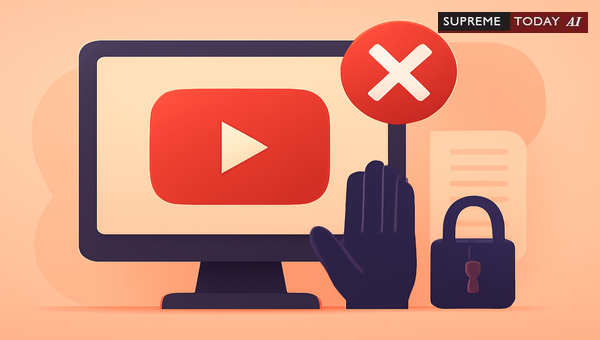
In today's digital age, YouTube has become a powerhouse for creators, businesses, and voices from all walks of life. But what happens when someone wants a channel taken down? Can a YouTube channel be blocked arbitrarily? The short answer, backed by landmark judicial rulings, is no. Arbitrary blocking violates fundamental constitutional rights, particularly the under . This blog post dives deep into the legal principles, key court decisions, and practical insights to help creators, platforms, and users understand their rights. Note: This is general information, not legal advice. Consult a qualified lawyer for specific cases.
The legal documents clearly establish that YouTube channels or online platforms cannot be blocked arbitrarily. Such actions must adhere to constitutional and statutory safeguards, ensuring restrictions are reasonable, proportionate, and based on lawful grounds2015 2 Supreme 513.
At the heart of this is Article 19(1)(a), which guarantees , subject only to under . Overbroad or vague restrictions, like arbitrary blocking, are unconstitutional 2015 2 Supreme 513. Courts have repeatedly stressed the need for transparency, justifiable reasons, and before any content restriction 2015 2 Supreme 513.
The landmark Shreya Singhal v. Union of India judgment struck down as unconstitutional, highlighting its on free speech. The Court noted: Dissemination of all information... constitutes offence, if causing annoyance or inconvenience to someone – No distinction made between mere discussion or advocacy, and incitement – Making use of internet, if causing annoyance or inconvenience, an offence – Affects – Internet is the market place of ideas satisfying peoples’ right to know – Section 66A curbs this right.2015 2 Supreme 513. This ruling set a precedent: , 2000 is unconstitutional because it was Article 19(1)(a) due to overbreadth and vagueness, enabling arbitrary blocking 2015 2 Supreme 513.
Blocking an entire YouTube channel without a clear legal basis and procedural fairness is impermissible. Restrictions must be specific, proportionate, and rooted in law. For instance, and the Rules are valid because they mandate recorded reasons, hearings, and 2015 2 Supreme 513. Arbitrary decisions—based on subjective complaints or unilateral actions—violate these protections.
In practice, courts favor targeted actions over blanket bans. For example, in cases involving alleged infringing content, orders typically direct the removal of specific videos, not entire channels 2023 0 Supreme(Del) 2513 2024 Supreme(Online)(DEL) 9022. One case referenced videos like Cow urine and powder dung sprays in Indian spices posted by a channel named TVR, but the focus was on individual videos, not channel-wide blocking 2023 0 Supreme(Del) 2513. Similarly, courts have ordered YouTube to immediately taken down and blocked for public viewing specific links, such as v=QKXMaEZNZUg, while allowing channels to continue 2024 Supreme(Online)(DEL) 9022.
Any restriction must follow :- Written reasons must be recorded.- Opportunity for hearing provided.- available.- Transparency in decision-making 2015 2 Supreme 513.
Without these, actions are unlawful. Courts have upheld Section 69A precisely for incorporating such safeguards, contrasting it with the vague Section 66A 2015 2 Supreme 513. Platforms like YouTube, as , must comply with valid orders but typically limit responses to specific infringing videos unless persistent violations justify more 2023 0 Supreme(Del) 5644 2025 Supreme(Online)(Del) 7374.
Judicial trends reinforce selective blocking of videos over entire channels to balance enforcement with free expression:- In copyright disputes, courts order removal of particular videos (e.g., tainted spices claims or teaser ads) while channels remain active 2023 0 Supreme(Del) 2513 2022 0 Supreme(Bom) 886.- One order directed: Respondent representing Youtube shall block channel run in the Youtube in the name of Punch Prabhakar, but this was tied to derogatory content and specific processes, not arbitrariness 2021 0 Supreme(AP) 978.- Platforms are directed to act on specific links, like https://www.youtube.com/watch?..., emphasizing precision 2024 Supreme(Online)(DEL) 9022.- Broad restraints on non-parties or third-party platforms are discouraged without proper justification 2025 0 Supreme(Kar) 308.
YouTube's policies align: It removes notified infringing content but rarely blocks entire channels unless violations are severe and repeated 2022 0 Supreme(Mad) 1888 2023 0 Supreme(Del) 5615. This approach respects freedom of expression, protected under law, ensuring restrictions are proportionate and lawful2025 Supreme(Online)(Kar) 24817 2022 Supreme(Online)(MAD) 4676.
Restrictions aren't absolute. They may apply for legitimate aims like , morality, or under , but only if:- Lawfully authorized.- Proportionate to the threat.- Procedurally sound2015 2 Supreme 513.
Blanket blocks based on vague allegations fail this test. For instance, in defamation or false info cases, courts still prefer video-specific takedowns 2023 0 Supreme(Cal) 1223.
To navigate this landscape:- Document everything: Keep records of content and complaints.- Seek legal process: Demand written reasons and hearings for any block request.- Target specifics: Plaintiffs should specify videos, not channels.- Comply judiciously: Platforms like YouTube should enforce only valid, precise orders.- Judicial recourse: Challenge arbitrary actions via .
Authorities must ensure , including hearings and review, to avoid censorship 2015 2 Supreme 513.
Indian courts, through rulings like Shreya Singhal 2015 2 Supreme 513, affirm that YouTube channels cannot be blocked arbitrarily. Restrictions demand constitutional compliance, legal grounding, and safeguards to prevent overreach. While specific videos may be removed for valid reasons—like copyright or defamation—entire channels enjoy robust protection unless exceptional circumstances and processes apply. This balance fosters a vibrant internet as the market place of ideas.
Key Takeaways:- Prioritize targeted removals over channel blocks 2023 0 Supreme(Del) 5644.- Uphold free speech with proportionality 2025 0 Supreme(Kar) 308.- Platforms act on court orders, but cautiously 2025 Supreme(Online)(Del) 7374.
Stay informed, creators—your voice matters. For tailored advice, reach out to a legal expert.


Regarding the YouTube channel, he submits that individual videos ought to be blocked rather than the entire YouTube channel. ... Counsel appearing for YouTube/Google LLC, submits that Google LLC would be responsible for implementing the orders passed by this Court. Accordingly, he submits that, as far as Google LLC is concerned, the Google Form, Google Drive and YouTube....

Aaj Tak News - YouTube channelhttps://www.youtube.com/channel/UCxPXd08FsF2OD8a5eIfCTVA/featuredDisabled. ... /channel/UC-5jrJioIW- 5ZDB5QUfSlsA/featuredWebsite, Facebook Profile and YouTube channel disabled. ... ti=asWebsite, Facebook profile and YouTube channel disabled. ... /channel/UCRQv4PNjGxOPWgm7wc6GwTgWebsite,....

’s YouTube channel blocked. ... Lall, also submits that the defendant no.1’s YouTube channel has been blocked by YouTube on account of the copyright strikes made by the plaintiff. Without prejudice to the rights and contentions of the parties, the defendant no.1 may apply to YouTube for unblocking of its YouTube channel#HL_E....
Aajtak) - YouTube channel https://www.youtube.com/channel/UCdmY- mZL_Dm_Kf9Zx8XfIrA Disabled. 29. ... profile and YouTube channel disabled. ... Aaj Tak News - YouTube channel https://www.youtube.com/channel/UCxPXd08FsF2OD 8a5eIfCTVA/featured Disabled. ... MP Aaj Tak - Yo....

YouTube Channel joined 25th May 2016 https://goo.gl/7dTDOS www.youtube.com/@Btvnewskannada (“Document No.14” is enclosed for the kind perusal of this Hon’ble court). 3. ... Restraint orders against third parties who are not made parties to the suit cannot be granted by any cannon of law. ... The social media page was suddenly blocked and removed in the 3rd week of April, 2025 by all social media platforms....
(b) Video titled "Cow urine and powder dung sprays in Indian spices and products [IMG], posted by a channel named TVR [Defendant No. 2] available at: https://www.youtube.com/watch? ... https://www.youtube.com/watch? ... Plaintiff's grievance pertains to following three videos posted on the YouTube platform in July, 2020: (a) Video titled "[IMG] Indian Spices Tainted with Cow Urine [IMG] Indian Food Spices Video", posted b....
blocked by Defendant no. 6- Google https://www.youtube.com/watch? ... Instagram handle or YouTube Handle Weblink available with Plaintiff Def no. 1 @Satlokashram ( YouTube channel) https://www.youtube.com/channel/UC_fEW2qONh KMeeIHyS7wWKA Def no. 2 Not visible since it is temporarily ... It is averred in the plaint that the plaintiff no.1 has a large following on t....

The respondent no. 1 is a social media influencer and claims to be a “YouTube educator” having a YouTube channel by the name of “Dhruv Rathee” at URL: https://www.youtube.com/@dhruvrathee/featured. ... On 14 February, 2023 the defendant no. 1 had uploaded a video (the impugned video) on its you tube channel at URL: https://www.youtube.com/watch?v=Y-k2eaDcyqo which has a duration of 21 mi....

YouTube is blocking only the specific videos and not the concerned YouTube Channel. 17. ... He further submitted that YouTube is, in fact, encouraging these type of defamatory videos and depending upon the views, both YouTube as well as the channel holders are making money out of it. ... In case of any violation of the conditions, it is the duty of the intermediaries to remove or block t....
v=QKXMaEZNZUg, shall be immediately taken down and blocked for public viewing, by the YouTube. 14. ... They further submit that the defendants have no objection, if the speeches are taken down from the YouTube Channel, as prayed by the plaintiff. 13. ... Considering the submissions made before this Court, it is directed that the videos available on the YouTube platform, having the following links, i.e., h....

iv) YouTube: https://www.youtube.com/channel/UC-UUoGWO-MCcPusXptzCmkA iii) Instagram : https://www.instagram.com/tatatoken

This emphasis on ‘truth’ by USVPL carries on to this day. The teaser was first available on USVPL’s YouTube channel. Later in January 2021, HUL came across three audio visuals in Hindi launched by USVPL for its SEBAMED cleansing bar. Each of these three advertisements referred specifically to HUL’s LUX soap, DOVE soap and PEARS soap.
9. YouTube is blocking only the specific videos and not the concerned YouTube Channel.
However, learned counsel submitted that in view of the allegations levelled by the plaintiff and the defendant No.1 against the defendant No.2, he felt obliged to set the record straight. He was no longer interested in the said YouTube channel. No relief had been sought against the defendant No.2, which was why it had even sought deletion from the array of the parties on 1st June, 2021.

(4) Respondent representing Youtube shall block channel run in the Youtube in the name of Punch Prabhakar. (5) The Registrar General shall continue the said process hereafter and shall act forthwith whenever derogatory content is found or brought to the notice of Registrar General. (3) The CBI in turn, shall examine the content and act in accordance with law.


An indispensable Tool for Legal Professionals, Endorsed by Various High Court and Judicial Officers
Please visit our Training & Support
Center or Contact Us for assistance

Scan Me!
India’s Legal research and Law Firm App, Download now!


For Daily Legal Updates, Join us on :



 Back to top


