


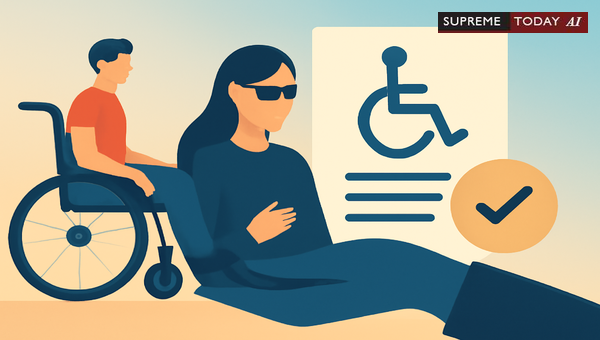
Rights for & in India
In India, individuals with such as and often face unique challenges in employment, education, and daily life. The question of how the law addresses multiple disability and is critical for ensuring equal opportunities. This blog post delves into the legal principles, protections, and practical implications under key legislations like the , and the (PwD Act, 1995). We'll cover definitions, benchmark status, reservations, accommodations, and insights from court judgments. Note: This is general information and not specific legal advice; consult a qualified lawyer for personalized guidance.
Understanding Key Definitions
To grasp the legal protections, it's essential to define the disabilities in question:
- : This refers to a disability of the bones, joints, or muscles leading to substantial restriction of movement of limbs or any form of cerebral palsy. 2021 4 Supreme 330
- : It encompasses visual impairment where a person has limited vision that cannot be corrected to a normal level. 2023 0 Supreme(Raj) 324
These definitions are rooted in the RPwD Act, 2016, which expanded the scope from the 1995 Act to include 21 categories of disabilities, recognizing explicitly. For instance, cases involving vision and /cerebral palsy highlight how these conditions intersect.
Legal Framework and
The RPwD Act, 2016 and PwD Act, 1995 form the cornerstone for recognizing and . Both are classified as , meaning they meet a 40% disability threshold certified by a medical authority. This status unlocks rights like reservations in employment and education. 2007 7 Supreme 450
ensure individuals receive targeted benefits. The law mandates protections against discrimination and promotes inclusion. As noted in judicial interpretations, disabilities of hearing impairment as well as low (d) autism, intellectual disability, specific learning disability are similarly categorized, underscoring a broad inclusive approach.
Employment Reservations: A 4% Mandate
One of the most significant provisions is the of vacancies in government establishments for persons with . This is subdivided as follows:
- 1% for persons with blindness and .
- 1% for persons with locomotor disabilities.
- The remaining for other categories like hearing impairment and intellectual disabilities. 2023 0 Supreme(Raj) 513 2025 Supreme(Online)(MAD) 10865
Under the PwD Act, 1995, required not less than three per cent reservations, now enhanced to 4% under RPwD Act. 2025 0 Supreme(Raj) 391 This aims to promote equal opportunities. For example, The Act requires the reservation of 4% to be made in any Government employment and out of the said 4%, 1% each shall be reserved for blindness and . 2025 Supreme(Online)(MAD) 10865
Courts have upheld this rigorously. In one case, a candidate with 90% hearing impairment (analogous to protections) was directed for appointment under PwD category after administrative error rectification, emphasizing, The court affirmed the right of a disabled candidate to be appointed under the PwD category despite administrative errors. 2025 0 Supreme(Raj) 391
Another ruling clarified applicability to aided schools: benefit of reservation as envisaged under 1995 Act/2016 Act has to be extended to Persons with Disabilities. 2022 0 Supreme(Ker) 502
Assessment of Fitness and Medical Boards
Fitness for roles, such as physical training instructors, is determined by a Medical Board. This objective assessment considers the nature and extent of disabilities, preventing unjust exclusions. 2021 0 Supreme(Raj) 811
In motor accident cases, disability assessment includes , blindness, ... and the assessment of such impairment is within medical capableness. Courts stress expertise in anatomy and orthopedics. 2014 0 Supreme(Ker) 740 For employment, notifications identify suitable posts, e.g., High School Assistant... /cerebral Palsy/Blindness/. 2022 0 Supreme(Ker) 502
A case on medical admissions noted, Functional capacity to discharge the functions... is undoubtedly a relevant factor, but dismissed challenges to upper vs. lower limb distinctions, urging reviews for inclusivity. 2015 0 Supreme(Del) 671
Reasonable Accommodations: Enabling Inclusion
Employers must provide reasonable accommodations, such as workplace modifications or adjusted duties, to allow effective performance. This is a legal obligation under both Acts. Failure invites penalties and judicial intervention. 2009 6 Supreme 259
For , accommodations might include assistive tech for or ergonomic setups for locomotor issues. Courts reinforce this: Rights that are guaranteed to differently-abled persons under 1995 Act, are founded on sound principle of human dignity. 2022 0 Supreme(Ker) 502
Exemptions are possible for specific work types, but rare: the appropriate Government may... exempt any establishment from the provisions. 2025 0 Supreme(Raj) 391 2018 0 Supreme(UK) 49
Insights from Landmark Cases
Several judgments illuminate applications:
- : Upheld reservations for locomotor and in public posts. 2022 0 Supreme(Raj) 2583 2003 0 Supreme(Raj) 1154
- : Affirmed protections, stressing continuous assessment to avoid bias. 2014 0 Supreme(SC) 104 2013 4 Supreme 687
- Uttarakhand Case: Dismissed petition due to ineligibility but noted reservation withdrawals' impacts. 2018 0 Supreme(UK) 49
In a ruling, exclusions from certain categories were challenged, but core protections remained. 2024 Supreme(Online)(MAD) 4379
These cases collectively emphasize rectification of errors, objective evaluations, and constitutional commitments under , 15, 41. 2022 0 Supreme(Ker) 502
Challenges and Recommendations
Despite robust laws, challenges persist: administrative errors, narrow post identifications, and assessment biases. Recommendations include:
- Timely Medical Board certifications.
- Proactive accommodations by employers.
- Awareness of backlog vacancies carryover post-2016 Act. 2022 0 Supreme(Ker) 502
Government notifications continue identifying suitable posts, expanding opportunities. 2022 0 Supreme(Ker) 502
Key Takeaways
- and are entitled to 4% reservations (1% each category).
- Medical Boards assess fitness objectively.
- Reasonable accommodations are mandatory for inclusion.
- Courts vigilantly protect these rights, as seen in multiple rulings. 2017 0 Supreme(SC) 1202 2019 1 Supreme 611
Individuals with multiple disability and are safeguarded under Indian law to foster an inclusive society. Employers and institutions must comply to uphold dignity and equality. For tailored advice, reach out to legal experts or disability commissions.
Sources: and judgments including 2021 4 Supreme 330, 2023 0 Supreme(Raj) 324, 2023 0 Supreme(Raj) 513, 2021 0 Supreme(Raj) 811, 2022 0 Supreme(Raj) 2583, 1998 9 Supreme 446, 2007 7 Supreme 450, 2009 6 Supreme 259, 2014 0 Supreme(SC) 104, 2013 4 Supreme 687, 2003 0 Supreme(Raj) 1154, 2020 0 Supreme(SC) 901, 2012 0 Supreme(Raj) 428, 2013 8 Supreme 721, 2007 0 Supreme(Raj) 1652, 2017 0 Supreme(SC) 1202, 2019 0 Supreme(Raj) 875, 2020 0 Supreme(Raj) 269, 2019 1 Supreme 611. Additional cases from other sources integrated as cited.
#DisabilityRightsIndia, #PwDReservations, #LocomotorLowVision












