


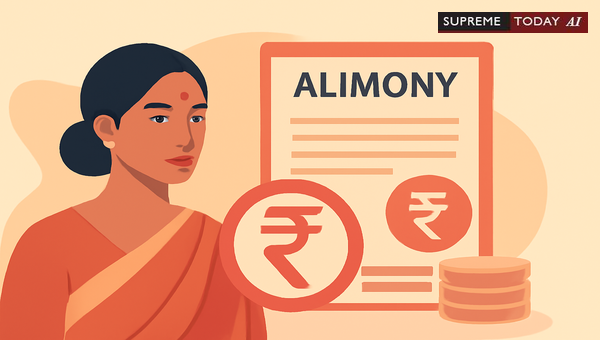
Are Educated Women Entitled to in India?
In family law disputes across India, a common question arises: Educated Women is Not Entitled to Grant . This stems from misconceptions about legal provisions that seem to penalize self-sufficiency. However, Indian courts have provided nuanced interpretations, balancing a wife's educational qualifications and against her actual financial situation. This blog post delves into the legal framework, landmark judgments, and exceptions to clarify when educated women may or may not claim .
Whether you're navigating a divorce, separation, or petition, understanding these principles is crucial. Note: This is general information based on judicial precedents and not specific legal advice. Consult a qualified lawyer for your case.
Legal Framework Governing
rights for wives are primarily governed by two key statutes:
Section 18 of HAMA entitles a Hindu wife to from her husband unless she is capable of maintaining herself. Courts often interpret 'capable' to include high education and superior earning capacity compared to the husband. For instance, if a wife is more educated and earns better, may be denied. This was upheld in cases emphasizing self-support capability 2012 0 Supreme(All) 2672
Vikas Pandey VS Vandita Gautam - Current Civil Cases
.CrPC provides to a wife unable to maintain herself. Importantly, 'unable' refers to actual income, not mere potential. An educated but unemployed wife may still qualify if she lacks current support 2016 0 Supreme(P&H) 2889 2018 0 Supreme(Kar) 605. The Supreme Court has clarified: An order of is conditional on the circumstance that the wife or husband who makes a claim has no , sufficient for her or his support. It is no answer to a claim of that the wife is educated and could support herself 2023 0 Supreme(Cal) 931.
These provisions apply across religions, with Muslim women also covered under 2024 0 Supreme(MP) 728.
Key Judicial Interpretations on Educated Wives
Courts have delivered contrasting yet complementary rulings, focusing on facts over assumptions.
Denial Based on Superior Qualifications and Income: The ruled that a more educated wife earning more than her husband is not entitled to , as she can support herself 2012 0 Supreme(All) 2672. Similarly, arguments that an educated lady capable of work but not earning forfeits rights have been noted 2018 0 Supreme(All) 479.
Entitlement Despite Education if Unemployed: The Karnataka High Court stressed that potential earning does not equal actual income. An unemployed educated wife unable to maintain herself can claim 2016 0 Supreme(P&H) 2889. In , educational qualifications did not disqualify a wife lacking 2016 0 Supreme(P&H) 2889. Prior employment is irrelevant if currently jobless; focus on present status 2018 0 Supreme(Kar) 605.
Recent cases reinforce this:- A court modified a order, granting despite the wife's education and partial income, holding: A wife's earning does not bar her from receiving ; the court must consider the husband's financial status and the wife's lifestyle
.- Enhancement petitions affirm: A wife is entitled to even if she has her own income, ensuring her standard of living is maintained according to her husband's financial status 2024 0 Supreme(MP) 728.- Under the , potential earning does not preclude claims if no sufficient exists 2021 0 Supreme(Del) 1380.
The Supreme Court in Rajnesh v. Neha () 2 SCC 324 provides guidelines: courts must weigh parties' status, wife's needs, husband's capacity, and her
2022 0 Supreme(Bom) 957.
Exceptions and Counterarguments
decisions hinge on case-specific factors:
Current Employment and Income: Unemployment trumps education. The court must consider the financial status of the husband and the lifestyle of the wife when determining - The rejection of based solely on the wife's education and partial income was deemed erroneous
.
and Additional Factors: Courts consider child care, husband's capacity, and living standards. Even working wives or those with parental support may qualify if needs exceed income 2024 0 Supreme(Kar) 107. The law is settled that the earning women are also entitled to 2022 0 Supreme(Bom) 957.
: Often granted if no sufficient support, regardless of education 2023 0 Supreme(Cal) 931 2017 0 Supreme(Mad) 1840. It is no answer to a claim of that the wife is educated and could support herself 2021 0 Supreme(Del) 1380.
Other Laws: Under or , similar principles apply, prioritizing actual need 2017 0 Supreme(Mad) 1840 2022 5 Supreme 542.
Fraud or suppression of income can lead to review, but proof is required 2022 0 Supreme(Bom) 957.
Broader Context: Social Justice and Evolving Views
laws aim for social justice, recognizing many women lack financial independence despite education. In India, most women are not educated nor are they earning; neither do they have financial independence so as to live singly 2022 5 Supreme 542. Courts reject blanket denials, promoting dignity: The amount must not be so meager that the wife cannot maintain her dignity 2024 0 Supreme(MP) 728.
Conclusion and Key Takeaways
Generally, an educated woman is not entitled to if she has better income or capacity than her husband under HAMA Section 18. However, under CrPC , she may claim it if currently unable to support herself, regardless of qualifications 2016 0 Supreme(P&H) 2889 2018 0 Supreme(Kar) 605.
Key Takeaways:- Assess current income over potential.- Courts prioritize husband's status and wife's lifestyle.- Factors like children or unemployment favor grant.- Follow Rajnesh v. Neha guidelines for fair quantum.
Recommendations: Gather evidence of finances and consult experts. Each case turns on facts— is key.
References:- 2012 0 Supreme(All) 2672
Vikas Pandey VS Vandita Gautam - Current Civil Cases
2016 0 Supreme(P&H) 2889 2018 0 Supreme(Kar) 6052024 0 Supreme(MP) 728 2023 0 Supreme(Cal) 931 2024 0 Supreme(Kar) 107 2022 0 Supreme(Bom) 957 2022 5 Supreme 542 2021 0 Supreme(Del) 1380 2018 0 Supreme(All) 479 2017 0 Supreme(Mad) 1840
Stay informed on family law updates for empowered decisions.
#MaintenanceRights #FamilyLawIndia #WomenLegalAid


















