


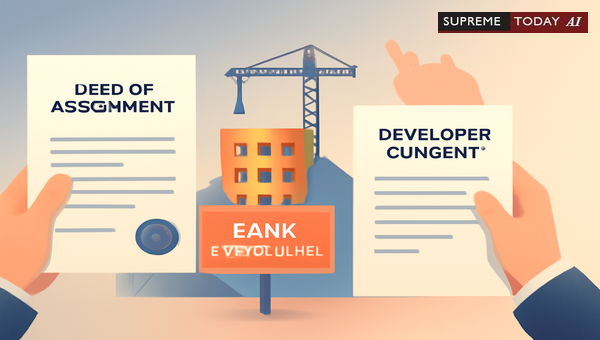
Can Malaysian Developers Block Bank via Assignment?
In Malaysia's dynamic property market, disputes between developers, homebuyers, and banks often arise when loans default and looms. A common question emerges: Can Malaysian developers block a bank's by withholding consent for a of the ? This issue pits developers' contractual rights against banks' security interests, governed by principles from the , , and evolving case law.
This article delves into the legal landscape, drawing from key Malaysian judgments. While no definitive ruling absolutely prohibits developers from withholding consent, courts emphasize reasonableness, contractual fairness, and statutory protections. Note: This is general information, not legal advice—consult a qualified lawyer for your situation.
The Core Legal Issue: Developer Consent in Assignments
When a buyer defaults on a bank loan for a property under construction, banks often rely on a of the SPA as security. This assigns the buyer's rights under the SPA to the bank, enabling or resale. However, many SPAs require the developer's consent for such assignments.
Courts have not established that developers cannot withhold consent. Instead, the jurisprudence indicates that withholding must be justified, reasonable, and not arbitrary. Banks' security interests are protected, but developers retain leverage tied to contractual terms and good faith.
The considered that the bank acted as an agent on behalf of the purchaser when making payments to the developer. The case emphasizes the bank’s role as a holder of the loan sum and not as an owner of the property.
Key Legal Principles Governing Consent
Contractual and Statutory Framework
Under standard SPAs (Schedules G/H of HDA Regulations), developers act as '' post-payment, holding legal title for buyers. This limits developers' ability to encumber properties without consent, protecting purchasers. Banks perfect security via assignment, but developer consent clauses persist.
allows buyers (or assignees) to sue developers post-assignment, notifying the bank—implying consent isn't an absolute barrier.
Under , the homebuyer (or purchaser) can initiate proceedings against the developer even after assignment, provided the bank is notified.
Courts prioritize fairness: Arbitrary withholding may breach implied good faith duties, allowing judicial intervention.
Banks' Limited Role Post-Assignment
Assignments transfer rights, not ownership. Banks don't become 'owners' and can't unilaterally foreclose without developer involvement if consent is required. Buyers retain to enforce SPA terms.
Landmark Malaysian Cases
Several decisions clarify the balance:
- Hoo See Sen Case (): Bank as purchaser's agent; assignment terms critical, no absolute developer block.
- Purchaser Rights Post-Assignment: Courts affirm buyers/banks can sue developers despite assignment.
- Application: Reinforces enforcement rights.
- No Ownership Transfer: Banks hold security, not title.
- Reasonableness in Assignments: Withholding must align with contracts.
No case explicitly bars withholding consent—it's case-by-case.
Insights from Related Case Law
Additional precedents highlight developers' trustee duties, bolstering banks/purchasers:
- Developers as cannot create charges post-SPA without buyer consent; such charges are void.
Champion Score Sdn Bhd vs Mohd Sobri Chew bin Abdullah
The court ruled that a developer acting as a bare trustee cannot create a valid charge over property sold to a purchaser, thus protecting the purchaser's rights under the .
A developer cannot create a valid charge over property sold to a purchaser, as it acts merely as a bare trustee, rendering the charge null and void under statutory protections for home buyers.
This mirrors scenarios: Developers can't arbitrarily obstruct valid security enforcement.
- under : Registered titles prevail, but fraud claims need evidence. Unregistered bank interests may falter without proof.
Other sources (e.g., Indian cases like 2025 0 Supreme(Gau) 374) discuss for security but underscore Malaysian focus on HDA protections.
Exceptions and Limitations on Withholding Consent
Developers may withhold, but:- Cannot act arbitrarily or in bad faith.- Courts may compel consent if unreasonable or breaching SPA.- Statutory duties (HDA) prioritize buyer/bank rights post-payment.
Developers cannot withhold consent arbitrarily or in bad faith. (Derived from prevailing principles across cases)
Practical Recommendations
- For Developers: Document justifications for withholding; draft clear SPA clauses.
- For Banks/Buyers: Include consent waivers in facilities; notify under s 22C HDA.
- All Parties: Use early; seek mediation before litigation.
Parties should carefully draft the and related agreements to specify the circumstances under which consent may be withheld. (General principle from analysis)
Conclusion: A Balanced Approach
Malaysian law does not definitively prevent developers from blocking bank via assignment consent. However, courts demand reasonableness, protecting banks' interests while respecting contracts. Absent binding precedent prohibiting withholding, outcomes hinge on specifics—contract terms, good faith, and HDA/NLC interplay.
Key takeaways:- No absolute developer veto; must be justified.
- Bare trustee status limits developer interference.
- Case-by-case judicial scrutiny prevails.
Stay informed on property law evolutions. For tailored advice, engage a Malaysian property lawyer.
References: Cases cited inline from Malaysian Legal Database (MLD).
#MalaysiaPropertyLaw, #BankForeclosure, #DeveloperRights















