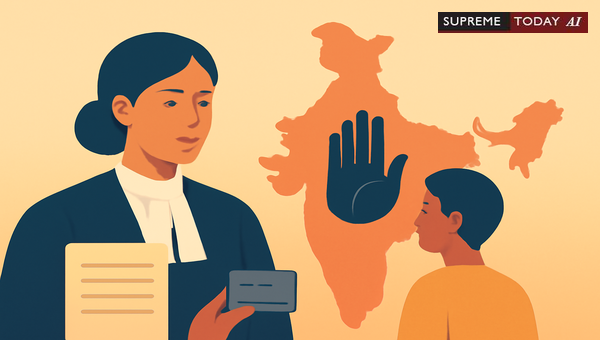
Legal Aid in India: Ensuring Access to Justice for the Marginalized
In today's digital age, platforms like LinkedIn have become powerful tools for professionals, advocates, and even litigants to spotlight critical legal issues. A LinkedIn post highlighting arguments in legal aid matters often underscores the systemic challenges faced by poor litigants in accessing justice within the Indian judiciary. These posts amplify real-world struggles, drawing attention to constitutional promises and judicial imperatives. This article delves into the importance of legal aid, its legal framework, and practical recommendations, drawing from key judicial insights and related cases.
While social media discussions can raise awareness, they also intersect with legal proceedings—such as in maintenance claims where LinkedIn profiles reveal earning capacities (The LinkedIn profile of petitioner brought on record by respondent ha also not been denied by petitioner during arguments, which shows from February 2015 to October, 2019 the petitioner managed buying and selling of semi precious and artificial jewellery. 2025 Supreme(Online)(DEL) 888) or contempt cases involving defiant posts (The LinkedIn post of the defendant is extracted as follows... defendant has posted on his LinkedIn account 2024 Supreme(Online)(DEL) 32119). Understanding legal aid is crucial for anyone engaging in such discourse.
Note: This is general information based on judicial precedents and not specific legal advice. Consult a qualified lawyer for personalized guidance.
The Critical Importance of Legal Aid for Poor Litigants
Legal aid is the cornerstone of access to justice, particularly for impoverished individuals who cannot afford representation. The absence of dedicated mechanisms in High Court registries exemplifies a systemic gap. As highlighted in judicial observations, The absence of a dedicated mechanism within the High Court registry to address applications for free legal aid highlights a systemic deficiency, especially for impoverished litigants who cannot afford legal representation. The need for establishing a separate cell to identify and act upon such applications is emphasized, with a suggestion to seek administrative and financial support from the State Government 1982 0 Supreme(Raj) 242.
Establishing a separate cell could streamline processes, ensuring timely identification and support for eligible applicants. This is vital in a country where economic disparities often bar the poor from courts.
Constitutional and Statutory Backbone of Legal Aid
India's Constitution enshrines the right to free legal aid under Article 39A, which mandates the State to ensure equal justice and to provide free legal aid to promote justice for all, especially marginalized sections 2016 0 Supreme(SC) 758. This directive principle transforms legal aid from a charity into a fundamental obligation.
Complementing this is the Legal Services Authorities Act, 1987, which institutionalizes legal aid programs. It positions advocates as key players in upholding justice, framing legal aid as a public duty and social security measure for the legal profession 2016 0 Supreme(SC) 758. These frameworks compel courts and authorities to proactively assist indigent litigants.
In practice, complaints against legal aid lawyers or delays in provision are common grievances. For instance, guidelines allow complaints including Against a legal aid lawyer, where a legal aid lawyer has been assigned to a party at any level, including in respect of his working and conduct... Against not being provided legal aid, where a party feels that he/she is entitled to legal aid 2017 0 Supreme(AP) 96.
Judicial Recognition: Legal Aid as a Fundamental Right
Courts have repeatedly affirmed legal aid as integral to fair trials. Indigent accused must be informed of their right to free counsel at all stages, including sentencing. Failure to do so can vitiate convictions: Courts have consistently acknowledged that indigent accused persons must be informed of their right to free legal aid, and failure to do so can vitiate convictions. The right to legal aid extends to all stages of criminal proceedings, including sentencing, emphasizing its integral role in fair trial rights 1986 0 Supreme(SC) 65 2019 7 Supreme 739.
This principle echoes in cases like those involving extended legal aid despite limitations, where Legal Aid Committee of this Court extended the legal aid to him through an appointed Advocate. Though legal aid was extended, the appeal was not filed within the time of limitation 2015 0 Supreme(Bom) 2262. Even in habeas corpus matters, courts note when accused are explained their rights: The accused has been explained about legal aid to him 2013 0 Supreme(Mad) 3893.
LinkedIn has inadvertently entered such narratives, as seen in employment disputes where auditors discussed matters leading to posts (Following these meetings, Henson sent a LinkedIn message to Donny Rouse 2024 Supreme(US)(ca5) 40), reminding us that professional networks can influence legal aid eligibility assessments.
Leveraging Technology and Administrative Reforms
High Courts are innovating with technology to overcome geographical barriers: The use of technology by High Courts to bridge geographical barriers exemplifies innovative approaches to ensure access to justice, especially for dispersed populations. State-sponsored legal aid programs are recognized as effective in alleviating financial hardships and promoting justice for the poor 2023 0 Supreme(SC) 249.
Administrative orders, like transfer petitions, further accessibility: Transfer petitions and administrative orders demonstrate judicial efforts to ensure justice is accessible and efficiently administered across jurisdictions SIMPY KUMARI vs SAURABH KUMAR SINGH - Supreme Court (2023)SIMPY KUMARI vs SAURABH KUMAR SINGH - Supreme Court (2023).
Social media plays a dual role here. While posts can highlight impersonation frauds needing urgent injunctions (as in trademark cases with LinkedIn activity 2025 0 Supreme(Del) 652), they also risk defamation claims, where courts balance speech with reputation: The court balanced the right to freedom of speech and expression with the right to reputation, emphasizing the necessity and proportionality of an interim injunction in defamation cases 2020 0 Supreme(Del) 688. Responsible posting on LinkedIn can advocate for legal aid without crossing lines.
In family matters, LinkedIn profiles impact maintenance claims: A spouse's ability to earn and actual earning are distinct; mere capability does not justify denial of maintenance if genuine efforts to secure income are not demonstrated... The petitioner was found capable of earning and deliberately remaining unemployed 2025 Supreme(Online)(DEL) 888. This shows how digital footprints inform legal aid and support decisions.
Key Recommendations for Strengthening Legal Aid
To bridge gaps, courts and authorities should:- Establish dedicated cells in High Court registries for legal aid applications 1982 0 Supreme(Raj) 242.- Reinforce communication of rights to accused at every stage 1986 0 Supreme(SC) 65 2019 7 Supreme 739.- Integrate technology for remote access and grievance redressal 2023 0 Supreme(SC) 249.- Promote proactive complaint handling: Complaint is received by any Authority or Committee at any level the approach should be towards problem solving rather than replying and disposing of the complaint... The objective should be redressal and not mere disposal 2017 0 Supreme(AP) 96.- Leverage platforms like LinkedIn ethically to raise awareness, avoiding violations as in contempt cases 2024 Supreme(Online)(DEL) 32119.
Conclusion: Towards Inclusive Justice
Legal aid remains a fundamental pillar of India's justice system, upheld by Article 39A, statutes, and judicial precedents. LinkedIn posts highlighting these arguments not only educate but also pressure for reforms, from dedicated mechanisms to tech-driven access. By addressing systemic deficiencies, India can truly realize justice for all.
Key Takeaways:- Legal aid is a constitutional mandate, not optional.- Courts mandate informing indigents of their rights.- Technology and admin reforms enhance reach.- Social media amplifies issues but requires caution.
Stay informed, advocate responsibly, and support accessible justice. For case-specific advice, reach out to legal experts.
#LegalAidIndia, #AccessToJustice, #IndianJudiciary