


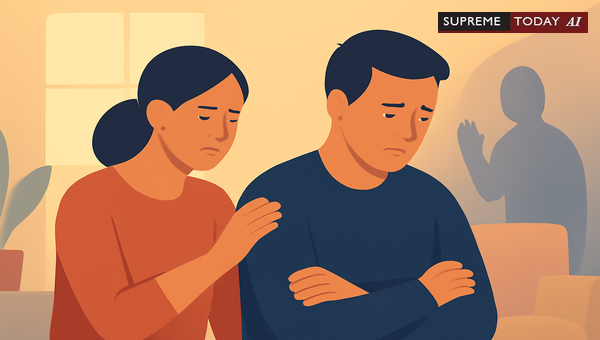
Can Married Person Have in India?
Introduction
In modern India, live-in relationships among have gained increasing acceptance, offering an alternative to traditional marriage. However, complications arise when one partner is already married. A common question is: Whether a Person Already Married can Live in Relationship Without Dissolution of Earlier Marriage? This issue touches on family law, the (), and judicial interpretations.
While live-in relationships between unmarried adults may qualify for certain legal protections, a typically bars recognition as a '.' This blog post analyzes the legal position, key precedents, and nuances, drawing from court rulings. Note: This is general information, not specific legal advice. Consult a qualified lawyer for personalized guidance.
Legal Position on Live-In Relationships Involving Married Persons
Under Indian law, a married individual's with another person generally does not qualify as a valid '' or one 'in the nature of marriage,' especially if the earlier marriage subsists. Courts emphasize that the woman (or aggrieved person) must be unmarried for such recognition. 2015 0 Supreme(Bom) 196
The defines a '' under to include relationships between adults who are related by marriage, consanguinity, or through a . However, a disqualifies parties from this category. As held, a married woman, who has not obtained a legal divorce, cannot be considered to be in a valid with another man. 2015 0 Supreme(Bom) 196
Narayan Jangluji Thool VS Mala Chandan Wani - Current Civil Cases (2015)
This stance aligns with societal norms and legal principles preventing or relationships from gaining marital-like protections.
Criteria for a ''
For a live-in arrangement to mimic marriage, courts assess several factors:
- and mutual support: Living together with financial and emotional interdependence.
- Social recognition: Holding out as spouses in society.
- Duration and conduct: Long-term cohabitation, sexual relationship, joint resources, children, and socialization.
The outlines these in precedents like
,
05600007042
, 2019 0 Supreme(Chh) 989. Yet, an existing marriage overrides these, as the woman must be unmarried to be in a . 2015 0 Supreme(Bom) 196Impact of a
A key judicial rider: If one party remains legally married, the new relationship cannot be 'in the nature of marriage.' Courts view such arrangements as morally and socially unacceptable, denying protections under the . 2015 0 Supreme(Bom) 196 2013 0 Supreme(UK) 533
The clarifies that essential characteristics are absent when a marriage subsists. 2021 0 Supreme(Cal) 256
Judicial Precedents and Viewpoints
Indian courts consistently rule against recognizing live-in relationships with married parties:
- Live-in involving a married woman and another man lacks validity as a . 2015 0 Supreme(Bom) 196
- Long-term cohabitation may presume marriage, but this is , especially with proof of a . 2021 0 Supreme(Cal) 256
From additional sources, consider scenarios where an unmarried woman enters a relationship with a married man. Courts note: Situations may arise when an unmarried adult woman knowingly enters into a relationship with a married adult male. 2021 0 Supreme(Del) 341
Parveen Tandon VS Tanika Tandon
2021 0 Supreme(Del) 1372In such cases, or may be granted pending trial, but final entitlement depends on evidence proving a '' or . For instance, one High Court declined interference at the interim stage, stating the issue can be determined only after the evidence is led. 2021 0 Supreme(Del) 341 It directed safeguards for refunding maintenance if protections are denied post-trial.
Parveen Tandon VS Tanika Tandon
Another ruling emphasizes: In order to maintain a petition under aggrieved person has to show that aggrieved person and respondent (man) lived together in a and this could be even from a relationship in nature of marriage.
Parveen Tandon VS Tanika Tandon
However, extra-marital relationships are deemed immoral: an act of relationship entered by an individual with another female or male... while is/her spouse is alive would be an act of amounting to adultery and would be considered as an immoral act so far as Indian society is concerned. 2019 0 Supreme(Raj) 2703
Exceptions and Limitations
While strict, exceptions exist:
- Interim Relief: Unmarried partners of married individuals may secure temporary maintenance or residence if evidence exists, decided fully at trial. 2021 0 Supreme(Del) 1372
- Live-in Between Unmarried Adults: Fully recognized if criteria met. 2013 8 Supreme 122 2017 0 Supreme(All) 2278
- Presumption from Cohabitation: Long duration raises marriage presumption, by marriage proof. 2021 0 Supreme(Cal) 256
Tangentially, familial ties persist post-marriage, as in where married daughters are entitled... as marital status does not negate their familial ties. 2024 0 Supreme(AP) 380 This underscores that marriage doesn't sever bonds but doesn't validate live-ins.
Second marriages with a living spouse are invalid, aimed at preventing harassment to a woman who enters into a marital relationship. 2022 Supreme(Online)(MP) 3874
Practical Implications and Recommendations
- No Legal Protection Typically: A married person's live-in lacks safeguards unless exceptionally proven.
- Seek Divorce First: Dissolve the marriage legally before new commitments.
- Evidence Matters: Parties claiming protections must prove , intent, etc.
Such relationships risk social stigma, legal challenges, and no maintenance/child rights akin to marriage.
Conclusion and Key Takeaways
Generally, a married person cannot validly enter a 'in the nature of marriage' without dissolving the prior marriage under Indian law. Courts prioritize subsisting marriages, denying recognition to prevent -like scenarios. While interim relief may arise in unmarried woman-married man cases, final outcomes favor evidence and legality.
05600007042
Key Takeaways:- bars 'relationship in nature of marriage.'- Focus on criteria like duration, support, recognition—but marriage trumps.- Consult professionals; laws evolve with judgments.
For evolving family dynamics, prioritize legal clarity to avoid disputes. Stay informed on updates.
(Word count: approx. 1050. Sources cited are for reference; full judgments recommended.)
#LiveInRelationship, #IndianFamilyLaw, #DVAct


















