


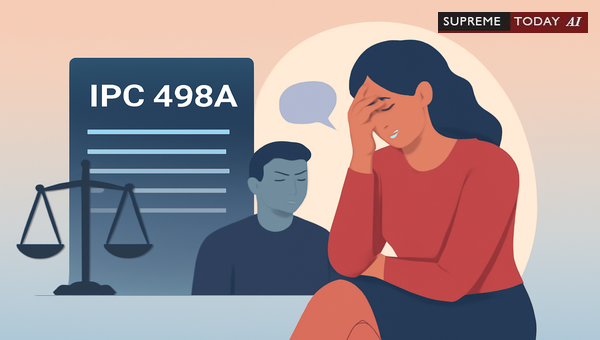
Navigating SC/ST Atrocity Allegations by Wife Against Husband and In-Laws
In the complex world of matrimonial disputes in India, allegations under the (SC/ST Act) can add significant layers of legal tension. A common scenario arises when a wife accuses her husband, mother-in-law, and father-in-law of atrocities, often intertwined with claims of dowry demands and cruelty under (IPC). But what happens when evidence is scrutinized, inconsistencies emerge, or counterclaims of false accusations surface? This post breaks down such cases, drawing from legal precedents and court observations to provide clarity—note: this is general information, not specific legal advice; consult a qualified lawyer for your situation.
The Core Issue: Wife Alleging SC/ST Atrocity Against Husband and In-Laws
Picture this: A wife files complaints alleging harassment, physical abuse, and caste-based atrocities by her husband and in-laws. These claims typically invoke the SC/ST Act alongside IPC provisions for cruelty. As seen in various proceedings, The wife has consistently alleged that her husband and in-laws subjected her to harassment and physical abuse due to insufficient dowry. Specific instances of physical violence and demands for money have been documented in her complaints and testimonies from family members 1995 0 Supreme(SC) 952.
However, courts often examine the full context. In one instance related to SC/ST charges over a land dispute, The accused were charged with assault and derogatory conduct against the complainant... The found no convincing evidence to uphold the prosecution's case against the accused, leading to their acquittal 2025 0 Supreme(Guj) 1853. The appellate court upheld this, stressing that acquittals stand unless grave errors exist, reinforcing the 2025 0 Supreme(Guj) 1853.
Legal Framework: SC/ST Act Meets IPC 498A
The SC/ST (Prevention of Atrocities) Act aims to prevent atrocities against marginalized communities, with Section 3(1)(10) addressing insults or intimidation in public view. Yet, in matrimonial cases, these allegations frequently overlap with:
- IPC Section 498A: Cruelty by husband or relatives, including harassment for dowry.
- : Broader protection against abuse.
Courts have noted, 's earlier dismissal of charges against the father-in-law and mother-in-law was found to be unjust, as there was sufficient evidence to frame charges under Section 498A against all three respondents (husband, mother-in-law, and father-in-law) 1995 0 Supreme(SC) 952. This highlights the need for robust evidence like witness statements and medical reports.
But proceedings aren't one-sided. In , inconsistencies arose regarding the involvement of the in-laws. For instance, one declaration exonerated the father-in-law while implicating the husband and mother-in-law in acts of violence 2004 8 Supreme 603. Such variances can sway outcomes.
Key Findings from Court Documents
Legal documents reveal patterns:
Evidence of Cruelty and Dowry Demands
- Witness statements often corroborate abuse claims: Witness statements corroborate her claims, indicating a pattern of abuse and dowry-related harassment involving both the husband and the in-laws 1995 0 Supreme(SC) 952.
- Physical violence instances are documented, but proof is crucial.
Charges and Procedural Issues
- Courts criticize inadequate representation: The court emphasized that the learned failed to adequately represent the case, leading to a misinterpretation of the evidence presented 1995 0 Supreme(SC) 952.
SC/ST Specifics in Matrimonial Context
In a case involving alleged assault during a dispute, She has stated that at the time of the incident, her earring was lost and the accused had broken their pots and had pulled her husband. Her father-in-law, mother-in-law and brother-in-law had intervened 2025 0 Supreme(Guj) 1853. Yet, lack of led to acquittal, as The appellate court cannot overturn an acquittal unless the 's decision is found to be unreasonable or lacks a proper evidentiary basis 2025 0 Supreme(Guj) 1853.
Counterclaims: as
Husbands and in-laws frequently counter with claims of under Hindu Marriage Act Section 13(1)(ia). False or exaggerated complaints can backfire.
- In multiple precedents, wives' indecent allegations constituted cruelty. For example, the wife has given a Criminal complaint against the husband and his family members specifically alleging that the mother-in-law has forced her to sleep with her father-in-law. The held that such a conduct of the wife... is 2019 0 Supreme(Mad) 1400 2017 0 Supreme(Mad) 3599 2017 0 Supreme(Mad) 2093
Manimaran VS Nalini
. - One case details: appellant/husband never misbehaved with respondent wife -- as per her own statement, he was caring -- allegation of husband that wife accused him of consuming liquor, womanizing... wife and her parents... came to official residence of appellant, assaulted and abused appellant 2023 0 Supreme(MP) 689. Courts found no dowry proof, deeming wife's actions as cruelty: acts/conduct of wife constitute cruelty -- cannot be treated as normal wear and tear of matrimonial life 2023 0 Supreme(MP) 689.
Such filings, especially post-divorce petitions, are weighed heavily: even one such complaint is sufficient to constitute 2017 0 Supreme(Mad) 2093. Events after filing can be considered 2023 0 Supreme(MP) 689.
Recommendations for Handling Such Cases
Navigating these disputes requires strategy:
- Gather Comprehensive Evidence: Compile medical reports, witness testimonies, and prior complaints. It is crucial to compile all relevant evidence... to substantiate the claims of harassment and abuse 1995 0 Supreme(SC) 952 (for complainants) or disprove them (for accused).
- Secure Strong Legal Representation: Avoid pitfalls like poor advocacy that leads to dismissals 1995 0 Supreme(SC) 952.
- Prepare for Counterclaims: Address potential or defamation: Allegations of have also been raised, particularly regarding defamatory statements made by the wife against her husband and in-laws 2013 2 Supreme 80.
- Appellate Caution: Additional documents at appeal stage are rarely admitted: additional documents cannot be taken on record at appellate stage, especially on failing to establish that such documents could not be produced earlier despite 2023 0 Supreme(MP) 689.
Conclusion and Key Takeaways
Allegations of SC/ST atrocities by a wife against her husband and in-laws often intersect with 498A cruelty claims, but success hinges on credible evidence. Courts frequently highlight inconsistencies, like varying 2004 8 Supreme 603, and recognize false complaints as grounds for divorce on cruelty 2023 0 Supreme(MP) 689 2019 0 Supreme(Mad) 1400. While protections exist for victims, misuse can lead to acquittals or counter-relief 2025 0 Supreme(Guj) 1853.
Key Takeaways:- Prioritize evidence over emotions.- Effective representation is pivotal.- False claims may entitle the other side to divorce.- Subsequent events influence outcomes.
For personalized guidance, reach out to a family law expert. Stay informed, stay protected.
References: 1995 0 Supreme(SC) 952 2004 8 Supreme 603 2013 2 Supreme 80 2023 0 Supreme(MP) 689 2025 0 Supreme(Guj) 1853 2019 0 Supreme(Mad) 1400 2017 0 Supreme(Mad) 3599 2017 0 Supreme(Mad) 2093
Manimaran VS Nalini
' #SCSTAtrocities #MatrimonialCruelty #FamilyLawIndia















