




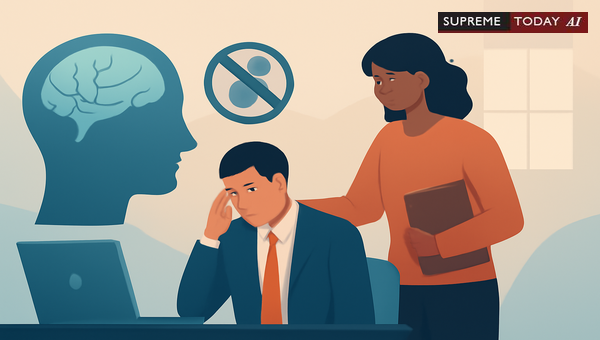
Mental Illness and Job Dismissal in India: What Are Your Rights?
In today's fast-paced work environment, mental health challenges are increasingly common. But what happens when an employee has been suffering from mental illness for a long time—say, about 18 years—and faces removal from service? This question raises critical issues under Indian employment law, particularly regarding protections for those with disabilities, , and the need for medical evidence. While employers have rights to ensure productivity, courts have consistently emphasized safeguards to prevent arbitrary dismissals.
This article breaks down the legal framework, key court rulings, and practical recommendations. Note: This is general information based on precedents and not specific legal advice. Consult a qualified lawyer for your situation.
Main Legal Finding: Protection Against Arbitrary Dismissal
Indian courts recognize that individuals with long-term mental illness may be entitled to protection from dismissal or removal from service, especially if the condition impairs duty performance without proper procedures. Dismissal based solely on longstanding mental illness, without medical evidence, , or a hearing opportunity, is typically invalid. Courts stress proper medical assessment and adherence to principles. 2022 1 Supreme 539
For instance, in cases involving diagnoses like OCD, depression, and bipolar disorder, employees classified as permanently unfit (S-5 category) still require a proper inquiry into the mental health status before termination. Mere duration of illness does not justify dismissal without evidence. 2022 1 Supreme 539
Key Points on Long-Term Mental Illness and Employment
- Duration as a Factor: Suffering from mental illness for 18 years is relevant but does not automatically warrant removal; procedural steps are crucial. 2025 0 Supreme(SC) 1062
- Medical Evidence Required: Objective assessments by , with reasoned opinions, are mandatory. Unreasoned medical views cannot sustain dismissal. 2022 1 Supreme 539
- Essential: No or inquiry renders actions unsustainable, particularly for mental health claims. 2013 4 Supreme 647
- Proportionality Matters: Punishments like removal for prolonged absence due to illness are often deemed . 2024 0 Supreme(Mad) 577
Detailed Analysis: Court Precedents and Protections
Recognition of Mental Illness in Employment
Mental illnesses such as paranoid schizophrenia, bipolar disorder, or depression are acknowledged as disabilities warranting protections. Courts mandate thorough medical evaluations before adverse actions. In one case, an employee's classification under S-3 or S-5 categories was upheld only because it was supported by detailed medical reports; otherwise, the act of the authority based on mere opinion sans reasons can certainly be questioned. 2022 1 Supreme 539
Long-term treatment history strengthens claims. For example, a psychiatrist's certificate confirming treatment from 2002 onward protected an Assistant Marketing Inspector from termination for absence, as it was due to compelling circumstances such as illness. The court set aside the order, citing failure to follow procedures. 2014 0 Supreme(Gau) 492
and Principles of
Dismissals without a hearing or chance to submit evidence are routinely quashed. Dismissal not sustainable when lacking , , or proper evaluation, especially for mental illness claims. 2013 4 Supreme 647
In another instance, a Bill Clerk absent for over three years due to mental illness treatment at Erwadi Dargah was reinstated. The court found removal , directing reinstatement with a '' condition for the absence period, given bona fide reasons and a fitness certificate. 2024 0 Supreme(Mad) 577
Medical Evidence and Disability Certification
Objective proof is key. Disability certificates, like one certifying 45% mental illness (Bipolar Affective Disorder) valid for 5 years, are persuasive even in remission, as there's no reason to assume that the petitioner’s disability will fall below 40% merely because he is in remission. BHAVYA NAIN vs -5948_2019)
' opinions must be reasoned and final per regulations, preventing arbitrary reliance on unsubstantiated views. 2022 1 Supreme 539
Long Duration of Illness: Does 18 Years Justify Removal?
No—flawed processes invalidate actions despite long illness. In 2025 0 Supreme(SC) 1062, discharge based on unreasoned medical opinion was deemed invalid, underscoring procedural safeguards.
Courts also consider context, like a constable boarded out for paranoid schizophrenia attributable to service, entitling him to under , liberally construed for those boarded out on medical grounds. 2023 0 Supreme(Del) 3354
Exceptions and Limitations
While protections exist, exceptions apply:- Proven Unfitness: If severe illness renders one objectively unfit (e.g., safety-critical roles) with proper procedures, dismissal may hold.- Clear Evidence: Supported medical reports and fairness can justify action.- Service-Specific Rules: Mental fitness is vital in or high-risk jobs, but pensions may still apply. 2023 0 Supreme(Del) 3354
In tragic cases, like a constable's disappearance due to mental illness leading to death, courts allowed pension claims for legal heirs, recognizing compelling circumstances. 2019 0 Supreme(Jhk) 1275
Recommendations for Employers and Employees
- For Employers: Conduct detailed medical evaluations with reasons; issue show-cause notices; consider accommodations or periodic assessments before termination.
- For Employees: Gather medical certificates, treatment records; demand hearings; explore disability benefits or pensions.
- Seek Rehabilitation: Broader mental health support, including surveys and facilities, is urged by courts. 2021 0 Supreme(Mad) 3164
Courts scrutinize for fairness: Law is well settled that if absence from duty is due to compelling circumstances such as illness... such absence cannot be held to be wilful. 2014 0 Supreme(Gau) 492
References to Key Cases
- 2022 1 Supreme 539: Medical evaluation and fairness in mental illness terminations.
- 2013 4 Supreme 647: Need for inquiry before dismissal. 2013 4 Supreme 647 2022 1 Supreme 539
- 2025 0 Supreme(SC) 1062: Unreasoned opinions invalid.
- 2025 6 Supreme 153: Objective evidence crucial.
- 2009 0 Supreme(SC) 259: Procedural lapses void dismissals.
- Additional: 2014 0 Supreme(Gau) 492, 2024 0 Supreme(Mad) 577, 2023 0 Supreme(Del) 3354
Conclusion: Balancing Rights and Responsibilities
Long-term mental illness, even spanning 18 years, does not permit hasty removal from service under Indian law. Employers must prioritize medical evidence, , and proportionality, while employees should document their conditions thoroughly. Precedents like those above show courts favor reinstatement or benefits when processes falter, promoting inclusive workplaces.
Key Takeaways:- Always demand .- Medical evidence is non-negotiable.- Explore pensions for invalidation due to illness.- Mental health stigma must not override legal rights.
Stay informed, seek professional advice, and prioritize well-being in employment disputes.
#MentalHealthLaw #EmploymentRightsIndia #JobDismissal












