


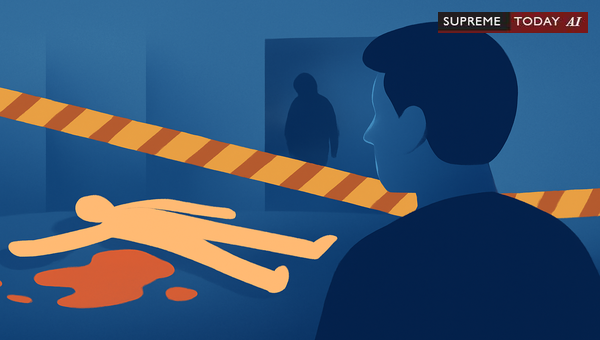
Mere Presence at Crime Scene: Grounds for Guilt?
In high-stakes criminal cases like murder or robbery, the line between guilt and innocence often hinges on more than just being in the wrong place at the wrong time. Imagine this: an accused individual is found standing near the scene of a violent stabbing or robbery but did not wield the weapon or take any property. Does mere proximity equate to culpability? This question arises frequently in courtrooms, particularly under Indian criminal law, where the prosecution must prove .
The core issue can be framed as: accused was not stabbing, not robbed victim but only standing near the act—alteration of charge. Courts consistently emphasize that presence alone does not suffice for conviction. This blog post delves into the legal findings, key case principles, and supporting evidence to clarify when mere bystanders escape liability.
Main Legal Finding: Presence vs. Participation
Legal documents firmly establish that the presence and participation of the accused at the scene, coupled with like stabbing or robbing, are essential for culpability in offenses such as murder or robbery. Merely standing near the act or being present at the scene without engaging in overt acts such as stabbing or robbing does not suffice to hold the accused liable for the . 1980 0 Supreme(SC) 480 1989 0 Supreme(SC) 218
Key Points on Liability
- Act Must Be Proven: The prosecution must demonstrate that the accused committed the stabbing or robbery; mere presence is insufficient. 1980 0 Supreme(SC) 480 1989 0 Supreme(SC) 218
- Active Participation Required: Evidence of inflicting injuries with a weapon or taking property is necessary for guilt in murder or robbery cases. 1980 0 Supreme(SC) 480 1989 0 Supreme(SC) 218
- No Guilt from Proximity Alone: The law holds that standing near the scene does not amount to participation without overt acts in furtherance of the offense. 1980 0 Supreme(SC) 480
This principle aligns with broader criminal jurisprudence, where guilt demands proof of (guilty act) alongside (guilty mind).
Detailed Analysis: Why Presence Alone Falls Short
Presence Does Not Imply Guilt
Criminal law prioritizes over passive observation. In one analyzed case, the court noted: materials on record do not warrant a finding that the individual act of the accused D had been perpetrated in furtherance of the of all the accused when the accused was merely present but did not actively stab or rob the victim. 1989 0 Supreme(SC) 218
Similarly, in 1980 0 Supreme(SC) 480, the accused admitted to being near the scene but denied inflicting wounds or robbing the deceased, leading courts to scrutinize evidence beyond location.
The Need for Overt Acts
Conviction hinges on proof of direct actions. Courts require evidence that the accused inflicted injuries, robbed, or took some active step in the commission of the crime. 1980 0 Supreme(SC) 480 1989 0 Supreme(SC) 218
Supporting this, other cases reinforce that bystanders without action are not liable. For instance, witnesses seeing an accused running away from the place of offence but not the act itself were deemed insufficient: there is no manner of doubt that the whole case against the appellant rests upon the ... such circumstances even if taken cumulatively fail to form chain so complete. 2008 0 Supreme(Guj) 450
In another scenario, a witness had not actually seen the accused stabbing the victim and she claims to have seen the accused while he was taking out the knife post-act, which did not establish participation.
Legal Principles from Case Law
- Courts have held: the accused was not stabbing nor robbing the victim but only standing near the act does not establish guilt for murder or robbery. 1980 0 Supreme(SC) 480
- Mere presence without active role leads to acquittals or charge alterations. 1980 0 Supreme(SC) 480 1989 0 Supreme(SC) 218
- Overt acts must further : emphasized in group crime analyses. 1989 0 Supreme(SC) 218
In 2016 0 Supreme(Mad) 3191, the court acquitted due to unproven direct involvement: It is nowhere in evidence that... there was also a commotion... the story projected by PW-1 to PW-4... is highly doubtful.
Relevance of Evidence in Determining Culpability
Courts rigorously examine witness statements, medical reports, and forensics. In 1980 0 Supreme(SC) 480, evidence of witnesses and medical reports supported the conclusion that the injuries were inflicted after the accused was present but not actively stabbing.
must form an unbroken chain. As noted in 2008 0 Supreme(Guj) 450, seeing an accused running nearby his residence could not be said that such circumstance is so complete that it would lead in all probabilities to the guilt. Factors like the accused's proximity to home or lack of weapon possession weaken the case.
In flawed investigations, like 2008 0 Supreme(Ori) 703, the prosecution failed to establish a clear chain of circumstances... the flawed investigation and contradictory evidence led to the acquittal.
Contrastingly, active roles are clear in convictions: he turned and saw accused stabbing the victim... He identified MO.1/knife used. 2025 0 Supreme(Kar) 2741
Exceptions and Limitations: When Presence Might Matter
While mere standing typically exonerates, exceptions exist:- Armed Presence Facilitating Crime: If armed and enabling the offense, liability may attach, though mere standing near without such involvement is insufficient. 1980 0 Supreme(SC) 480- Encouragement or Aiding: Presence with clear aid or encouragement can imply participation, but requires clear evidence. 1989 0 Supreme(SC) 218
In 2019 0 Supreme(Jhk) 1407, one accused was standing there who did not do any act, distinguishing him from active perpetrators in a rape case.
Other cases highlight pursuit or premeditation overriding claims: the accused chased the deceased for a long distance... it cannot be said that his act was not premeditated. But without such proof, presence alone fails.
Insights from Additional Case Law
Broader precedents underscore proof burdens:- In drug deal stabbings, exceeding self-defense via pursuit convicts, but initial presence does not.
- Witness identification post-arrest near the scene requires corroboration: Police took them... where the accused was standing. PW9 identified. Yet without act proof, insufficient. 2026 Supreme(Online)(Mad) 1- Recovery and forensics must link directly: The recovery is not in accordance with... . 2005 Supreme(Online)(Bom) 5
These illustrate that unreliable witnesses or gaps acquit: The prosecution has not proved... beyond reasonable doubt. 2008 0 Supreme(Guj) 450
Recommendations for Prosecution and Defense
- Prosecution: Focus on direct acts like injuries inflicted or property taken.
- Defense: Highlight lack of overt involvement; mere presence cannot convict.
- Evidence Strategy: Prioritize forensics, consistent witnesses over circumstantial proximity.
Conclusion and Key Takeaways
Generally, under Indian criminal law, standing near a stabbing or robbery does not warrant conviction for murder or robbery without proof of active participation. Cases like 1980 0 Supreme(SC) 480 and 1989 0 Supreme(SC) 218 affirm: liability demands overt acts, not bystander status.
Key Takeaways:- Mere presence is insufficient for guilt. 1980 0 Supreme(SC) 480 1989 0 Supreme(SC) 218- Demand proof of stabbing, robbing, or aiding.- Circumstantial chains must be unbreakable. 2008 0 Supreme(Guj) 450
This post provides general insights based on case law and is not legal advice. Consult a qualified attorney for specific situations.
References
- 1980 0 Supreme(SC) 480: Active participation vs. mere presence.
- 1989 0 Supreme(SC) 218: Standing near without overt acts insufficient.
- Additional sources: 2008 0 Supreme(Guj) 450, 2016 0 Supreme(Mad) 3191,
, etc.















