


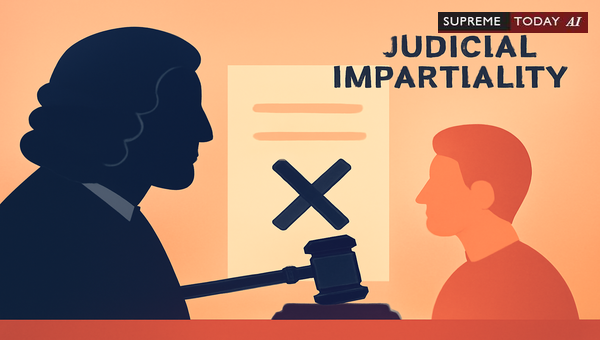
Can't Judge Disputes You've Dealt With: The Rule
In the realm of law, fairness is paramount. Imagine a scenario where the very person tasked with resolving your dispute has previously been involved in it—perhaps as an investigator, advisor, or even a party. Does this raise red flags? Absolutely. The legal question at the heart of this issue is clear: One should not adjudicate a dispute which he or she has dealt with in any capacity. This principle safeguards the integrity of justice, ensuring decisions are impartial and free from even the appearance of bias.
This blog post delves into this foundational rule of , drawing from Indian jurisprudence, landmark cases, and practical applications in various legal contexts. Whether you're a legal professional, business owner facing arbitration, or simply curious about your rights, understanding this concept is crucial for upholding public confidence in the judicial system.
Overview of the Principle
The principle that one should not adjudicate a dispute in which they have previously been involved in any capacity is a cornerstone of . Rooted in the Latin maxim —meaning no one should be a judge in their own cause—it prioritizes impartiality. The focus isn't just on actual bias but on the , where prior involvement could reasonably lead others to question the adjudicator's neutrality. As noted, the appearance of bias is sufficient to disqualify a judge from adjudicating a matter 2009 0 Supreme(SC) 124 2010 7 Supreme 970.
This rule applies broadly to judges, arbitrators, adjudicators, and authorities, ensuring justice is not only done but seen to be done 2012 5 Supreme 260 2003 7 Supreme 681. Courts have consistently emphasized that is vital for public trust in the system.
Key Legal Principles
1. and Nemo Debet Esse Judex
No person shall be a judge in their own cause. This maxim underscores that personal interest or prior dealings disqualify an adjudicator. It is well settled that no person should adjudicate a dispute which he or she has dealt with in any capacity. The failure to observe this principle creates an on the part of the said person 2021 0 Supreme(Gau) 604.
2. Test
The test is objective: Would a fair-minded observer conclude there's a real possibility of bias? In , the clarified that circumstances of prior involvement alone can create this perception 2009 0 Supreme(SC) 124. This was reaffirmed in A.U. Kureshi v. , holding that prior capacity dealings taint the process 2010 7 Supreme 970.
3.
Adjudicators must be free from any interest or bias. Principles of must be strictly adhered to in such a proceeding 2021 0 Supreme(Gau) 604, especially in roles like disciplinary inquiries.
Landmark Case Law
A.U. Kureshi v.
This case directly addressed the issue, stating a person cannot adjudicate matters they've handled before, as it fosters bias apprehension 2010 7 Supreme 970. The relied on Ashok Kumar Yadav to reinforce this 2017 0 Supreme(Del) 3152 2017 0 Supreme(Jhk) 786 2016 0 Supreme(Ori) 447 2015 0 Supreme(Jhk) 1058.
v. State of Gujarat
Here, the court stressed maintaining public confidence, ruling that prior vested interest disqualifies adjudicators 2012 5 Supreme 260.
Applications in Disciplinary Proceedings
Multiple rulings apply this in . In one case, the same person acting as inquiry officer and disciplinary authority violated : No person can be a judge in his own cause and... an operates as a disqualification 2017 0 Supreme(Jhk) 786. Proceedings were quashed, with directions for fresh action 2021 0 Supreme(Gau) 604 2017 0 Supreme(Del) 3152 2016 0 Supreme(Ori) 447 2015 0 Supreme(Jhk) 1058.
Another instance involved bias in a disciplinary committee, rendering proceedings void due to a member's prior involvement 2017 0 Supreme(Del) 3152. Courts ordered reinstatement, noting, The violation of the principles of due to bias... rendered the entire disciplinary proceedings void 2017 0 Supreme(Del) 3152.
Broader Contexts: Arbitration and Adjudication
In construction disputes, adjudicators under contracts must remain neutral. One case highlighted distinct roles: the Adjudicator decides first, followed by arbitration if needed. Dissatisfaction led to arbitrator appointment under 2023 0 Supreme(Raj) 18.
Timeliness matters too. In a Malaysian-linked context under the , late delivery voided a decision, though corrections were upheld if non-prejudicial
. While not Indian, it echoes impartiality needs.
In service matters like proceedings, bias from prior dealings led to quashing punishments and 2021 0 Supreme(Gau) 604. Similarly, in corruption-related departmental probes, dual roles vitiated processes 2017 0 Supreme(Jhk) 786.
Practical Implications and Recommendations
This principle extends beyond courts to arbitrations, administrative tribunals, and internal disputes. Failure invites challenges, delays, and overturned decisions.
- Vetting Adjudicators: Thoroughly check for prior involvement before appointments.
- Training on Bias: Educate professionals on recognizing .
- Public Awareness: Inform parties of rights to impartial forums.
- Disclosure Protocols: Mandate upfront declarations of past dealings.
Legal practitioners should flag conflicts early. In contracts, specify neutral adjudicator selection.
Conclusion and Key Takeaways
The rule that one should not adjudicate a dispute they've dealt with previously is firmly entrenched in Indian law, protecting judicial integrity. Landmark cases like A.U. Kureshi and Ashok Kumar Yadav illustrate its application across contexts, from courts to disciplinary panels 2010 7 Supreme 970 2009 0 Supreme(SC) 124.
Key Takeaways:- Prior involvement creates bias apprehension, disqualifying adjudicators.- demands strict impartiality.- Violations lead to quashed proceedings—act preventively.
Disclaimer: This post provides general information based on legal principles and is not specific legal advice. Consult a qualified lawyer for your situation.
References: 2009 0 Supreme(SC) 124 2010 7 Supreme 970 2012 5 Supreme 260 2003 7 Supreme 681 2021 0 Supreme(Gau) 604 2017 0 Supreme(Del) 3152 2017 0 Supreme(Jhk) 786 2016 0 Supreme(Ori) 447 2015 0 Supreme(Jhk) 1058 2023 0 Supreme(Raj) 18
#NaturalJustice, #JudicialBias, #LegalBias















