


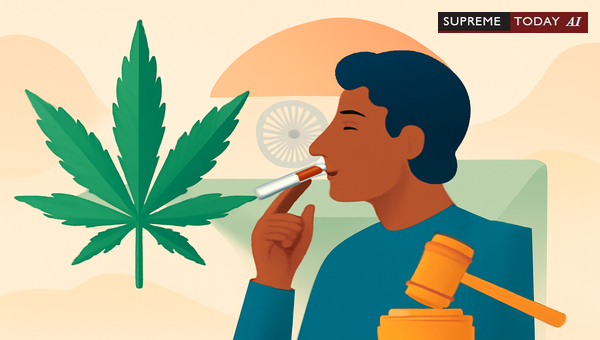
Smoking Weed in India: Legal Risks & Penalties
In a country where cultural attitudes towards cannabis vary widely, many wonder about the boundaries of legality when it comes to smoking weed, also known as ganja or marijuana. With changing global perspectives on cannabis, India's strict laws remain a critical concern for individuals. This post explores the question: Smoking Weed and Offence – delving into the legal framework, potential charges, defenses, and real-world implications. Note: This is general information, not legal advice. Consult a qualified lawyer for personalized guidance.
Overview of Cannabis Laws in India
India's approach to cannabis is governed primarily by the , which classifies ganja as a narcotic drug. Smoking weed isn't just a personal choice; it can lead to serious criminal charges. Possession, consumption, or even being in certain situations involving ganja can trigger offences under this act, along with provisions from the and state-specific laws like the .
Under , possession of ganja is punishable, with penalties including imprisonment. These offences are and , allowing police to arrest without a warrant and making bail challenging. Public smoking may also intersect with the , which bans smoking in public places 2019 7 Supreme 111.
Key Legal Provisions Explained
1. NDPS Act: Possession and Consumption
The NDPS Act is the cornerstone of cannabis regulation in India. Any form of possession, sale, or use of ganja can result in severe penalties. Even small quantities don't escape scrutiny, as courts have upheld convictions based on evidence like smell or paraphernalia. For instance, law enforcement often relies on the odor of weed, presence of pipes, or witness accounts to build cases 2022 0 Supreme(SC) 1314.
In one account, One day, Nitin came after doing intoxication (weed marijuana), I thought that I found weed pipe earlier from his pocket – highlighting how paraphernalia serves as key evidence 2022 0 Supreme(SC) 1314. Similar patterns appear in reports where police detect the smell of weed leading to charges 2021 Supreme(US)(ca8) 527.
2. Indian Penal Code: Intoxication and Defenses
If smoking weed leads to other crimes, the IPC comes into play. addresses : it doesn't absolve liability unless proven that the person was incapable of understanding their act. The burden is on the accused 1927 0 Supreme(Mad) 493. Habitual use doesn't qualify as an under , which requires 1927 0 Supreme(Mad) 493.
3. State Laws like
Certain states enforce additional restrictions. Under the , mere presence in an assembly for smoking is an offence, presuming guilt unless disproven 1955 0 Supreme(Ori) 81 1976 0 Supreme(MP) 193. In Duti Dei v. State, the court ruled that presence with smoking apparatus suffices for conviction 1955 0 Supreme(Ori) 81.
Public health rules further complicate matters. Hotels and restaurants must segregate smoking areas with clear signage: each area shall contain boards indicating thereon 'Smoking Area/Non-Smoking Area' and ensure physical separation 2021 0 Supreme(Gau) 256 2015 0 Supreme(MP) 1059. Smoking ganja in such spaces could invite dual charges.
Landmark Case Law Insights
Courts have consistently upheld for weed-related activities:
- In Queen Empress v. Irappa, habitual intoxication didn't exempt the accused from liability for arson, as actions showed awareness 1927 0 Supreme(Mad) 493.
- Duti Dei v. State confirmed convictions based on assembly presence and tools 1955 0 Supreme(Ori) 81.
Internationally, parallels exist. In Malaysia, smoking weed is illegal, with prosecutions for possession or use
BSO vs JEH - High Court Malaya Kuala Lumpur
. US cases emphasize smell and paraphernalia as evidence for driving under influence charges 2021 Supreme(US)(ca8) 527 2025 Supreme(US)(ca6) 166. In India, similar evidence has led to NDPS convictions, though some defenses succeed on insufficient proof 2024 0 Supreme(Ker) 957.Immunity provisions may apply for addicts seeking treatment, offering limited protection 2025 Supreme(Online)(Tel) 11640 2025 Supreme(Online)(Tel) 15844.
Evidence Commonly Used in Weed Cases
Prosecutors build cases on:- Smell of cannabis: A primary indicator 2021 Supreme(US)(ca8) 527.- Paraphernalia: Pipes or bongs found on person 2022 0 Supreme(SC) 1314.- Witness testimony: Accounts of intoxication or use
.- Location: Presence in smoking assemblies 1955 0 Supreme(Ori) 81.
Defenses often challenge these, claiming false implication or lack of possession 2024 0 Supreme(Ker) 957.
Potential Penalties and Consequences
- First-time small quantity possession: Up to 6 months imprisonment or fine.
- Commercial quantities: 10-20 years rigorous imprisonment.
- Additional charges: Public smoking under COTPA adds fines 2019 7 Supreme 111.
- Long-term impact: Criminal record affecting employment and travel.
Health risks compound legal ones; smokers face higher respiratory issues 2011 0 Supreme(Guj) 621.
Building a Defense: What to Know
Successful defenses are rare but possible:- Prove or insanity with medical evidence 1927 0 Supreme(Mad) 493.- Challenge for seized ganja.- Highlight treatment-seeking for immunity 2025 Supreme(Online)(Tel) 11640.- Argue mere presence without intent 1955 0 Supreme(Ori) 81.
Gather witness statements, medical reports, and alibis early.
Recommendations for Avoidance and Response
- Avoid public or group smoking: Reduces assembly charges.
- Seek immediate legal help: NDPS cases move fast.
- Comply with signage laws: In businesses, ensure segregated areas 2012 0 Supreme(Ker) 275.
- Educate on global variances: While decriminalized elsewhere, India remains strict.
Businesses like hookah lounges must restrict to herbal flavors to avoid interference 2023 Supreme(Online)(MAD) 19743.
Key Takeaways
Smoking weed in India carries significant risks under the NDPS Act, IPC, and related laws. Penalties are harsh, defenses limited, and evidence like paraphernalia or smell often seals cases. While global trends shift, Indian enforcement prioritizes deterrence. Stay informed, avoid risks, and consult professionals for any legal entanglements.
Word count: 1028. This post draws from legal precedents and reports for educational purposes only.
#WeedLawsIndia, #NDPSAct, #GanjaLegalRisks















