


Can You Recover Your Seized Car After a Small Ganja Possession Case?
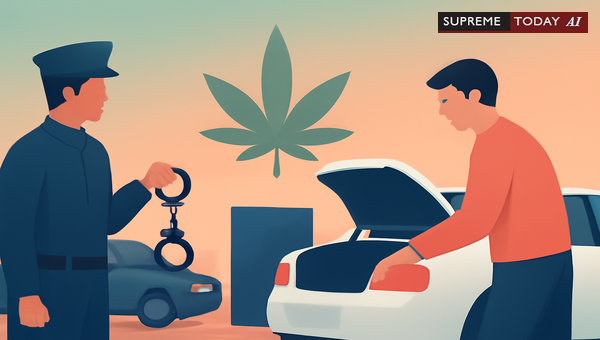
Imagine driving your car when police stop you, find 10 grams of ganja, seize your vehicle, and leave you stranded. A common worry arises: once the case is disposed of by remitting a fine, can the car be released back to you? This scenario plays out frequently under India's Narcotic Drugs and Psychotropic Substances (NDPS) Act, , especially with small quantities. While laws prioritize public safety, they also provide pathways for vehicle owners to reclaim their property under specific conditions.
This blog breaks down the legal framework, key principles, and practical steps based on judicial precedents. Note: This is general information, not legal advice. Consult a qualified lawyer for your specific case.
Understanding Vehicle in Ganja Cases
When police seize a vehicle during a ganja possession incident—like 10 grams found on the driver—they act under NDPS Act provisions to prevent further misuse. However, does not mean automatic or permanent . The law emphasizes the case's final outcome before deciding on forfeiture. As per legal documents, the of the vehicle for small quantities of ganja does not automatically lead to ; the law emphasizes the importance of the case's final outcome before is ordered 2025 1 Supreme 275.
In practice:- secures evidence and deters crime.- typically follows or , not immediately 2025 1 Supreme 275.- Small quantities (under commercial limits) often lead to fines rather than harsh penalties.
Related cases highlight procedural scrutiny. For instance, in a case involving ganja transport in a car, courts examined compliance with guidelines under , noting independent witnesses and sampling 2023 0 Supreme(Mad) 2442. Such details can influence later release decisions.
Legal Principles: vs.
Key Distinction
Under NDPS rules, vehicles are tools seized incidentally, not primary contraband. generally occurs after the final disposal of the case, typically upon , , or of the accused2025 1 Supreme 275. Prior to that, release mechanisms exist.
Release on Fine Payment
The law explicitly allows owners to in lieu of , which is non-refundable and payable after . The law permits the release of seized vehicles on payment of a fine in lieu of , provided the case has been disposed of and the owner/accused remits the fine 2024 0 Supreme(Pat) 132. This provision balances enforcement with property rights.
Authorities may release the vehicle even during pendency if conditions are met, but post-disposal strengthens claims 2024 0 Supreme(Pat) 132.
Impact of on Vehicle Release
Once disposed—via , with fine, or —the path clears. The vehicle can be released upon payment of the prescribed fine, subject to authority conditions. Once the case is disposed of—whether by , , or —the vehicle can be released upon payment of the prescribed fine. This is supported by the provisions that after , the owner has the opportunity to pay the fine and reclaim the vehicle 2015 0 Supreme(Ker) 725.
- Timeline: Remit fine within stipulated period (often 30-60 days post-notice).
- Process: File application with seizing authority or court, prove ownership, pay fine.
- Conditions: No prior connivance, reasonable precautions taken 2025 1 Supreme 275.
In cases like 10 grams, outcomes favor release, unlike large hauls (e.g., 189.5 kg ganja from a car leading to denials initially) 2024 Supreme(Online)(KER) 7418.
Applying to Your Scenario: 10 Grams Ganja While Driving
For 10 grams found on the accused driving the car:- valid if procedures followed (e.g., witnesses, sampling) 2023 0 Supreme(Mad) 2442.- No auto-; awaits case end 2025 1 Supreme 275.- Post-disposal release likely via fine: In the scenario where 10 grams of ganja is found from an accused while driving a car, the law indicates that the vehicle's does not automatically result in . If the case is disposed of—say, by or —the accused or owner can remit the fine... and the vehicle can be released 2015 0 Supreme(Ker) 725.
Courts stress owner non-involvement. If you're the registered owner without knowledge, release is more probable 2016 0 Supreme(Ori) 1139.
Exceptions and Limitations
Not all cases guarantee release:- with large quantities: Higher risk (e.g., 204g MDMA + 33g ganja in car dickey) 2025 0 Supreme(Ker) 212.- Procedural flaws: Tampering doubts led to acquittals, aiding release (e.g., sample seals not handed over properly) 2018 0 Supreme(Bom) 2770.- Owner connivance: Stricter if proven (e.g., hiring for transport) 2023 0 Supreme(Mad) 2442.- standard: Vehicle typically returned without fine 2025 1 Supreme 275.
Prolonged custody without trial may allow interim , indirectly aiding release claims, as courts relax rigors for rights 2024 Supreme(Online)(KER) 7418 2025 0 Supreme(Ker) 212.
Insights from Related NDPS Vehicle Cases
Judicial trends reinforce flexibility:- denials in transport cases: Large ganja (189.5kg) from car tied accused via documents, but no direct vehicle release discussion 2024 Supreme(Online)(Ker) 75896.- Acquittals on evidence gaps: No proved (e.g., 10+kg ganja bags), leading to full 2018 0 Supreme(Bom) 2770.- grants post-delay: Nearly 2 years custody without trial warrants release, applicable to vehicle owners 2024 Supreme(Online)(KER) 7418.- Non-owner acquittals: Stranger to seized car not liable 2016 0 Supreme(Ori) 1139.
These underscore: + + post-disposal fine = strong release case.
Practical Recommendations
To maximize chances:1. Document ownership immediately.2. Monitor ; apply promptly post-judgment.3. Pay fine timely—reasonable per rules 2015 0 Supreme(Ker) 725.4. Challenge irregularities (e.g., search compliance under ) 2023 0 Supreme(Mad) 2442.5. Seek if hardship proven.
Authorities must issue notices, hear objections before 2024 0 Supreme(Pat) 132.
Conclusion and Key Takeaways
Yes, generally, your seized car can be released after by remitting the fine, especially for small ganja quantities like 10 grams. Provisions under NDPS and related rules prioritize case outcomes over blanket forfeitures 2025 1 Supreme 275 2024 0 Supreme(Pat) 132 2015 0 Supreme(Ker) 725. While exceptions exist for grave cases, judicial precedents favor balanced justice.
Key Takeaways:- ≠ .- Fine payment post-disposal is key.- Small quantities tilt toward release.- Always comply with procedures.
Stay informed, act swiftly, and consult professionals. Drive safe and legal!
References:1. 2025 1 Supreme 2752. 2024 0 Supreme(Pat) 1323. 2015 0 Supreme(Ker) 7254. Additional contexts: 2023 0 Supreme(Mad) 2442, 2024 Supreme(Online)(KER) 7418, 2025 0 Supreme(Ker) 212, 2018 0 Supreme(Bom) 2770, 2016 0 Supreme(Ori) 1139
#NDPSAct, #GanjaSeizure, #VehicleRelease












