


Does No Light Mention Doom Night Assault Cases?
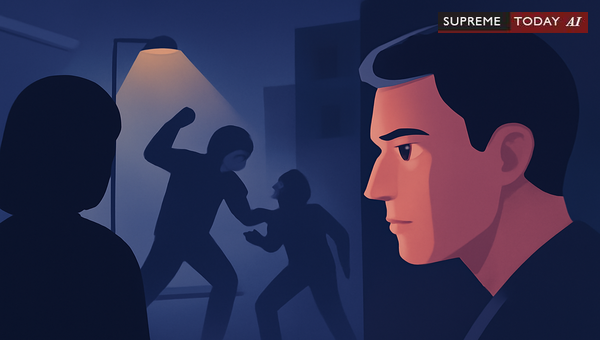
Imagine a brutal attack unfolding in the dead of night nearby, with a victim succumbing to fatal injuries. Witnesses claim to have seen the perpetrators clearly, but the record is silent on lighting conditions. Does this omission undermine the ? In , particularly in India, the question Person Nearby Attacked a Person at Night Presence of Light is Not Mentioned Fatal strikes at the heart of eyewitness reliability.
This blog delves into where courts have repeatedly scrutinized the role of lighting in nighttime incidents. Generally, the absence of proven illumination can cast significant doubt on identifications, potentially swaying outcomes in assault cases—even fatal ones. We'll examine key principles, landmark cases, and practical takeaways, drawing from established judgments.
The Critical Role of Lighting in Eyewitness Testimony
Eyewitness accounts form the backbone of many prosecutions, but their strength hinges on visibility. Courts have long held that nighttime scenes demand clear evidence of adequate light for credible identification. Without it, testimony becomes artificial and difficult to believe.
In one pivotal case, the incident occurred at 11:30 pm inside a quarry with no street lights on any side. Witnesses claimed torchlight aided their view, but the court was skeptical: The occurrence in this case took place during the night... No street lights were available on the four sides of the quarry... The evidence tendered by the witnesses is artificial and difficult to believe. 2020 0 Supreme(Ker) 461
The judgment further questioned the torchlight narrative: The source of light proposed by the prosecution for the witnesses to see the occurrence is material in this case... when PW1 was examined before court, he stated that before proceeding from his house, his mother had entrusted a handy torch with him and he had witnessed the occurrence with the help of the handy torch. 2020 0 Supreme(Ker) 461
Ultimately, the court concluded: Having taken into consideration of the fact that no street lights were available in and around the quarry and that the alleged occurrence took place inside the quarry, the prosecution adduced evidence to show that they had witnessed the occurrence with the aid of torch lights... it is not safe to rely on their version that they had seen the accused with particular weapons in their hands. 2020 0 Supreme(Ker) 461
This underscores a core principle: Witnesses' ability to see clearly at night depends heavily on sufficient light. Courts recognize that darkness or inadequate lighting renders identification unreliable. 2026 0 Supreme(Ker) 628
Contrasting Cases: When Light is Disputed or Absent
Not all nighttime cases falter on lighting alone, but discrepancies amplify doubts. In another matter, witnesses alleged street lights illuminated the scene, yet defense evidence contradicted this: The witnesses stated that there was street light when the occurrence took place. However, the evidence of DW 4 was that there was no street light... the respondent's case was that the incident was in darkness as there was no street light at that time. 1970 0 Supreme(Ker) 218
Such conflicts often tip the scales. For instance, in a midnight occurrence, identification via torchlight was dismissed: The occurrence is said to be of mid night, so it is not possible for a person to identify the person flashing torch on him in the dark night as darkness prevails behind the lit torch and the person litting the torch cannot be identified in such darkness. 2017 0 Supreme(Pat) 1113
Similarly, in a case at 8:15 pm under cement sheets 10 feet from the road with no nearby light, prior acquaintance was absent, weakening claims: From evidence of this witness it is transpired that, incident was taken place at 0815 pm in the night and there was no light in nearby and accused person Mehbub Ghadiyali fired on Chinabhai. 2018 0 Supreme(Guj) 934
Even in scenarios with some light, like traffic or road lamps, courts probe consistency: In his cross-examination complainant has said that although the incident occurred at night but it was not total dark and he identified the person involved in the incident in traffic and road light. 2017 0 Supreme(Raj) 849
Real-World Application: The Souharda Nagar Fatal Attack
Consider a fatal nighttime assault in Souharda Nagar around 9 p.m., where a group of 5-6 attackers targeted victim Shameer, who later died. Witnesses described the scene but initially omitted details on weapons or precise lighting. 2024 0 Supreme(Ker) 694 2024 Supreme(Online)(KER) 14602 2024 Supreme(Online)(KER) 14603 2024 Supreme(Online)(KER) 14601
Here, evidence of street lights, house lights, temple illumination, and moonlight supported identification, despite some inconsistencies in early statements: Several sources mention the presence of sufficient light at the scene, including street lights, house lights, and nearby temple lights, as well as moonlight. However, there are inconsistencies: some witnesses did not mention the presence of light in their initial statements. 2024 0 Supreme(Ker) 694 2024 Supreme(Online)(KER) 14602 2024 Supreme(Online)(KER) 14603 2024 Supreme(Online)(KER) 14601 2022 Supreme(Online)(KER) 58401 2022 Supreme(Online)(KER) 3737 2022 Supreme(Online)(Ker) 75314
The overall record affirmed adequate lighting, linking accused to the fatal attack. Yet, omissions like unmentioned electric posts highlighted vulnerabilities defense could exploit. 2022 Supreme(Online)(KER) 58401
In contrast, total darkness led to non-identification: Since it was night hours, there was no light and they could not identify the person. 2021 0 Supreme(Mad) 988
Exceptions: When Testimony Holds Despite Poor Light
Poor lighting doesn't automatically discredit witnesses. Courts may uphold convictions with corroboration:- Scientific evidence (e.g., forensics)- Weapons with unique marks- Prior enmity or motive- Multiple consistent testimonies
For example, even without exhaustive light details, identity was affirmed: Attorney General was that there is no doubt as to the identity of the appellant as the person who attacked the deceased... Apart from the mentioned sources of light, it was the evidence of PW-01 that there was a wedding function going on at a house... 2023 Supreme(SRI)(CA) 19
However, mere presence doesn't imply guilt: AIR 1965 SC 202 it has been held that mere presence of a person in an assembly does not make him member of an unless it is shown that he had committed or omitted to do something... 2023 0 Supreme(All) 1421
Strategic Recommendations for Litigants
- Prosecutors: Bolster cases by proving light sources via site plans, photos, or multiple witnesses. 2020 0 Supreme(Ker) 461
- Defense: Highlight unmentioned or disputed lighting to sow , especially in fatal nearby attacks. 2026 0 Supreme(Ker) 628
- Courts: Scrutinize visibility rigorously in nighttime claims.
Conclusion and Key Takeaways
In summary, when a person nearby attacked a person at night and presence of light is not mentioned in a fatal context, courts typically view eyewitness testimony with suspicion. Precedents like those in 2020 0 Supreme(Ker) 461 and 1970 0 Supreme(Ker) 218 illustrate that inadequate or unproven lighting can unravel prosecutions.
Key Takeaways:- Lighting is pivotal for nighttime ID credibility.- Absence of light mention = major defense ammunition.- Corroboration can salvage weak visual evidence.- Always document scene illumination thoroughly.
This post provides general insights based on public judgments and is not legal advice. Consult a qualified attorney for case-specific guidance.
References:1. 2020 0 Supreme(Ker) 461: Quarry nighttime assault, torchlight doubts.2. 2026 0 Supreme(Ker) 628: Lighting's role in credibility.3. 1970 0 Supreme(Ker) 218: Street light disputes.4. 2024 0 Supreme(Ker) 694, 2024 Supreme(Online)(KER) 14602, etc.: Souharda Nagar case details.
#NightAssaultLaw #EyewitnessCredibility #CriminalLighting















