Searching Case Laws & Precedent on Legal Query..!
Scanned Judgements…!



Searching Case Laws & Precedent on Legal Query..!
Scanned Judgements…!
Night-time Vision Challenges - Eye witnesses during night may have limited visibility, leading to discrepancies or doubts about their ability to clearly see the incident. The absence of adequate lighting, such as in the case of a motorcycle or in darkness, raises questions about the reliability of their observations. For example, in one case, it was doubted whether witnesses PW3 and PW5 could have had a clear view of the events due to poor lighting conditions ["2023 0 Supreme(Bom) 606"].
Credibility of Eye Witnesses - The reliability of eye witnesses is often scrutinized. Witnesses who are not present at the scene or whose presence is doubtful are not considered credible. The courts emphasize assessing the quality and consistency of their testimonies rather than quantity. Witnesses like PW1 and PW2 were deemed not to be eye witnesses after thorough evaluation, affecting their evidentiary value ["2023 0 Supreme(Jhk) 856"], ["2024 0 Supreme(Jhk) 999"].
Discrepancies and Reliability - Eye witnesses may make discrepancies when examined at length, especially in details like timing or sequence. However, corroborative evidence, such as injury reports or other witnesses, can help resolve these discrepancies. The overall ring of truth in their testimony is crucial. For example, PW1's injury report supported her claim of being an injured eye witness, and PW12's testimony helped clarify inconsistencies ["2024 0 Supreme(Gau) 758"].
Single Eye Witnesses - Courts may convict based solely on a reliable single eye witness if their testimony is credible and consistent. The absence of motive or other corroborative witnesses does not necessarily undermine their testimony. The key is the witness's reliability, which can suffice for conviction if established convincingly ["2025 0 Supreme(All) 2354"].
Visibility Conditions and Witness Testimony - In some cases, witnesses testified about the incident occurring at night under extreme weather conditions, which could impair visibility. Despite this, their presence and testimonies were deemed credible if corroborated by other evidence or injuries sustained during the incident ["2024 0 Supreme(Gau) 758"], ["2024 0 Supreme(Gau) 832"].
Presence and Identification - The presence of witnesses at the scene and their ability to identify the accused is critical. Witnesses whose presence is doubtful or who cannot specify their observations are disbelieved. Conversely, witnesses who are present and provide consistent accounts are considered credible, even if their observations are limited by poor lighting or weather ["2024 0 Supreme(Jhk) 999"], ["2025 0 Supreme(All) 2575"].
Analysis and Conclusion:The vision of eye witnesses during night relies heavily on lighting conditions, witness reliability, and corroborative evidence. While night conditions can impair visibility, courts assess the credibility of witnesses based on consistency, presence, and supporting evidence. Reliable witnesses, even if few, can form the basis for conviction, provided their testimonies are corroborated or internally consistent. Discrepancies are often considered but do not necessarily negate the testimony if the overall account appears truthful and credible ["2023 0 Supreme(Bom) 606"], ["2024 0 Supreme(Gau) 758"], ["2025 0 Supreme(All) 2354"].
References:- 2023 0 Supreme(Bom) 606- 2023 0 Supreme(Jhk) 856- 2024 0 Supreme(Gau) 832- 2024 Supreme(Online)(CAT) 9675- 2025 0 Supreme(All) 2354- 2024 0 Supreme(Gau) 758- 2025 0 Supreme(All) 2575- 2024 0 Supreme(Guj) 2041- 2024 0 Supreme(J&K) 254
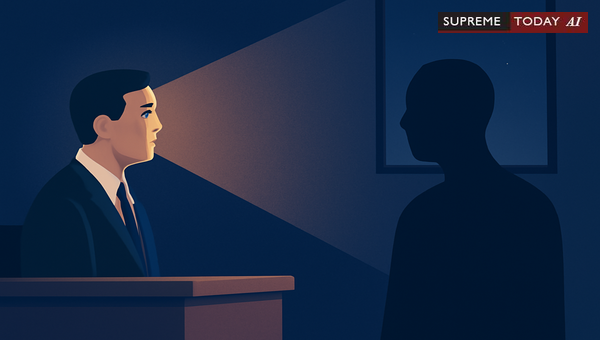
In criminal trials, often forms the backbone of prosecutions, especially in nighttime incidents. But what happens when a witness claims to have seen critical details in the dark without mentioning any light source? Can courts presume the presence of light to validate such testimony? This question—Whether Presence of Light can be Presumed if Witness Fail to Depose about Source of Light at Night—raises significant concerns about evidence reliability and judicial scrutiny.
Nighttime visibility is notoriously tricky. Poor lighting can impair identification, yet witnesses sometimes provide vivid accounts without explaining how they saw clearly. Courts typically demand clarity on visibility conditions to assess credibility. This post delves into key legal principles, precedents, and practical considerations, drawing from landmark cases to guide understanding.
hinges on vision quality during the event. Courts closely examine a witness's eyesight, particularly in low-light scenarios, to gauge identification accuracy.
For example, in one case, a witness near her residence affirmed good vision despite darkness, bolstering her testimony 2022 0 Supreme(Cal) 938. However, impaired vision or unmentioned lighting often leads to skepticism.
Identifying perpetrators at night poses inherent difficulties. The in ruled that spotting assailants in a mob assault under insufficient light was improbable, given their positioning 2021 0 Supreme(Raj) 609.
Similarly, in another instance, the occurrence at made assemblage of multiple eyewitnesses at one spot doubtful, with their statements appearing stereotypical 2016 0 Supreme(Jhk) 489. Courts question such testimonies lacking visibility details.
Familiarity with the accused can mitigate poor lighting. Witnesses knowing the perpetrators may recognize them via voice, gait, or build. Cases illustrate this: even in dim conditions, prior acquaintance enabled reliable IDs 2023 0 Supreme(Del) 5274 2008 3 Supreme 629.
Yet, courts remain cautious. In a gang rape case, a witness omitted details about an accused lighting a matchstick for observation, undermining her account 2014 0 Supreme(Bom) 2065. She denied sleeping in a hut beforehand but was contradicted by prior statements, highlighting inconsistencies.
Testimony falters if witnesses couldn't plausibly observe. One case dismissed a purported eyewitness who admitted sleeping after dinner at , waking at , while the incident occurred around 2018 0 Supreme(Jhk) 199. This witness is not at all the eye-witness to the occurrence.
Judicial panels have acquitted based on unreliable night testimonies with unnatural conduct or improvements 2018 0 Supreme(Jhk) 199. must be reliable and trustworthy, and any material improvements or unnatural conduct may render it untrustworthy.
Courts hesitate to convict on solitary nighttime eyewitnesses without 1997 4 Supreme 278 1993 0 Supreme(SC) 708. In darkness, additional evidence is vital.
Circumstantial proof fills gaps where direct testimony lacks. One ruling relied on it absent eyewitnesses 2022 0 Supreme(All) 774. applies only exceptionally, like crimes in private bedrooms at night, but prosecution bears primary proof burden 2012 0 Supreme(All) 1089. Prosecution is not absolved from its duty of discharging—Its general or primary burden of proving—Case beyond .
A trial judge's interference, like directing a witness not to remove goggles amid eye issues, prejudices cases, as it shields vision scrutiny 2014 0 Supreme(Del) 1026. Judge was not expected to ask the witness not to remove his goggles which apparently he was not wearing due to eye infection or any eye ailment.
Here's a breakdown of pivotal elements:
In a murder appeal, unreliable testimonies led to acquittal despite medical evidence, as witnesses improved statements 2018 0 Supreme(Jhk) 199.
To strengthen or challenge nighttime testimonies:
These steps align with judicial trends emphasizing caution.
Generally, courts do not presume light presence merely because a witness omits the source. Testimony must detail visibility conditions; otherwise, it risks rejection, especially without . Cases like Jagdish v. State of Haryana underscore this 2021 0 Supreme(Raj) 609.
Key Takeaways:- Vision and lighting are foundational to night eyewitness credibility.- Familiarity aids but doesn't override poor conditions.- Always seek corroborative evidence.- Solitary dark testimonies demand utmost scrutiny.
This post provides general insights based on precedents and is not legal advice. Consult a qualified attorney for case-specific guidance.
References: 2022 0 Supreme(Cal) 938 2021 0 Supreme(Raj) 609 2023 0 Supreme(Del) 5274 2008 3 Supreme 629 2022 0 Supreme(All) 774 1997 4 Supreme 278 1993 0 Supreme(SC) 708 2018 0 Supreme(Jhk) 199 2016 0 Supreme(Jhk) 489 2014 0 Supreme(Bom) 2065 2014 0 Supreme(Del) 1026 2012 0 Supreme(All) 1089
#EyewitnessReliability, #NightTestimony, #CriminalLawIndia


(III) When eye-witness is examined at length it is quite possible for him to make some discrepancies. ... The sequence of events narrated by eye witnesses clearly suggest that accused persons had come in the night with common intention for giving effect to the threat given by Dastgir to deceased. ... He pointed out that there was no source of light and it being night time, according to him, it is doubtfu....
![Hari Hessa VS State of Bihar [Now Jharkhand] - 2023 Supreme(Jhk) 856](https://supremetoday-s3.b-cdn.net/Jharkhand_small_3.png)
to be an eye witness. ... seen that he cannot be treated to be eye witness. ... , P.W. 1 and P.W. 2, have been treated not to be an eye witness by the trial Court. ... Therefore, the learned trial Court while considering the testimony of P.W. 1 and P.W. 2 not to be an eye witness there is no infirmity to that effect that once it has been considered to ....

When eye-witness is examined at length it is quite possible for him to make some discrepancies. ... The decisions in Anil Phukan [supra] and Lallu Manjhi [supra] are on the point of acceptability or otherwise of the evidence of the solitary eye-witness. ... The decision in Khalil Khan [supra] is on the point of acceptability or otherwise of a dying declaration implicating the appellant therein as the assailant in the absen....

Applicant was disqualified as his vision in the right eye is 6/18 and in the left eye is 6/9 and there was also a tattoo on right arm. xxx xxx xxx 10. ... His medical examination was held on 17.04.2018 and for reasons of eye sight he was medically disqualified as he had undergone LASIK surgery to correct his vision. ... extreme weather conditions during day as well as night.” ... in extr....

.-7 who is alleged to be an eye witness and daughter of both the deceased. As per the appellants, the P.W.-7 cannot be said to be an eye witness as her presence at the place of occurrence is doubtful. ... It is the quality of the witness which should be taken into account and not the quantity. Even on the basis of testimony of the sole-eye witness, if the eye....

So long as the single eye-witness is a wholly reliable witness the courts have no difficulty in basing conviction on his testimony alone. ... This case primarily hinges on the testimony of a single eye witness Ajoy PW3. Indeed, conviction can be based on the testimony of a single eye-witness and there is no rule of law or evidence which says to the contrary provided the....

When eye-witness is examined at length it is quite possible for him to make some discrepancies. ... This witness had deposed that the incident took place at about 8:00 p.m. in the night. Basti people came to her house and the accused persons left. She had stated that the accused persons had killed her husband in the courtyard of her house. ... Moreover, the injury report of PW-1 is available on record which also goes to pr....

Hem Lata and Others (supra), has held that in absence of there being any other independent witness and also failure of the claimants to examine an injured eye witness, the appeal deserves to be allowed because the Court found that the eye witness P.W.2 could not show as to how this witness ... Therefore once an eye witness has been produced,who proved ....

The learned Sessions Court, in the impugned judgment and order, has discarded the testimony of the injured eye witness as well as the independent eye witness. ... Further, the injured eye witness could not depose or could not answer properly with regard to the injuries on the accused persons. However, this aspect would not create any doubt on the presence of the injured eye#HL_....

The witness cannot be termed as eye witness to the occurrence though in the challan he has been cited as eye witness. The trial court has also concluded that PW-Puran Chand cannot be said to have seen the accused committing the crime. This witness had died prior to the present trial. ... The witness cannot be termed as eye witness to ....

As regards P.W.-3 Dashrath Hansda, it is pointed out by the learned counsel that though he has also tried to become the eye-witness to the occurrence, but he has admitted in his cross-examination that he had slept after taking his meals in his house at 07:00 P.M., and when he woke up on the noise, it was 10:00 P.M. in the night. The occurrence had taken place at about 07:00 to 07:30 P.M. in the night and as such, this witness is not at all the eye-witness to the occurrence. L....
The knife, which was seized, has not been produced as evidence before the court. The occurrence took place during night at about 10 P.M. and, therefore, assemblage of all the eye witnesses at one point of time to witness the occurrence appears doubtful. 1, 2, 3 and 7 have given almost stereo type statement, which could not be possible.

Importantly, this witness does not state anything about the accused no.1 lighting the matchstick and the witness getting an opportunity of observing the accused in the glow of the matchstick. She has denied the suggestion that on reaching the hut they slept in the hut for some time and thereafter went to the police station. She was confronted with the portion of her previous statement where she had admitted that they had slept in the hut and thereafter gone to the police station. In ....

Even the learned APP states that such direction to the witness is bound to cause prejudice to the prosecution case itself as the accused may, at the end of trial take undue advantage. For instance, Judge was not expected to ask the witness not to remove his goggles which apparently he was not wearing due to eye infection or any eye ailment and direct him not to answer any question put up by the counsel on that aspect. Counsel wanted to see whether witness has perfect eye-sight to be ....

The aid of Section 106 of the Act can be available only in those exceptional cases where it would be well neigh impossible for the prosecution to prove certain facts which are especially in knowledge of the accused. The Supreme Court has considered the ingredients and the applicability of the Section 106 of the Evidence Act in series of decisions. For illustration, if a crime is committed in the bed room of a person during night, then there cannot be any possibility for the presence ....


An indispensable Tool for Legal Professionals, Endorsed by Various High Court and Judicial Officers
Please visit our Training & Support
Center or Contact Us for assistance

Scan Me!
India’s Legal research and Law Firm App, Download now!


For Daily Legal Updates, Join us on :



 Back to top


