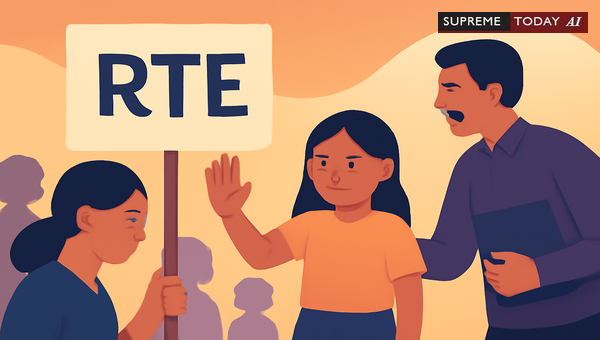
No Harassment for RTE Students: Legal Guide
Introduction
In India's education landscape, the Right of Children to Free and Compulsory Education Act, 2009 (RTE Act) stands as a cornerstone for ensuring equitable access to quality education. Yet, a pressing concern arises: Not to Harass Students Studying under Right to Education Act. Parents, educators, and institutions often grapple with issues like teacher strikes, fee disputes, and uniform mandates that risk violating students' rights. This blog explores the legal safeguards against harassment, drawing from constitutional principles, court judgments, and official guidelines. While this provides general insights, it is not legal advice—consult a qualified lawyer for specific cases.
The RTE Act mandates free and compulsory education for children aged 6-14, reinforcing Article 21 of the Indian Constitution. Courts have consistently prioritized students' uninterrupted learning over disruptions, emphasizing no harassment or coercion. Let's delve into the key legal principles.
Right to Education as a Fundamental Right
The foundation lies in the Supreme Court's landmark ruling in J. P. Unni Krishnan v. State of Andhra Pradesh (1993) 1 SCC 642, which recognized education as a fundamental right under Article 21. The RTE Act operationalizes this by requiring free education in neighborhood schools. Disruptions like teacher strikes undermine this right, as courts have noted that teachers' illegal strikes are viewed as a violation of students' right to education RAVINDRA KUMAR, ADVOCATE VS STATE OF UTTAR PRADESH - Allahabad (1998).
Students under RTE, especially from disadvantaged backgrounds, deserve protection. For instance, institutions admitting poor students under the Act must ensure seamless operations without victimization Pampapathi S. Karamadi Advocate VS State of Karnataka - 2019 Supreme(Kar) 2270 - 2019 0 Supreme(Kar) 2270. The Act's focus is clear: The right of education under the Right to Education Act is not to protect the teachers but to grant education to the students. If he is to study, he is entitled to the best possible teacher to teach him Saurabh Singh Baghel VS State of Madhya Pradesh - 2018 Supreme(MP) 455 - 2018 0 Supreme(MP) 455Saurabh Singh Baghel VS State of M. P. - 2018 Supreme(MP) 603 - 2018 0 Supreme(MP) 603.
Impact of Teacher Strikes and Disruptions
Teacher strikes, while addressing grievances, cannot justify halting classes. Courts stress continuity: ensuring the continuity of education during such disruptions RAVINDRA KUMAR, ADVOCATE VS STATE OF UTTAR PRADESH - Allahabad (1998). Withholding salaries for non-performance is permissible, but harassment of students is not. The state must intervene to maintain classes, preventing any spillover effects on learners.
In unprecedented situations like pandemics, governments should bear online education costs for RTE students in private schools: the State Government should bear all the expenses to be incurred on online education of all the students studying in private schools Sunil Samdaria VS State Government of Rajasthan - 2020 Supreme(Raj) 646 - 2020 0 Supreme(Raj) 646. This underscores prioritizing student access over administrative disputes.
Prohibition of Harassment and Coercion
Harassment—mental, physical, or otherwise—is strictly prohibited. The RTE Act and judgments affirm: children should not be subjected to harassment or victimization, and their right to education must be protected at all costs State of Tamil Nadu VS All India Private Schools Legal Protection Society - Madras (2024)Principal Jawahar English Medium School, Pathirappally VS Simi A. C. - Kerala (2014). This extends to fee-related pressures, where schools must avoid stigmatization or coercion.
Key guidelines include:- No harassment over fees: Circulars prohibit schools from harassing students or guardians: schools should not harass students over fees or other issues Manager Kadambur Higher Secondary School, Edakkad VS Kerala State Commission for Protection of Child Rights Sreeganesh - KeralaVirander Kumar Sharma Punj VS Government of NCT of Delhi - Delhi. Actions like forcing payments can constitute mental harassment Jyeshtha Acharya K.T. vs State Of Karnataka, Rep. By Its Principal Secretary Karnataka State Department Of School Education And Literacy - KarnatakaMaheen Showkat (Minor) S/o Late Mohammad Yousef Thakur VS Union Territory of Jammu and Kashmir - Jammu and Kashmir.- Fee reimbursement: States reimburse 25% seats for RTE students, ensuring no denial of access Sunil Samdaria VS State Government of Rajasthan - 2020 Supreme(Raj) 646 - 2020 0 Supreme(Raj) 646.- Admission without barriers: Transfer Certificates aren't mandatory, and fee disputes shouldn't block entry State of Tamil Nadu VS All India Private Schools Legal Protection Society - Madras (2024).
State and Institutional Responsibilities
The onus is on states and schools to safeguard rights:- Ensure smooth classes and safety during strikes RAVINDRA KUMAR, ADVOCATE VS STATE OF UTTAR PRADESH - Allahabad (1998).- Prevent illegal practices like mandatory uniforms: Uniform is not mandatory for students studying in Pre University college under Government/Pre University Education Department/Education Act Aishat Shifa VS State of Karnataka - 2022 Supreme(SC) 1043 - 2022 0 Supreme(SC) 1043.- Promote equity via Section 12(1)(c) for disadvantaged children, avoiding discrimination Huzaifa Khan through their Father Quayum Khan vs State of U.P. - Allahabad.
Private schools aren't obligated to admit non-paying students but must follow law without harassment Master Prabhnoor Singh Virdi (Minor Son) Through Father Karamjeet Singh Virdi (Father) VS Indian School - DelhiM.K.SURESH vs THE SECRETARY TO GOVERNMENT - Madras. Curriculum uniformity, like prescribed textbooks, supports RTE goals without chaos J&K Private Schools United Front VS UT of J&K - Jammu and Kashmir.
Limitations, Exceptions, and Balanced Rights
Disciplinary actions against teachers must be lawful and proportionate, without student fallout. Courts dismiss disproportionate petitions, like evictions violating rights Harish Chandra VS Lt. Governor - Delhi (2017). Balancing occurs: teachers' rights vs. students', but education prevails.
Authorities enforce via circulars, ensuring no illegal fee collection or harassment Manager Kadambur Higher Secondary School, Edakkad VS Kerala State Commission for Protection of Child Rights Sreeganesh - KeralaVirander Kumar Sharma Punj VS Government of NCT of Delhi - Delhi. Vulnerable students get special provisions for a level playing field Huzaifa Khan through their Father Quayum Khan vs State of U.P. - Allahabad.
Key Takeaways and Recommendations
- Prioritize students: Refrain from harassment during strikes, fee issues, or mandates—focus on RTE compliance.
- Lawful actions only: Disciplinary measures shouldn't infringe fundamental rights.
- Seek enforcement: Report violations; states must protect continuity and access.
- For RTE students: Free education means no coercion over uniforms, fees, or disruptions.
In summary, the RTE Act and judiciary robustly protect students from harassment, ensuring education remains a right, not a battleground. By upholding these principles, India advances inclusive learning. For tailored advice, reach out to legal experts.
References:- (1993) 1 SCC 642- RAVINDRA KUMAR, ADVOCATE VS STATE OF UTTAR PRADESH - Allahabad (1998)State of Tamil Nadu VS All India Private Schools Legal Protection Society - Madras (2024)Principal Jawahar English Medium School, Pathirappally VS Simi A. C. - Kerala (2014)Aishat Shifa VS State of Karnataka - 2022 Supreme(SC) 1043 - 2022 0 Supreme(SC) 1043Sunil Samdaria VS State Government of Rajasthan - 2020 Supreme(Raj) 646 - 2020 0 Supreme(Raj) 646Pampapathi S. Karamadi Advocate VS State of Karnataka - 2019 Supreme(Kar) 2270 - 2019 0 Supreme(Kar) 2270Saurabh Singh Baghel VS State of Madhya Pradesh - 2018 Supreme(MP) 455 - 2018 0 Supreme(MP) 455Saurabh Singh Baghel VS State of M. P. - 2018 Supreme(MP) 603 - 2018 0 Supreme(MP) 603Manager Kadambur Higher Secondary School, Edakkad VS Kerala State Commission for Protection of Child Rights Sreeganesh - KeralaVirander Kumar Sharma Punj VS Government of NCT of Delhi - DelhiJyeshtha Acharya K.T. vs State Of Karnataka, Rep. By Its Principal Secretary Karnataka State Department Of School Education And Literacy - KarnatakaMaheen Showkat (Minor) S/o Late Mohammad Yousef Thakur VS Union Territory of Jammu and Kashmir - Jammu and KashmirHuzaifa Khan through their Father Quayum Khan vs State of U.P. - AllahabadJ&K Private Schools United Front VS UT of J&K - Jammu and KashmirMaster Prabhnoor Singh Virdi (Minor Son) Through Father Karamjeet Singh Virdi (Father) VS Indian School - DelhiM.K.SURESH vs THE SECRETARY TO GOVERNMENT - MadrasHarish Chandra VS Lt. Governor - Delhi (2017)
#RTEAct, #StudentRights, #NoHarassment