


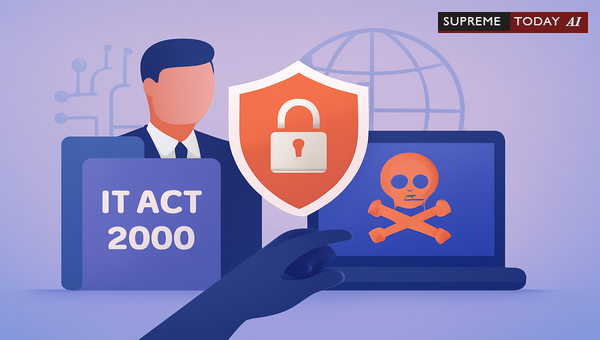
Why the IT Act is Often Overlooked in Cyber Crime Cases in India
In the digital age, cyber crimes are rampant, from and data tampering to online fraud. Yet, a pressing question arises: Non Invocation of IT Act in Cyber Crime Cases. Why do prosecutors and police frequently bypass the (IT Act)—India's primary law for cyber offenses—in favor of general criminal statutes like the (IPC)? This blog delves into the legal implications, court rulings, exceptions, and best practices, drawing from judicial precedents and expert analysis. Note: This is general information, not legal advice; consult a qualified lawyer for specific cases.
The Core Issue: Primary Legislation for Cyber Crimes
The IT Act, 2000 (amended in 2008), stands as the cornerstone for tackling cyber crimes in India. Its preamble aims to recognize and facilitate while criminalizing offenses in Chapter XI (Sections 65-78). Provisions like Section 66 explicitly target computer-related offenses such as and tampering with electronic data. 2024 7 Supreme 129 2018 0 Supreme(Mad) 2648
Courts have repeatedly stressed that cyber crimes, involving computer systems and digital activities, should primarily fall under the IT Act. Failure to invoke it can weaken prosecutions, as general laws like the IPC lack tailored provisions for electronic evidence and . The has underscored this, noting that offenses like or misuse of demand IT Act application unless other statutes better fit. 2022 0 Supreme(Mad) 367
Court Observations on Non-Invocation
Judicial scrutiny highlights the pitfalls of ignoring the IT Act. In one key ruling, the observed that invoking Section 45 () in cyber cases is misplaced, urging reliance on specific sections for or tampering. This absence risks an inadequate legal response, as the IT Act is designed for cyber-specific enforcement. 2022 0 Supreme(Mad) 367
Similarly, courts note that Section 66A (struck down for overbreadth and free speech violations) doesn't undermine the Act's overall validity. 2022 0 Supreme(Mad) 367 Other precedents affirm: offences relating to cyber activities, such as , tampering, and electronic communication, are covered under specific provisions of the IT Act, and that invocation of these provisions is essential. 2024 0 Supreme(Raj) 1601
Overlap with IPC and When IT Act Takes Precedence
Cyber crimes often intersect with IPC sections like 420 (cheating) or 406 (criminal breach of trust). For instance, cases registered under IPC 420 alongside IT Act Sections 66A and 66D show combined invocation. 2023 0 Supreme(MP) 726 However, courts emphasize the IT Act's superiority for digital elements: failure to invoke IT Act can render charges baseless. 2018 0 Supreme(Mad) 2648
From other cases, FIRs include both: Crime No.6/2020 under IPC 403, 406, etc., and IT Act Sections 62 and 72 for dishonest misappropriation via digital means. 2020 0 Supreme(Kar) 1284 Yet, non-invocation persists, potentially due to familiarity with IPC or oversight.
Exceptions and Limitations
Not every cyber-related case mandates the IT Act:- Physical or non-digital elements: If involving violence (IPC 370, 365) without electronic misuse, IPC may suffice. 2024 0 Supreme(AP) 729- Non-cyber scope: Offenses outside electronic data fall beyond IT Act purview.- Struck-down provisions: Avoid overbroad sections like 66A.- Non-: Some IT Act/IT-related crimes (e.g., phone tapping) limit arrests without warrants. 2023 0 Supreme(Del) 2769
Jurisdictional Challenges in Cyber Crime Probes
Jurisdiction complicates invocation. Cyber crimes span states, prompting disputes. Local police (Inspector rank or above) can investigate IT Act cases, not just specialized Cyber Crime Stations. 2025 0 Supreme(Ori) 110 Courts uphold: investigations proceed where the cause arises, but apply.
Examples abound: Cases from (with IT Act 66-F) or recovering ATM cards in multi-state frauds. 2024 0 Supreme(AP) 729 2020 0 Supreme(P&H) 1332 2020 0 Supreme(P&H) 1350 2020 0 Supreme(P&H) 1333 noted difficulties in cyber evidence but proceeded. 2025 Supreme(Online)(Jhk) 4308
Bail, Investigation, and Procedural Nuances
Many cases involve bail petitions. IT Act offenses like Sections 66 and 67 are often . Courts caution against presuming guilt from account balances; proof is key. 2025 Supreme(Online)(Kar) 38549 2023 0 Supreme(Ker) 686
Investigations via (NCCP) aid, but delays occur due to complexity. Partial under are filed when time-constrained. 2019 0 Supreme(All) 527 2023 0 Supreme(Ker) 686
Prosecutions blend IPC/IT Act, with courts scrutinizing procedures. 2024 0 Supreme(Telangana) 1057 2024 0 Supreme(Ker) 1031
Recommendations for Effective Prosecution
To address non-invocation:- Primary reliance on IT Act: Invoke for electronic misuse to bolster cases.- Training for enforcers: Ensure awareness of Sections 66, 72, etc.- Broad judicial interpretation: Courts should apply IT Act expansively.- Jurisdictional clarity: Leverage flexible rules for cross-border probes.
Prosecutors must prioritize IT Act for /digital fraud, strengthening enforcement. 2024 7 Supreme 129
Key Takeaways
- The IT Act is indispensable for cyber crimes; non-invocation undermines justice.
- Courts favor specific provisions over general ones. 2022 0 Supreme(Mad) 367
- Exceptions exist for non-digital aspects, but digital cores demand IT Act.
- Jurisdiction and procedures add layers, yet flexibility aids investigations.
In summary, while overlaps exist, sidelining the IT Act risks ineffective responses to India's cyber threats. Victims should flag IT Act applicability; authorities must adapt. For tailored advice, seek professional counsel.
References
- 2024 7 Supreme 129: IT Act scope and cyber crimes.
- 2018 0 Supreme(Mad) 2648: Invocation necessity.
- 2024 0 Supreme(Raj) 1601: Specific provisions.
- 2022 0 Supreme(Mad) 367: on misplaced invocations.
- Additional cases: 2024 0 Supreme(AP) 729, 2023 0 Supreme(MP) 726, 2025 Supreme(Online)(Jhk) 4308, 2020 0 Supreme(P&H) 1332, 2020 0 Supreme(Kar) 1284, 2025 0 Supreme(Ori) 110, etc.

















