


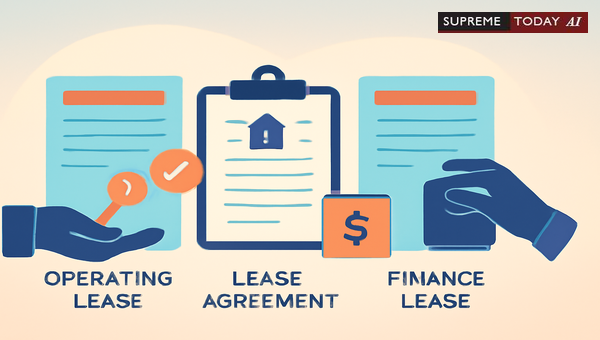
What Is an ? A Comprehensive Guide
In today's business landscape, leasing assets—from equipment and vehicles to real estate and aircraft—has become a cornerstone strategy for companies aiming to manage cash flow, access modern technology, and avoid large upfront capital expenditures. But not all leases are created equal. A common question arises: What is an ? Understanding this distinction is crucial for business owners, accountants, and legal professionals, as it impacts accounting treatment, tax obligations, and regulatory compliance.
This article dives deep into the definition, characteristics, judicial interpretations, and practical implications of operating leases, drawing from key legal documents and precedents. We'll explore how they differ from finance leases and provide actionable insights. Note: This is general information and not specific legal advice. Consult a qualified attorney for your situation.
Definition and Core Characteristics of an
An is fundamentally a rental agreement where the retains ownership, risks, and rewards of the leased asset, while the gains only the right to use the asset for a specified period without acquiring ownership or significant associated risks. 2010 7 Supreme 738
Key points include:- Ownership and risks (e.g., maintenance, insurance, obsolescence) remain with the .- The 's rights are limited to usage during the lease term.- Lease payments are treated as operating expenses in the 's profit and loss account.- Typically, the lease term is shorter than 75% of the asset's economic life, with no purchase option at the end. 2010 7 Supreme 738
As detailed in 2010 7 Supreme 738, In an agreement - (i) the ownership of the asset is retained by the during and after the lease term and in the agreement, there is no option or entitlement for purchasing the asset at the end of the lease period; (ii) lease term is less than 75% of the estimated economic life of the equipment; (iii) the has only the right to use the asset, the risk and reward/benefit of ownership remains with the and it is the who pays for the maintenance and insurance of the asset, there is no transfer of risk and reward of ownership to the ; (iv) payment of lease rent by the are considered as operating expenses and shown in his profit and loss account statement.
This structure allows lessees to benefit from asset use without the burdens of ownership, making it ideal for short-term needs like office equipment or vehicles.
vs. : Key Distinctions
The primary differentiator between an and a lies in the transfer of risks and rewards of ownership. In a , these substantially shift to the , who effectively becomes the economic owner—often with purchase options, full payout terms, or lease terms covering most of the asset's life. 2010 7 Supreme 738 2010 7 Supreme 738
Conversely, operating leases keep these with the . For instance:- No transfer of substantial risks/rewards to the .- Asset returns to the at term end in good condition (normal wear excepted). 2023 Supreme(Online)(Mad) 97760- handles maintenance and insurance.
Documents like 2010 7 Supreme 738 emphasize that in operating leases, ownership remains with the , unlike or finance arrangements where the assumes de facto ownership.
Judicial Clarifications on Operating Leases
Indian courts and tribunals have consistently upheld this distinction. The and others clarify that operating leases fall outside certain regulations, such as those for non-banking financial companies. 2010 7 Supreme 738
A key ruling states: do not cover . Thus, does not come within the scope of and the said Act impliedly excluded it. 2010 7 Supreme 738
Another precedent notes: The lease of a building or premises which is for the purpose of carrying on a business, where the owner retains ownership and risks, and the only has the right to use, is an . 1967 0 Supreme(SC) 358
Internationally, cases like [ - Supreme( - )(ZACC) 18 - Supreme( - )(ZACC) 18](https://supremetoday.ai/doc/judgement/SA_ZACC__ZACC_4) illustrate practical applications, where an for a service station allowed the (Rissik Street) to sell the business during the term, underscoring retained ownership rights: recognises Rissik Street’s right to sell the service station business at any time during the currency of the .
Accounting and Tax Treatment Under Standards
Accounting standards like classify leases based on risks and rewards. Operating leases keep the asset on the 's balance sheet, with rentals as expenses for the —no capitalization required. 2010 7 Supreme 738 1975 0 Supreme(SC) 270
Tax implications are significant: income may qualify for treaty benefits (e.g., ), avoiding taxation in certain jurisdictions if no ownership transfer occurs. However, tax authorities may re-characterize leases as finance if substance suggests otherwise, impacting deductions and benefits. 2025 Supreme(Online)(ITAT) 3230 2025 Supreme(Online)(ITAT) 3232
In aviation and equipment cases, end-of-lease returns have been scrutinized as implying principal repayment, potentially shifting classification. 2025 Supreme(Online)(ITAT) 3297 2025 Supreme(Online)(ITAT) 3300
Real-World Applications and Exceptions
Operating leases appear across sectors:- Retail/Petroleum: Renewal requests and operations post-expiry, with retaining control. 2024 Supreme(Online)(Mad) 76710- Transportation: Truck leases tied to operating agreements, where validity hinges on usage rights. 2022 Supreme(US)(ca7) 285- Industrial: Equipment returns in good condition, with payments as rentals. 2023 Supreme(Online)(Mad) 97760- Real Estate/Aviation: Subject to local laws like , with cancellation risks for non-compliance. 2025 Supreme(DUB)(DIFC) 4
Exceptions arise if clauses mimic ownership (e.g., cancellable terms, purchase options), requiring analysis. Always examine overall terms to confirm operating status.
Recommendations for Businesses
To navigate operating leases effectively:1. Draft Clearly: Specify retention of ownership, risks, maintenance, and no purchase option.2. Classify Properly: Base on risks/rewards for accounting/tax—avoid superficial labels.3. Review Substance: In ambiguities, assess who bears economic risks.4. Seek Renewals Compliantly: As in petroleum outlets, secure timely approvals to avoid disputes. 2024 Supreme(Online)(Mad) 76710
Key Takeaways
- Operating leases provide flexible asset use without ownership transfer, ideal for operational efficiency.
- Distinguish from finance leases via risks/rewards test, supported by and precedents like 2010 7 Supreme 738.
- Judicial views exclude them from certain financial regs, but tax re-characterization risks persist.
- Prevalent in diverse industries, with rights (e.g., sale during term) preserved. [ - Supreme( - )(ZACC) 18 - Supreme( - )(ZACC) 18](https://supremetoday.ai/doc/judgement/SA_ZACC__ZACC_4)
In summary, an empowers lessees with usage rights while safeguarding lessors' ownership interests. Proper classification ensures compliance and optimizes financial strategies. For tailored guidance, consult legal and tax experts.
Word count: 1028. References are illustrative of general principles from cited documents.
#OperatingLease, #LeaseLaw, #BusinessLeases


![Rissik Street One Stop CC t/a Rissik Street Engen and Another vs Engen Petroleum [2023] ZACC 4 - 2023 Supreme(SA)(ZACC) 18](https://cdn.supremetoday.ai/static/img/news-place-holder.png)












