Order 7 Rule 11 CPC: Can a Suit Be Rejected After Issues Are Framed?
In civil litigation in India, one common question arises: Can the latest judgment under Order 7 Rule 11 of the CPC prevent a suit from being rejected? Particularly, can a be rejected even after issues have been framed or during trial? This issue often confuses litigants and lawyers alike, as it touches on preventing frivolous suits while ensuring fair trials.
This blog post dives into the authoritative legal position, drawing from recent and landmark judgments. We'll clarify when courts can invoke Order 7 Rule 11 to reject a at any stage, supported by key precedents. Note: This is general information, not specific legal advice. Consult a qualified lawyer for your case.
What is Order 7 Rule 11 of the CPC?
, empowers courts to reject a on specific grounds, acting as a filter against . The relevant clauses include:
- Clause (a): does not disclose a .
- Clause (d): Suit appears barred by any law.
- Other grounds like insufficiently stamped plaints or duplicate suits.
The power is discretionary and meant to be exercised judiciously to save . Importantly, courts must read the entire meaningfully, not superficially or partially 2014 0 Supreme(Bom) 732.
Core Legal Principle: Rejection Possible at Any Stage
A pivotal finding from judicial precedents is that applications under Order 7 Rule 11 can be filed and entertained at any stage of the proceedings, including after issues are framed or even during trial1998 0 Supreme(Guj) 524. This is not automatic rejection but an independent remedy to curb .
Key points include:- Rejection is based solely on the 's averments, ignoring the defendant's or defenses 2016 0 Supreme(Pat) 1327.- Courts cannot reject if the discloses some , even if weak 2022 0 Supreme(Mad) 1552.- The objective is to prevent prolongation of untenable suits, as affirmed in rulings 1998 0 Supreme(Guj) 524.
For instance, the entire must be read meaningfully to determine whether it discloses a ; partial or formal readings are insufficient 2014 0 Supreme(Bom) 732.
Landmark Precedents
The has consistently upheld this stance:
- In , the Court clarified that powers under Order 7 Rule 11 are exercisable at any stage, post-framing of issues or during trial, to prevent 1998 0 Supreme(Guj) 524.
- and reinforced that if the is manifestly vexatious or lacks , rejection is permissible even after issues 1998 0 Supreme(Guj) 524.
These cases emphasize: Rejection under Order 7 Rule 11 is a discretionary and independent remedy that can be invoked at any stage of the suit, even after issues are framed 1998 0 Supreme(Guj) 524.
Latest Judicial Authority: Sushrut Arvind Dharmadhikari, J.
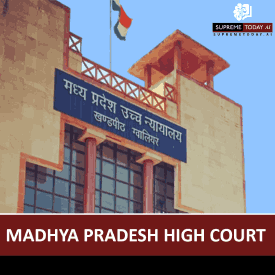
The most recent confirmation comes from Sushrut Arvind Dharmadhikari, J. in C.M.P. No. 48559/20222024 0 Supreme(MP) 8. This judgment explicitly states that an application under Order 7 Rule 11 can be entertained at any stage, including after issues are framed, if the lacks or is legally untenable.
It aligns with prior law, holding: an application under Order 7 Rule 11 can be rejected at any stage if the is found to be untenable or without , even after issues are framed 2024 0 Supreme(MP) 8. This evolves the stance against restricting such applications to initial stages.
Insights from Recent High Court Cases
Other judgments reinforce these principles:
- In a case, defendants filed under Order 7 Rule 11 alleging no per , highlighting the need for factual particulars in plaints 2024 Supreme(Online)(CG) 4502.
- noted applications filed even post-reply, underscoring timing flexibility 2024 Supreme(Online)(MP) 33753.
- stressed applies only if the suit is barred by law based on averments alone2021 Supreme(Online)(MAD) 49866.
Further, in a case on , the court refused rejection under Rule 11(d) as the disclosed a , limiting scrutiny to contents: the court's jurisdiction is limited to ascertaining whether a is shown in the 2016 0 Supreme(Pat) 1327.
challenges were dismissed as belated when raised late, post-evidence: The rejection of the under Order 7 Rule 11 CPC is a drastic step and can only be based on the contents of the 2016 0 Supreme(P&H) 820.
In contexts, pending suits pre-1996 were not barred, preventing rejection 2014 0 Supreme(All) 901. These illustrate judicious application.
Exceptions and Limitations
Not every application succeeds. Courts must avoid mechanical rejections:
- If the shows any or is not barred by law, rejection is impermissible 2022 0 Supreme(Mad) 1552.
- Superficial readings or technical grounds alone won't suffice; holistic review required.
- In time-barred suits, like those under , rejection is apt if evident from 2021 Supreme(Online)(RAJ) 994. E.g., the suit is clearly barred by law led to rejection.
Power is discretionary, exercised to prevent misuse, not delay genuine cases 2016 0 Supreme(P&H) 820.
Practical Recommendations for Litigants
- Defendants: File Order 7 Rule 11 applications early but know they remain viable later if defects persist. Focus on averments.
- Plaintiffs: Draft comprehensive plaints disclosing clear to withstand scrutiny.
- Courts: Apply judiciously at any stage for manifestly frivolous suits.
Parties should anticipate: The underlying object of is that if... no is disclosed... the court would not permit the plaintiff to unnecessarily protract the proceedings 2021 Supreme(Online)(RAJ) 994.
Conclusion and Key Takeaways
The latest legal position firmly establishes that suits cannot be automatically shielded from Order 7 Rule 11 rejection post-issues framing. Courts retain broad powers to reject untenable plaints at any stage, as confirmed in Sushrut Arvind Dharmadhikari, J.2024 0 Supreme(MP) 8 and precedents 1998 0 Supreme(Guj) 524 2022 0 Supreme(Mad) 1552.
Key Takeaways:- Read wholly for 2014 0 Supreme(Bom) 732.- Rejection viable anytime for barred suits or no cause 1998 0 Supreme(Guj) 524.- Avoid frivolous filings to evade costs/delays.
This framework promotes efficient justice. For tailored advice, engage a legal expert. Stay informed on evolving CPC interpretations!
References:- 1998 0 Supreme(Guj) 524, 2014 0 Supreme(Bom) 732, 2022 0 Supreme(Mad) 1552, 2024 0 Supreme(MP) 8, 2024 Supreme(Online)(CG) 4502, 2024 Supreme(Online)(MP) 33753, 2021 Supreme(Online)(MAD) 49866, 2016 0 Supreme(Pat) 1327, 2016 0 Supreme(P&H) 820, 2014 0 Supreme(All) 901.
#Order7Rule11, #CPCIndia, #CivilLaw