


in under
In legal proceedings involving juveniles, accurately determining a person's age can make or break a case. A common query arises: Yeah Careful of of Juvenile Act 2015. This highlights the need for caution when relying on the —a medical method to estimate age based on bone development—under the (). While useful, this test is far from precise, carrying a significant that courts must consider. This blog post delves into its limitations, legal principles, and best practices, drawing from judicial precedents and statutory guidelines. Note: This is general information and not specific legal advice. Consult a qualified lawyer for your situation.
Overview of the
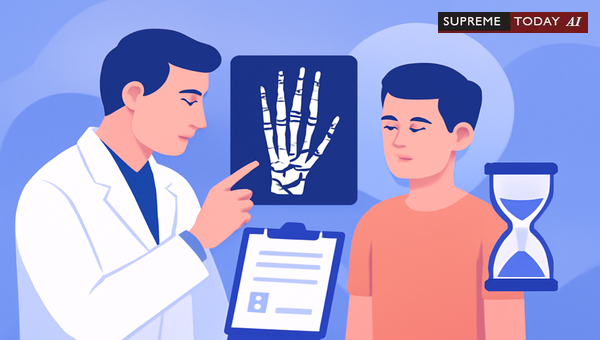
The examines X-rays of bones (typically wrists, elbows, or knees) to assess fusion and development stages, providing an estimated age. It's frequently invoked in juvenile cases to decide if an individual qualifies as a 'child' (under 18 years) under . However, as courts have repeatedly noted, it's not infallible.
In the age of the child is estimated, which has always a . 2022 0 Supreme(Pat) 637
This test is particularly relevant in criminal matters, POCSO cases, and juvenility claims, but its results serve only as a guiding factor alongside other evidence. 2017 1 Supreme 560
The Standard
A key limitation is the two-year on either side of the estimated age, even with examinations of multiple joints. This means if the test estimates 17 years, the actual age could range from 15 to 19 years. Courts recognize this as a settled principle to ensure fairness, especially when juvenility is claimed.
in - The is not conclusive for determining a person's exact age due to inherent , typically around two years on either side. 2024 0 Supreme(All) 68 2024 0 Supreme(Jhk) 502 2024 Supreme(Online)(DEL) 30751
This margin accounts for individual variations in growth, nutrition, genetics, and environmental factors. Post-, accuracy drops sharply, making the test unreliable. The accuracy of the significantly diminishes after the individual crosses the age of . Medical evidence becomes less reliable... 2017 1 Supreme 560
In POCSO cases, the principle applies similarly: Whether the principle of ‚‟ is to be applicable or not in cases under the where the age of a victim is to be proved through bone age . 2024 Supreme(Online)(DEL) 515
Legal Framework under , 2015
outlines the procedure for age determination:1. First preference: Matriculation certificate from the school.2. Second: Date of birth certificate from municipal authority or panchayat.3. Third: Birth certificate from hospital or nursing home.4. Last resort: by a medical board.
As per when the date of birth from the school of the child is available then there Is no occasion for directing her In view of the provision of the Juvenile Justice Act. 2020 0 Supreme(Del) 42
Courts conduct an (not investigation) for age claims, applying a '' standard rather than . This favors the accused in doubtful cases. 2017 1 Supreme 560 2012 0 Supreme(SC) 619
The Juvenile Justice Board has committed a grave error of law in treating the radiological report as and making determination of age of the petitioner/applicant solely o... 2021 0 Supreme(All) 302
Preference for Documentary Evidence
Documentary proof trumps medical tests due to the latter's uncertainties. If school records or birth certificates exist, ossification is unnecessary.
In the above case before the court the arguments of the revisionist that the Juvenile Justice Board should have gone for , was discarded as misconceived in the light of specific provisions given in of .... 2022 0 Supreme(All) 924
Forensic age estimation would be required only in those cases where real age is unknown. Invariably, in almost all cases under the , the Investigating Officers fail to collect documents relating to the age of the victim child... 2022 0 Supreme(Pat) 637
In one instance, a board relied on ossification despite available matriculation certificates, which was held erroneous. 2022 0 Supreme(All) 924
Judicial Interpretations and Case Law
Courts consistently apply the two-year margin:- When results are borderline (e.g., 18-20 years), the lower end is favored for juveniles. 2021 0 Supreme(Jhk) 970- In terms of Section 94 of the , the Juvenile Justice Board asked for ... taking his age as 24 years by giving the ... 2021 0 Supreme(Jhk) 970
Legal Position - The (Section 94) does not explicitly specify a for ossification tests; however, courts have consistently recognized the two-year margin as a settled legal principle. 2024 0 Supreme(All) 68 2024 Supreme(Online)(DEL) 30751
In POCSO and criminal appeals, this ensures protection for potential juveniles. Judicial Interpretations - Courts have applied the margin of two years in various cases, often considering other evidence like school certificates... 2024 0 Supreme(UK) 411 2024 Supreme(JK) 476
Practical Recommendations
For lawyers and individuals:- Compile comprehensive evidence: Gather school records, Aadhaar, or birth certificates first. 2009 0 Supreme(SC) 919 2015 5 Supreme 581- Challenge ossification findings: Highlight the 2-year margin and post-30 unreliability. 2017 1 Supreme 560- Invoke Section 94 hierarchy: Argue against tests if documents exist. 2020 0 Supreme(Del) 42- Reference precedents: Use cases emphasizing over sole reliance on medical boards. 2012 0 Supreme(SC) 619
Use of Comprehensive Evidence: When representing a client in age determination cases, it is crucial to compile a comprehensive set of evidence... (Integrated from core answer).
Conclusion and Key Takeaways
The is a valuable but approximate tool under the , 2015, burdened by a typical two-year . Courts prioritize documentary evidence, viewing medical opinions as supplementary. By understanding these nuances—The serves as a useful tool for age estimation but carries a significant ... 2017 1 Supreme 560—practitioners can better advocate for clients.
Key Takeaways:- Margin: ~2 years either side; unreliable after 30. 2024 0 Supreme(All) 68- Docs > Medical tests per Section 94.- Use '' in inquiries.- Always corroborate with multiple sources.
This holistic approach enhances fairness in juvenile justice. For tailored advice, reach out to a legal expert.
References:2017 1 Supreme 560 2012 0 Supreme(SC) 619 2009 0 Supreme(SC) 919 2015 5 Supreme 581 2024 Supreme(Online)(DEL) 515 2022 0 Supreme(Pat) 637 2022 0 Supreme(All) 924 2021 0 Supreme(Jhk) 970 2021 0 Supreme(All) 302 2020 0 Supreme(Del) 42 2024 0 Supreme(All) 68 2024 0 Supreme(Jhk) 502 2024 Supreme(Online)(DEL) 30751
#OssificationTest, #JuvenileJustice, #MarginOfError












