


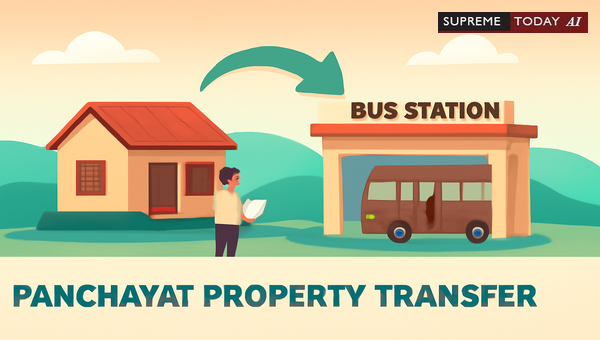
Panchayat Changes Bus Station Plans on Transferred Property: What Are Your Legal Remedies?
Imagine donating or transferring land to your local Panchayat for a public bus station, only to find them building something entirely different—a shopping complex or unrelated structure. This scenario raises critical questions: Can the Panchayat unilaterally change plans? What remedies are available? In this comprehensive guide, we delve into Property Transferred to Panchayath for a Public Bus Station but Panchayat Changing Plans for Construction Remedy, drawing from key legal provisions and real case insights under the .
Note: This article provides general information based on legal precedents and statutes. It is not a substitute for professional legal advice. Consult a qualified lawyer for your specific situation.
Understanding the Core Issue
Panchayats in India, particularly in Kerala, play a vital role in local infrastructure development, including public transport facilities like bus stations. Property is often transferred or acquired specifically for such public purposes. However, when the Panchayat deviates from the original intent—such as shifting from a bus stand to commercial construction—it can lead to disputes over misuse of public land, procedural lapses, and community impacts. 2021 0 Supreme(Ker) 981
Affected parties, including original landowners, donors, or nearby residents, may feel aggrieved if the change obstructs access, violates , or breaches transfer conditions. Courts have consistently emphasized adherence to statutory procedures and public welfare in such matters. 2013 0 Supreme(SC) 423
Relevant Legal Framework
The forms the backbone of Panchayat powers and obligations:
- Section 178: Permits Panchayats to acquire immovable property for public purposes, like bus stations, but mandates compliance with the , including proper valuation and title checks. 2021 0 Supreme(Ker) 981
- Section 227: Allows provision of public halting places for motor vehicles, but requires prior sanction from the (RTA). 2003 0 Supreme(Ker) 326
Additionally, the outline strict procedures for property handling, ensuring the purpose aligns with acquisition terms. 2021 0 Supreme(Ker) 981
Panchayats cannot arbitrarily repurpose land without due process. For instance, in cases where land was gifted with conditions, failure to use it for the specified purpose—like constructing a bus stand—triggers to the donor. ...a specific condition was made by the donor in the is that if the property is not used for the purpose of constructing bus stand and other connected sheds... then the property has to be reverted back to the donor or his legal representatives. 2025 0 Supreme(AP) 450
Panchayat's Authority and Limitations
Panchayats hold authority to manage transferred properties but must justify changes in . Key findings from legal documents include:
- Panchayats may construct facilities like bus stands cum shopping complexes after RTA approval and clearances. The 1st respondent , vide Ext R7(e) decision dated considered the resolution of the 5th respondent Panchayat for construction of the bus stand cum shopping complex and granted permission after obtaining Ext.R7(c) no objection from the ... 2025 0 Supreme(Ker) 2476 2025 0 Supreme(Ker) 1903
- Tenders on basis have been used, with contractors funding bus stands, waiting areas, and aid posts. 2025 0 Supreme(Ker) 2476
- Courts uphold such projects if procedures are followed, even against local opposition. In one case, shop owners challenged a new 22x11.5 feet bus shelter replacing an older one, claiming view obstruction, but the court dismissed it, prioritizing public welfare.
However, violations—like unpermitted construction or environmental breaches—invite accountability. If the Panchayat has a case that the construction was carried out without securing permit from the Secretary of the Grama Panchayat or that the construction is violative of the provisions... it is for the Panchayat to take appropriate action. 2022 Supreme(Online)(Ker) 72969
Insights from Court Cases on Plan Changes
Real-world cases illustrate remedies and Panchayat discretion:
- Approved Expansions Upheld: A Panchayat's new bus shelter was defended as necessary due to population growth, with 70% construction complete. Petitions for halts were rejected, affirming Panchayat authority under the 1994 Act.
- Restricted Use Enforced: Land transferred for specific uses, like private bus stands, cannot be repurposed without authorization. Courts stress compliance with sale deeds or resolutions. 2022 Supreme(Online)(KER) 16240
- Demolition for Violations: Unauthorized builds can be demolished, but only after due process. ...alteration or demolition shall not be caused to be carried out until the expiry of the period of such notice... 2022 0 Supreme(Guj) 1367
These precedents show courts balance public utility against individual claims, often favoring infrastructure if legally sound. 2018 0 Supreme(Ker) 831
Potential Legal Remedies
If the Panchayat changes plans improperly, several avenues exist:
- : Challenge the decision in to verify legal authority and procedure compliance.
- : Seek a court order halting further construction pending review. Effective against ongoing violations. 2023 0 Supreme(Ker) 321
- Public Consultation Mandate: Demand hearings to incorporate community input, as required for major changes.
- of Property: If conditional transfer (e.g., ), petition for return to original owner. 2025 0 Supreme(AP) 450
Pre-litigation steps include:- Documenting changes and impacts.- Engaging the Panchayat formally.- Lodging complaints with higher authorities like or RTA.
Recommendations for Affected Parties
- Gather Evidence: Photos, resolutions, transfer deeds, and witness statements.
- Consult Experts: Public law attorneys can assess case strength.
- Community Action: Rally support via petitions, highlighting public detriment.
- Alternative Dispute Resolution: Mediate before courts to save time and costs.
Conclusion and Key Takeaways
Panchayats wield significant power for public projects like bus stations, but changes to transferred property plans must follow the and secure approvals. While courts generally support public welfare initiatives with proper procedure—as seen in RTA-sanctioned bus stand complexes—violations open doors to remedies like injunctions or property . 2021 0 Supreme(Ker) 981 2003 0 Supreme(Ker) 326
Key Takeaways:- Always verify transfer conditions and permissions.- trumps private objections if laws are followed.- Act swiftly with evidence for best outcomes.
Stay informed on local governance to protect your rights. For tailored advice, reach out to a legal professional.
References: 2021 0 Supreme(Ker) 981 2003 0 Supreme(Ker) 326 2018 0 Supreme(Ker) 831 2023 0 Supreme(Ker) 321 2013 0 Supreme(SC) 423 2025 0 Supreme(Ker) 2476 2025 0 Supreme(Ker) 1903 2025 0 Supreme(AP) 450
#PanchayatLaw, #BusStandRemedies, #KeralaPropertyLaw












