


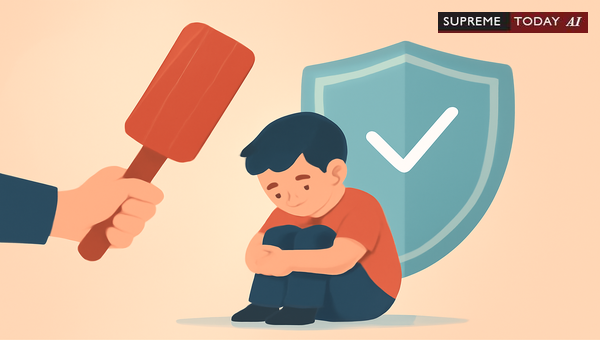
Is by Parents Legal in Malaysia?
In many households, disciplining children has long been a topic of debate, especially when it comes to physical methods. A common question arises: Whether of Children by a Parent is Allowed in Malaysia? As parenting evolves and child rights gain prominence, understanding the legal boundaries is crucial for parents, guardians, and educators. This post delves into Malaysia's legal framework, judicial insights, and international obligations to provide clarity—while noting this is general information, not specific legal advice. Consult a qualified lawyer for personalized guidance.
Defining and Its Legal Status
refers to the deliberate infliction of pain on a child for the purpose of discipline or reforming behavior2019 0 Supreme(Ker) 871. In Malaysia, this practice is heavily regulated, particularly in institutional settings, but what about within the family home?
Key Legislation Protecting Children
Malaysia's laws prioritize child welfare over traditional disciplinary methods:- The explicitly prohibits in child care institutions. Section 82 imposes penalties, including fines and imprisonment, on those who inflict it 2019 0 Supreme(Ker) 871.- The states that no child shall be subjected to physical punishment or mental harassment2022 0 Supreme(Ker) 243 2021 0 Supreme(Ker) 969.
These acts underscore a shift toward non-violent child-rearing, aligning with broader protections against abuse.
Parental Authority vs. Child Rights
Parents hold a natural authority to discipline their children, but this does not extend to unrestricted . Courts have noted that while teachers might have limited leeway for , this does not extend to parents in the same manner, especially if disproportionate 2022 0 Supreme(Ker) 243 2021 0 Supreme(Ker) 969. The legal framework views excessive physical discipline as abusive and contrary to children's rights 2021 0 Supreme(Ker) 969 2021 0 Supreme(Mad) 713.
Malaysia’s commitment to the further obligates the nation to shield children from 2022 0 Supreme(Ker) 243. As a signatory, Malaysia must harmonize domestic laws with these standards.
Insights from Judicial Precedents and Comparative Cases
Judicial interpretations provide nuance. For instance, some rulings emphasize that is generally prohibited under Malaysian law, particularly in educational settings and child care institutions2019 0 Supreme(Ker) 871 2022 0 Supreme(Ker) 243. However, related precedents highlight distinctions based on context and severity.
In examining analogous cases:- Courts have held that by teachers is not criminalized under the Juvenile Justice Act, stressing that international treaties require domestic legislation for enforceability. ''—a principle relevant to Malaysia's dualistic system 2025 0 Supreme(Ker) 1909. While morally questionable, it may not always constitute a legal offense without explicit provisions (Paras 24, 34, 38) 2025 0 Supreme(Ker) 1909.- The severity matters: 'What transpires from the above view is that it is the severity of punishment or injury which makes the distinction between and cruelty to a child'2024 Supreme(Online)(MEGH) 224. Broad interpretations of '' under the JJ Act include scenarios where excessive force by authority figures like teachers could lead to liability 2024 Supreme(Online)(MEGH) 224.- Schools are often excluded from '' definitions, meaning in educational settings under certain conditions does not constitute an offence2024 Supreme(Online)(Ker) 75706. In one case, proceedings against a teacher were quashed as Section 82 pertains specifically to child care institutions, with no grave injury found 2024 Supreme(Online)(Ker) 75706.
For parents specifically, minor injuries inflicted in a disciplinary context do not constitute an offence under the Juvenile Justice Act. Prior case law supports that do not fall under the provisions2024 Supreme(Online)(KER) 38973. Proceedings were quashed where malice or excessive force was absent (Paras 2-12) 2024 Supreme(Online)(KER) 38973.
These insights suggest that while is discouraged, the determine legality 2024 Supreme(Online)(Ker) 75706 2024 Supreme(Online)(KER) 38973.
Exceptions: and Cultural Considerations
- : There may be allowances for a reasonable degree of force in specific contexts, but it is heavily scrutinized and must not exceed what is necessary for discipline 2022 0 Supreme(Ker) 243 2021 0 Supreme(Ker) 969.
- Cultural Context: Traditional practices may persist in some homes, yet they do not align with legal standards or international obligations2021 0 Supreme(Mad) 713. Laws like the RCFCE Act bar such methods in schools, with disciplinary actions against violators 2019 0 Supreme(Raj) 149. 'The to a school child is barred by law'2019 0 Supreme(Raj) 149.
Additional guidelines, such as those during COVID-19, reinforce: '/violence to discipline children', prioritizing mental health in Child Care Institutions (CCIs) 2020 0 Supreme(SC) 295.
Evolving Standards and Employment Implications
cases often intersect with employment disputes. For example, teachers facing accusations must prove charges, with courts upholding due process. In one ruling, a teacher's dismissal was quashed due to unproven injuries and procedural lapses 2019 0 Supreme(Raj) 149. 'Any act of awarding to children, not to be taken lightly by the disciplinary authority'2019 0 Supreme(Raj) 149 2012 0 Supreme(Del) 1649.
Echoing CRC principles: ' upon children is inhuman', courts reference global standards and national policies prohibiting it 2012 0 Supreme(Del) 1649 2012 0 Supreme(Del) 2740.
Conclusion and Key Takeaways
In summary, of children by parents is not legally supported in Malaysia. Acts like the JJ Act and RCFCE Act prohibit it, especially in institutions, with parental discipline limited to non-violent, reasonable methods. While cultural norms and minor force exceptions exist, the trend favors child protection.
Key Takeaways:- Prioritize non-violent discipline to comply with law and CRC.- Excessive force risks penalties under child protection statutes.- Parents should explore education on positive parenting.- Advocate for awareness campaigns on 's harms.
Recommendations:- Educate on non-violent methods.- Promote stricter enforcement.- Run public campaigns on child development impacts 2019 0 Supreme(Ker) 871 2022 0 Supreme(Ker) 243 2021 0 Supreme(Ker) 969 2021 0 Supreme(Mad) 713.
References: 2019 0 Supreme(Ker) 871 2022 0 Supreme(Ker) 243 2021 0 Supreme(Ker) 969 2021 0 Supreme(Mad) 713 2025 0 Supreme(Ker) 1909 2024 Supreme(Online)(MEGH) 224 2024 Supreme(Online)(Ker) 75706 2024 Supreme(Online)(KER) 38973 2020 0 Supreme(SC) 295 2019 0 Supreme(Raj) 149 2012 0 Supreme(Del) 1649 2012 0 Supreme(Del) 2740.
This overview highlights the balance between discipline and rights—stay informed and choose compassion.
#CorporalPunishmentMalaysia, #ChildRightsMY, #ParentingLaws















