


in Indian Law: Definition Explained
In today's interconnected society, social exclusion remains a persistent challenge, particularly in contexts rooted in tradition and hierarchy. What exactly constitutes a under Indian law? This practice, often linked to caste, community, or social norms, can lead to severe isolation and hardship. This blog post delves into the legal definition of , its criminalization, real-world implications, and protective measures, drawing from key judicial interpretations and statutes. Note: This is general information and not specific legal advice; consult a qualified lawyer for personalized guidance.
What is the Definition of ?
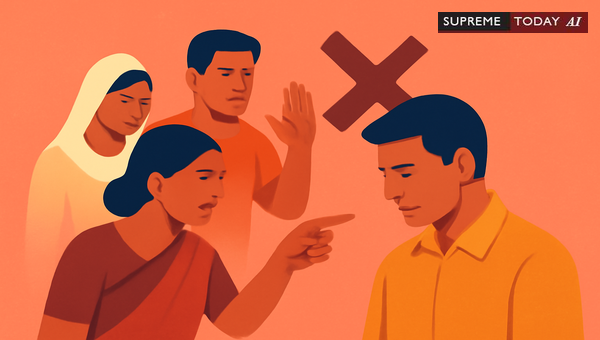
The term Definition often arises in discussions of discrimination and human rights. In Indian law, is broadly defined as a form of imposed on individuals or groups, typically based on caste, community, or social hierarchy. It involves refusing to permit participation in social, religious, or community activities, or denying access to essential services and resources. This practice is not mere disagreement but enforced isolation that can cause significant harm. 2019 0 Supreme(Guj) 216
Key characteristics include:- Refusal of customary services: Preventing a person from rendering or receiving services, or maintaining social relations, leading to isolation from social life. 2019 0 Supreme(Guj) 216- Exclusion from community events: Denial of access to religious places, social gatherings, or community resources. 2023 0 Supreme(Mad) 1919- Threats and intimidation: Often enforced through explicit threats to ensure compliance. 2022 0 Supreme(Bom) 1016
As noted in legal documents, is rooted in notions of purity and pollution, manifesting as . 2023 0 Supreme(Mad) 1919 It encompasses all practices of and exclusion that are based on ritual ideas of purity and hierarchy/subordination. 2023 0 Supreme(Mad) 1919
Legal Recognition and Criminalization
Indian law explicitly addresses through statutes aimed at eradicating discriminatory practices. The is central to this framework:
- criminalizes imposing or threatening a social or economic boycott of a person or group belonging to Scheduled Castes or Scheduled Tribes. 2022 0 Supreme(Bom) 1016
- It penalizes acts that force or threaten to force members of these communities to leave their residence or face exclusion. 2022 0 Supreme(Bom) 1016
The law emphasizes that such boycotts, when involving threats, intimidation, or enforced exclusion, are punishable offenses. 2022 0 Supreme(Bom) 1016 under includes these practices, linking them to violations of equality (), freedom (), and dignity (). 2023 0 Supreme(Mad) 1919
Additionally, state-specific laws like the , target broader instances of ostracism, recognizing it as incompatible with constitutional rights. Courts have intervened in cases where petitioners faced hardships due to , directing authorities to inquire and end the practice. For instance, in one case, a was sought to investigate and take measures to halt it.
Judicial Interpretations and Case Examples
Courts have provided nuanced views on . In a high court matter, allegations of were probed under Sections 3(1)(zc), where whoever, not being a member of a Scheduled Caste or a Scheduled Tribe: (zc) imposes or threatens a was highlighted.
Another petition addressed ostracization leading to deprivation, with courts noting connivance in village-level decisions enforcing boycott.
Historical perspectives clarify that threats of excommunication may equate to , though not always fitting IPC definitions of injury: I cannot see that a is a threat to injury as defined in I.P.C. 2018 0 Supreme(Mad) 18
via boycott is also defined broadly: For the purposes of this section '' includes a . 2006 0 Supreme(Bom) 10 2006 0 Supreme(Bom) 6 These rulings underscore proactive enforcement to protect vulnerable groups.
Social boycotts have been condemned publicly, as seen in commissions investigating community-imposed exclusions. 1995 0 Supreme(Raj) 38
Broader Social and Economic Implications
Beyond caste, can manifest as protest or punishment, depriving individuals of water, employment, or community support. It leads to adverse consequences, challenging social harmony.
Despite legal bans, enforcement challenges persist due to cultural entrenchment. Courts stress authorities' duty to investigate and dismantle boycotts, promoting awareness among communities and police.
Exceptions and Limitations
Not all community decisions qualify as criminal . Exceptions include non-coercive resolutions without threats. Offenses typically require public acts, intimidation, or enforcement. Mere social disapproval without harm may not trigger liability. 2019 0 Supreme(Guj) 216
Recommendations for Protection
To combat :- Document incidents: Record threats or exclusions to align with legal provisions.- Leverage broad definitions: Challenge hierarchy-based discrimination.- Raise awareness: Educate on PoA Act protections. 2022 0 Supreme(Bom) 1016- Seek judicial relief: Approach courts for inquiries and injunctions, as in boycott hardship cases.
Conclusion and Key Takeaways
in Indian law is a harmful practice of exclusion, criminalized to uphold dignity and equality. Rooted in statutes like the PoA Act, it targets enforced ostracism, with courts actively intervening. Key takeaways:- Broad scope: Includes social, economic, and religious exclusion via threats. 2023 0 Supreme(Mad) 1919- Legal remedies: PoA Act provides strong protections. 2022 0 Supreme(Bom) 1016- Ongoing vigilance: Cultural change and enforcement are crucial.
By understanding Definition, individuals can better assert rights. Stay informed, report abuses, and foster inclusive communities.
References
- 2019 0 Supreme(Guj) 216 – Refusal of services and social relations.
- 2023 0 Supreme(Mad) 1919 – and hierarchy-based exclusion.
- 2022 0 Supreme(Bom) 1016 – PoA Act provisions on boycott.
– Court directives on inquiry.
– applications.
- 2018 0 Supreme(Mad) 18 – Excommunication as boycott.
- 2006 0 Supreme(Bom) 10 & 2006 0 Supreme(Bom) 6 – definitions.















