


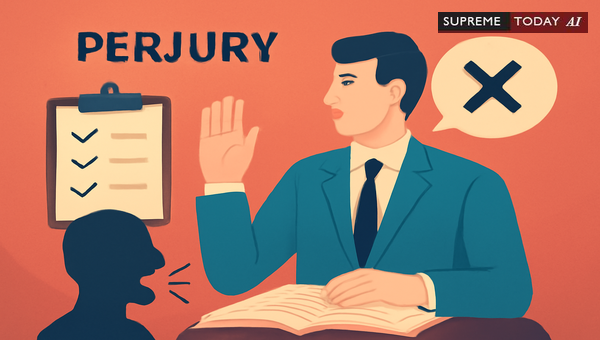
Can Be Committed on a Made on Client's Instructions Without Affirming It?
In the high-stakes world of legal practice, lawyers and agents often navigate a fine line between advocating zealously for clients and upholding the integrity of the judicial process. A common dilemma arises: Can be committed on a made on client's instructions without affirming it? This question strikes at the heart of , ethical duties, and under Indian law. While attorneys are bound to protect client interests, including acting on their instructions, the threshold for requires more than mere transmission of information.
This article delves into the legal nuances, drawing from key judicial precedents and statutory definitions. We'll examine whether simply following client directives to submit a equates to , or if personal is essential. Note: This is general information based on legal precedents and not specific legal advice. Consult a qualified attorney for your situation.
Understanding Under Indian Law
is a serious offense defined in . It occurs when a person, legally bound by or law to state the truth, makes a that they know or believe to be false2014 0 Supreme(Bom) 1449. The core elements are:
- Intentional falsehood: The statement must be deliberately false, with the maker's knowledge of its falsity.
- Legal obligation: Made under , , or to tell the truth.
- Personal responsibility: The individual must affirm or attest to the statement's truth 2014 0 Supreme(Bom) 1449.
As highlighted in judicial analysis, involves deliberate and conscious falsehood under or legal obligation to speak the truth 2014 0 Supreme(Bom) 1449. Mere inaccuracies, contradictions, or statements without personal endorsement do not suffice 2001 4 Supreme 108.
The Role of Client Instructions in Legal Practice
Lawyers are duty-bound to act on client instructions. prescribes that an advocate should not act on any other person's instructions other than his clients 2025 Supreme(Online)(Del) 3933. This duty to protect client interests persists even if instructions involve contentious or potentially false information.
However, making a on a client’s instructions without personally affirming it typically does not constitute 2024 6 Supreme 159 2001 4 Supreme 108. The key distinction lies in or adoption. If a lawyer or agent merely relays or prepares a document based on client directives—without signing, attesting, or endorsing its truth—they generally avoid liability. The act of merely transmitting or relaying instructions for a , without personal or attestation, generally does not satisfy the requirement of under Section 191 IPC 2014 0 Supreme(Bom) 1449.
In one precedent, the court clarified that merely signing or endorsing a document without personally attesting to its correctness does not amount to , especially if the individual did not affirm the contents as true or did not assume responsibility for their accuracy 2024 6 Supreme 159.
Judicial Precedents and Key Cases
Courts have consistently emphasized the need for personal knowledge and . In the case referenced 2014 0 Supreme(Bom) 1449, the Court held that false statements are only punishable as if the maker knowingly makes a and affirms or attests to its truth. Contradictory statements alone do not prove without evidence of falsity and knowledge.
Similarly, 2001 4 Supreme 108 reinforces that falsehood must be deliberate and on a matter of substance, and that mere inaccuracies or statements made under instructions without personal do not constitute .
From broader precedents:
- At common law, courts took action against a person who was shown to have made a statement, material in proceedings, which he knew to be false or did not believe to be true. The offence committed by him is known as 2023 0 Supreme(Cal) 468.
- There must be a glaring case of before action, and mere contradictions do not suffice
.
- Courts must ensure before sentence is pronounced the witness shall be informed what he has made which the Judge considers deserving of prompt punishment
.
These rulings underscore that requires proof beyond mere client instructions—deliberate and are pivotal
.
Exceptions: When Liability May Arise
While generally protected, exceptions exist:
- Personal : If the lawyer signs or verifies the statement knowing it to be false, liability attaches. Making a on before the Court not only amounts to but it also amounts to 2020 0 Supreme(All) 1462.
- Active endorsement: Adopting the as true implicates the individual 2024 6 Supreme 159.
- Knowledge of falsity: Full awareness and can trigger prosecution. In case, it is false and as such statement had been made on , he is liable to be tried for 2014 0 Supreme(SC) 62.
Courts scrutinize context: The gravity of the , the circumstances under which such statement was made and the repercussion of such a statement, are matters which the court ought to bear in mind before initiating a prosecution for the offence of 2023 0 Supreme(Ker) 216.
Reluctance to prosecute encourages false averments, so the person submitting false verification can be proceeded against in contempt and also for an offence of 2012 0 Supreme(Bom) 2071. However, a wrong recital... which has been corrected, can never constitute for the reason would relate to a deliberately made on 2012 0 Supreme(Del) 340.
Implications for Legal Professionals
For lawyers:
- Verify before affirming: Always ensure personal belief in the statement's truth before attesting.
- Clarify roles: Document that actions are based on client instructions without personal endorsement.
- Ethical vigilance: While bound by client duties 2025 Supreme(Online)(Del) 3933, avoid complicity in known falsehoods.
Courts recommend caution: Legal professionals should exercise caution and ensure they personally verify and affirm the truth of statements they attest to.
Procedural safeguards are vital—no summary punishment without informing the accused and allowing defense
. The mere fact that a statement made before the does not accord with... a statement made by him in a , is no evidence that the witness has committed
.
Key Takeaways and Recommendations
- No without : Generally, relaying client instructions for false statements does not constitute absent personal endorsement or knowledge of falsity 2014 0 Supreme(Bom) 1449 2024 6 Supreme 159.
- is key: Prosecution demands proof of deliberate, material falsehood under .
- Practice wisely: Lawyers must balance client loyalty with judicial integrity—verify, document, and affirm only what you believe true.
- Seek procedures: Any claim requires rigorous evidence and .
Summary: cannot generally be committed solely on false statements made on a client’s instructions without affirming or attesting to their truth. Personal guilt through knowledge and is essential under Indian law. Stay informed, ethical, and proactive to navigate these complexities.
References
- 2014 0 Supreme(Bom) 1449: Core definition and requirement.
- 2024 6 Supreme 159: Client instructions without personal attestation.
- 2001 4 Supreme 108: Deliberate falsehood on substance.
- Additional sources as cited inline.















