Searching Case Laws & Precedent on Legal Query.....!
Analysing the retrieved Case Laws
Scanned Judgements…!



Searching Case Laws & Precedent on Legal Query.....!
Analysing the retrieved Case Laws
Scanned Judgements…!
Legal nature of maintenance recovery under DV Act - The provisions of the Domestic Violence (DV) Act, specifically Sections 18 and 20, empower Magistrates to issue protection orders and grant monetary relief, including maintenance to the aggrieved woman. Violation of maintenance orders can be treated as a breach of protection orders, which are considered affirmative orders of protection ["2023 0 Supreme(Mad) 2965"].
Warrants for recovery of maintenance amount - Courts have the authority to issue non-bailable warrants and recovery warrants to enforce maintenance orders under the DV Act. For instance, a recovery warrant can be issued for arrears of maintenance, and such warrants can be executed through attachment of property or other enforcement mechanisms ["2024 0 Supreme(All) 2302"], ["2023 0 Supreme(All) 182"], ["2025 Supreme(Online)(UK) 39043"].
Permanent arrest warrants and enforcement - The law allows for the issuance of warrants for recovery of maintenance dues, including non-bailable warrants, which may involve attachment of property or other coercive measures. However, warrants for arrest are generally not issued unless explicitly permitted, and execution must conform to procedural safeguards, including limitations on arrest (e.g., no warrant shall be executed by arrest or detention in prison unless justified) ["2024 0 Supreme(UK) 21"], ["2023 0 Supreme(Telangana) 619"].
Procedure and limitations - The issuance of warrants for recovery is subject to conditions such as making an application within a specified period (e.g., one year from the amount becoming due) and following due process. Warrant execution for recovery of maintenance dues is permissible, but arrest warrants are not necessarily issued unless justified under the procedures ["2024 0 Supreme(UK) 21"].
Enforcement of maintenance orders - Courts have emphasized that enforcement mechanisms under the DV Act are intended to secure timely compliance with maintenance orders. While warrants for recovery of dues are permitted, the issuance of arrest warrants for recovery of maintenance is generally limited and must adhere to procedural safeguards, especially considering the protective and civil nature of the proceedings ["2024 0 Supreme(All) 2302"], ["2023 0 Supreme(Telangana) 619"].
Conclusion - Yes, under the DV Act, a permanent arrest warrant can be issued for the recovery of maintenance amounts, but typically such enforcement is through non-bailable warrants or attachment orders. Arrest warrants for recovery are issued cautiously and are subject to procedural safeguards, ensuring enforcement aligns with the protective intent of the law ["2023 0 Supreme(Mad) 2965"], ["2024 0 Supreme(All) 2302"], ["2025 Supreme(Online)(UK) 39043"].
References:- ["2023 0 Supreme(Mad) 2965"]- ["2025 0 Supreme(Ori) 348"]- ["2024 0 Supreme(All) 2302"]- ["2023 0 Supreme(All) 182"]- ["2024 0 Supreme(UK) 21"]- ["2023 0 Supreme(Telangana) 619"]- ["2025 Supreme(Online)(UK) 39043"]
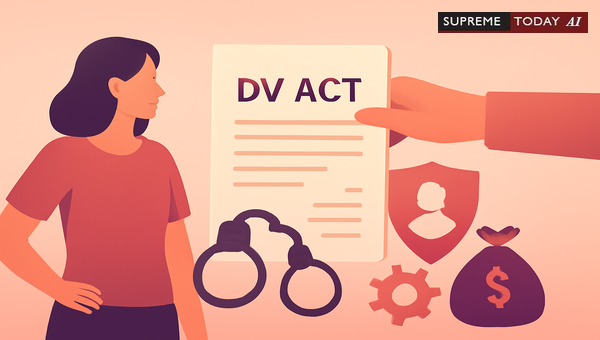
In the realm of family law in India, the (DV Act) serves as a crucial shield for women facing abuse, offering remedies like , , and . But what happens when payments are overdue? A common question arises: whether a can be issued for recovery of amount under the Protection of Women from Act?
This issue often surfaces in contentious domestic disputes, where aggrieved parties seek swift enforcement. While the DV Act empowers courts to enforce orders effectively, it draws clear boundaries on coercive measures. This blog post explores the legal position, backed by statutory provisions and judicial precedents, to clarify that permanent arrest warrants are not permissible solely for recovery. Note: This is general information based on legal interpretations and not specific legal advice. Consult a qualified lawyer for your case.
The DV Act provides comprehensive under , covering for the and dependents like children. Enforcement mechanisms are outlined in , which mandates that execution of orders follows the (CrPC) procedures.
(2) explicitly states that the procedure for executing orders passed under the Act shall be governed by the CrPC. This alignment ensures structured recovery without overstepping into punitive detention. Courts typically prioritize civil-like remedies for arrears, such as:
However, these do not extend to indefinite arrest. 2023 0 Supreme(Bom) 1121 2014 0 Supreme(Bom) 1047
A key distinction lies between warrants of attachment and arrest warrants. Under the CrPC (e.g., Sections 421-425), recovery of arrears permits:
In contrast, arrest warrants for are rare and temporary, aimed at compelling appearance or payment, not permanent detention. The DV Act does not authorize permanent arrest warrants solely for recovery. As held, The court can issue of salary for recovery of arrears of but not for future . 2023 0 Supreme(Bom) 1121
Issuing a would violate principles of proportionality and amount to indefinite detention, unsupported by the statute. 2014 0 Supreme(Bom) 1047
Courts have consistently reinforced these limits. In relevant rulings:
Further, the law clarifies: warrants of arrest for recovery are not permissible. 2014 0 Supreme(Bom) 1047
These precedents underscore that while non-compliance invites coercion, it stops short of permanent incarceration for dues recovery.
Understanding enforcement requires grasping eligibility. defines an broadly as any woman who is, or has been, in a with the respondent and alleges . This includes ex-partners or those living separately, entitling them to even post-separation. 2023 0 Supreme(All) 1355 2024 0 Supreme(All) 45
For instance:
These provisions highlight the Act's protective intent, balancing swift relief with procedural safeguards.
Limited exceptions exist for willful defaulters:
Courts caution against misuse. Vague allegations may lead to quashing proceedings, as seen where complaints lacked specifics on under . 2018 0 Supreme(P&H) 3668 2024 0 Supreme(Guj) 458
Jurisdictionally, handle DV applications only alongside existing proceedings, ensuring coordinated trials. 2017 0 Supreme(Ker) 391
For effective recovery without overreach:
Enforcement agencies must adhere: Enforcement agencies should utilize warrants of attachment of salary or property for recovering arrears. 2023 0 Supreme(Bom) 1121
Related contexts, like live-in relationships, also qualify for under the DV Act, broadening its scope. 2014 0 Supreme(Kar) 890
In summary, under the , a cannot be issued solely for recovering amounts. The framework favors attachment and execution over detention, as affirmed by (2) and CrPC integration. 2023 0 Supreme(Bom) 1121 2014 0 Supreme(Bom) 1047
Key takeaways:- Use salary/property attachment as primary tools.- Temporary warrants possible for defaulters, but not indefinite.- Broad relief for aggrieved persons, including separated women and children.- Courts prioritize timely disposal to aid victims. 2023 0 Supreme(Kar) 179
While the DV Act empowers women effectively, it maintains legal bounds to prevent abuse. For personalized guidance, approach a legal expert promptly. Stay informed, and ensure justice is served proportionately.
References:1. 2010 0 Supreme(Ker) 750: Framework for .2. 2014 0 Supreme(Bom) 1047: CrPC recovery procedures.3. 2023 0 Supreme(Bom) 1121: Attachment warrants affirmed.
#DVAct, #DomesticViolenceLaw, #MaintenanceRecovery


“Whether the non-payment of maintenance amount is a breach of protection order for which the law enforcing authority has jurisdiction to register the Criminal case under Section 31 of the Act?” ... The grant of monetary relief under Section 20 does not exclude the amount of maintenance which can be awarded in terms of Section 18 of the Act as part of the affirmative order in respect of the domestic violence as defi....

makes it clear that the protection of the Act is available to a woman who “is, or has been, in a domestic relationship” with the respondent and who alleges that she has been subjected to any act of domestic violence. ... In the said proceeding, the learned S.D.J.M., Panposh, by order dated 18.01.2021, issued notice to the Opposite Party and upon his non-appearance, issued distress warrant as well as conditional NBW....

, has authority to issue a non-bailable warrant as well as recovery warrant to recover the maintenance passed u/s 20 of Domestic Violence Act. ... Therefore, to recover the maintenance amount u/s 20 Domestic Violence Act, the court can issue a non-bailable warrant as well as a recovery warrant to recover the amount#H....

Ahmad Ali) u/s 12 of Domestic Violence Act on priority basis and while calculating the final figure of maintenance amount, the court concerned shall adjust the interim maintenance amount given by the opposite party no.2 and shall be paid to the applicant. ... Ahmad @ Ramzani) u/s 31 of the Domestic Violence Act, 2005, arising out of Case No.10095 of 2017 (Hasina Khatoon vs. ... Ahmad Ali) u/s 12 of the Do....

Provided that no such warrant shall be executed by the arrest or detention in prison of the offender.” ... During the course of hearing, learned counsel for the revisionists would submit that for recovery of the maintenance amount attachment warrants for immovable property has been issued, which is bad in the eyes of law. ... if sooner made: Provided that no warrant shall be issued for the recovery of any amount d....
Act has held that apart from the woman who is in a domestic relationship, any woman who has been in a domestic relationship with the respondent, if alleged to have been subjected to any act of domestic violence by the respondent comes within the meaning of aggrieved person. ... C. but present case is related to Domestic Violence Act which is a special act and has been formed to p....
Section 2(a) of the DV Act defines “aggrieved person” as any woman who is, or has been, in a domestic relationship with the respondent and who alleges to have been subjected to any act of domestic violence by the respondent. ... The woman who has been in domestic relationship with the respondent and who has been subjected to any domestic violence, is entitled for relief under the Act, irrespective....

A woman, who is a victim of domestic violence, knocking at the doors of the Magistrate, under the Act seeking maintenance or shelter such grievance, will have to be addressed with immediacy. ... to any act of domestic violence. ... In order to provide a remedy in the civil law for the protection of women from being victims of domestic violence and to prevent the occurrence of domestic#HL....

to the dependants, other relatives or any person who give the aggrieved person assistance from domestic violence; ] [(g) committing any other act as specified in the protection order.] ... Act and in connection with the application under Section 125 of the CrPC, settlement has been arrived at and amount of Rs.3,00,000/- was paid to the respondent no.2 and in connection with the application filed under the Violence Act, process has been issu....

Non-payment of maintenance amount is a domestic violence within the meaning of Section 3 of the Act and it is a continuing offence. Admittedly, the petitioner filed the petition for payment of maintenance as per Section 20 of the Act, 2005. 14. ... The question, whether a woman, who was in domestic relationship with the respondent and was subjected to domestic violence prior to c....

Even prima facie it does not make the case of domestic violence. Domestic violence defined under Section 3 of the Protection of Woman from Domestic Violence Act, 2005.

It is also not in dispute that the petitioners herein filed Ext. P4 petition for claiming relief under Sections 18 to 22 of Protection of Woman from Domestic Violence Act. In the decision reported in Anish Antony Thimothy's case (supra), a Single Bench of this Court has held that Proceedings pending before the Magistrate court under the provisions of Protection of Women from Domesticate Violence Act cannot be transferred to Family Court to be tried along with cases pending before that court and it is observed in that decision that: In that case, the pleadings are not over, ....

2 is the legally married wife of petitioner and out of the said wedlock, two children born. In the said application, it is categorically stated that the opposite party no. 2 filed an application under Section 12 of the Protection of Woman from Domestic Violence Act for maintenance for herself as well as for the maintenance of her two children.
The appellant, first wife, children and mother of the deceased are all entitled to equal share in the compensation awarded and entitled to interest at 6% p.a. on the enhanced compensation." In that context, denial of share in the compensation to the appellant does not appeal to be sound and proper. There is no material before the Court to suggest whether the marriage of the appellant with the deceased was conscious bigamous marriage. The law under the Domestic Violence Act also recognizes grant of maintenance for a woman who was in live-in-relationship.


An indispensable Tool for Legal Professionals, Endorsed by Various High Court and Judicial Officers
Please visit our Training & Support
Center or Contact Us for assistance

Scan Me!
India’s Legal research and Law Firm App, Download now!


For Daily Legal Updates, Join us on :



 Back to top


