


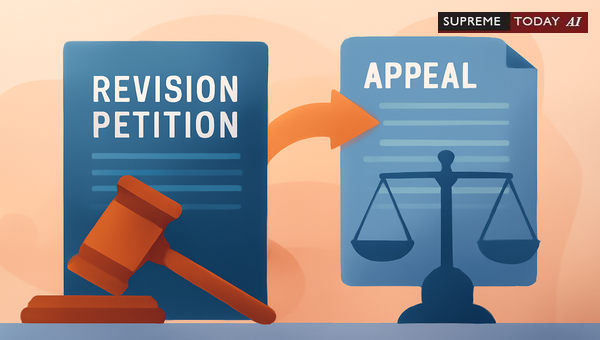
Petitioner's Prerogative: vs in India
In the complex landscape of the Indian judiciary, navigating the right remedial path can make or break a case. A common question arises: Relief of and : It is the Prerogative of the Petitioner to Choose in What Remedy to Avail? This query touches on a fundamental principle—does the petitioner hold the ultimate choice between invoking or , or are there statutory and judicial constraints guiding this decision?
While petitioners generally have flexibility, courts emphasize first, often prioritizing statutory appeals over revisions. This blog post delves into the legal framework, key precedents, exceptions, and practical recommendations, drawing from established case law. Note that this is general information and not specific legal advice; consult a qualified lawyer for your situation.
Legal Framework: vs
Understanding the Remedies
: This is a statutory right allowing a party to challenge a lower court's decision on facts and law. It's the primary remedy in most cases, governed by provisions like those in the or . Appeals provide a full rehearing opportunity, making them robust but time-consuming.
: Under or , is supervisory in nature. Courts intervene if there's a jurisdictional error, illegality, or irregularity causing a failure of justice. It's not a right but a discretionary power, often viewed as exceptional 2022 0 Supreme(Raj) 2559 2022 0 Supreme(Raj) 944.
Courts have ruled that when an is available, it typically supersedes to prevent . For instance, in licensing matters under the , the only remedy against a refusal is , not a writ petition 2018 0 Supreme(P&H) 2028.
The Prerogative of the Petitioner
Petitioners do have some prerogative, but it's not absolute. The law favors the chosen remedy if it's efficacious, but failure to pursue it can bar further relief. Judicial precedents underscore that opting for one doesn't always preclude others, yet bypassing a primary remedy invites .
In one ruling, after a under was availed, a subsequent petition under was deemed not maintainable, as it circumvented , which bars second revisions 2004 0 Supreme(Raj) 1788 2005 0 Supreme(Raj) 41. Similarly, The second petition is barred by Section 397(3) Cr.P.C. Even otherwise, it cannot be said that the order impugned would result in serious miscarriage of justice or abuse of process of any court warranting interference in 2008 0 Supreme(Raj) 1898.
Judicial Precedents Shaping the Choice
Indian courts have clarified this through consistent rulings:
Preference for Statutory Remedies: refrain from under if an exists under CPC. The High Court has emphasized that the availability of an should deter it from exercising its jurisdiction under of the Constitution, especially when a specific remedy is provided under the CPC 2019 0 Supreme(SC) 1104.
Exhaustion Doctrine: Petitioners must typically exhaust appeals before or writs. In pollution control cases, writs were dismissed, directing parties to appeals: Petitioner is directed to avail the remedy of as provided under the Act 2005 0 Supreme(Jhk) 844.
Rent Control Contexts: In eviction disputes under , ownership denial triggers proof burdens, but remedies follow statutory appeals or revisions 2013 0 Supreme(Mad) 3940. The court assessed, To what relief the petitioner is entitled? Whether the respondent is liable to be vacated and handover the demised premises to the petitioner, ultimately dismissing on merits.
These cases illustrate that while choice exists, it's tempered by procedure. Courts apply tests like shocking the conscience of court or if orders are wrong when petitioners skip remedies 2024 Supreme(SRI)(CA) 582 2023 Supreme(SRI)(CA) 893.
Exceptions: When Choice Overrides Norms
Exceptions allow direct higher relief:
Fundamental Rights Violation: Writs may proceed despite alternatives if rights under Articles 14, 19, or 21 are infringed or actions are arbitrary 2021 0 Supreme(Raj) 187.
Ineffective Remedies: If appeals are redundant or futile, courts permit alternatives 2023 0 Supreme(Raj) 430. For example, in applications, judges outline tests for relief when fundamental facts are at stake 2023 Supreme(SRI)(SC) 20782.
Exercising Discretion: Courts may invoke in shocking cases, as counsel urged under CPC provisions 2024 Supreme(SRI)(CA) 582.
The petition may be disposed of, relegating the petitioner to avail the remedy of , if so advised 2018 0 Supreme(P&H) 2028, but exceptions prevent injustice.
Strategic Recommendations for Petitioners
To navigate effectively:
Assess Availability: Review if or fits—appeals for merits, revisions for errors 2023 0 Supreme(Raj) 189.
Compliance First: Adhere to timelines and formats to avoid technical dismissals 2004 3 Supreme 205.
Weigh Writs Carefully: Reserve for rights violations; otherwise, courts relegate to statutes 1999 7 Supreme 325.
Avoid Multiplicity: Second revisions or inherent powers post- are risky 2008 0 Supreme(Raj) 1572 2008 0 Supreme(Raj) 1898.
Document Thoroughly: Prove why chosen remedy is apt, especially in exceptions 1998 0 Supreme(SC) 641.
In practice, like air pollution closures, appeals must be pursued within timelines, with stays possible 2005 0 Supreme(Jhk) 844.
Conclusion and Key Takeaways
The petitioner's prerogative to choose or exists but is guided by law favoring statutory exhaustion. While flexibility aids strategy, courts prioritize order and justice, barring parallel remedies unless exceptional.
Key Takeaways:- Opt for appeals when available; revisions are supervisory.- Exhaust remedies to avoid writ dismissals.- Exceptions for rights breaches or futility.- Always evaluate case specifics with counsel.
By understanding these nuances, litigants can select optimally. For tailored advice, engage a legal expert. References include 2022 0 Supreme(Raj) 2559 2022 0 Supreme(Raj) 944 2023 0 Supreme(Raj) 189 2023 0 Supreme(Raj) 430 2021 0 Supreme(Raj) 187 2004 3 Supreme 205 1999 7 Supreme 325 2002 5 Supreme 302 1996 3 Supreme 373 2019 0 Supreme(SC) 1104 2004 0 Supreme(Raj) 1788 2005 0 Supreme(Raj) 41 2008 0 Supreme(Raj) 1572 1998 0 Supreme(SC) 641 2013 0 Supreme(Raj) 2120.
This post is for informational purposes only and does not constitute legal advice.
#RevisionVsAppeal #IndianLegalRemedies #PetitionerRights
















