Searching Case Laws & Precedent on Legal Query..!
Scanned Judgements…!



Searching Case Laws & Precedent on Legal Query..!
Scanned Judgements…!
Mudireddydivya VS Sulktisivarama Reddy - Current Civil Cases
"], ["2025 Supreme(GUJ) 346"].Customs that are not pleaded or proved cannot be used as a basis for legal declarations, and any claim of customary divorce or marriage requires strict proof ["
Mudireddydivya VS Sulktisivarama Reddy - Current Civil Cases
"], ["2024 0 Supreme(Guj) 135"].Is it mandatory to plead customs?
Analysis and ConclusionPleadings concerning the customs of marriage and divorce are mandatory and must be specific and detailed. The law mandates that customs be pleaded explicitly and proved convincingly through documentary or oral evidence. Without proper pleadings, customs cannot be considered by courts, rendering claims based on unpleaded customs invalid. Courts are duty-bound to verify the existence and observance of customs before accepting them as grounds for legal declarations. Therefore, it is not enough to merely mention customs; they must be pleaded with sufficient detail and proved to be effective in legal proceedings ["2024 0 Supreme(Guj) 135"], ["2022 0 Supreme(Raj) 2406"].
References:["2024 0 Supreme(Guj) 135"]["2023 0 Supreme(Pat) 749"]["
Mudireddydivya VS Sulktisivarama Reddy - Current Civil Cases
"]["2025 Supreme(Online)(TEL) 4426"]["2023 0 Supreme(Pat) 1249"]["2025 0 Supreme(Ker) 2671"]["2024 0 Supreme(All) 1015"]["2012 0 Supreme(AP) 280"]["2022 0 Supreme(Raj) 2406"]["2001 Supreme(Online)(SC) 22"]["2022 0 Supreme(Chh) 607"]["Kizhakkayi Dasan VS Kuniyil Cheerootty - Current Civil Cases
"]["2022 0 Supreme(Ker) 706"]["Divvela Naga Venkataratnam vs Divvela Veera Venkata Maha Lakshmi - Telangana
"]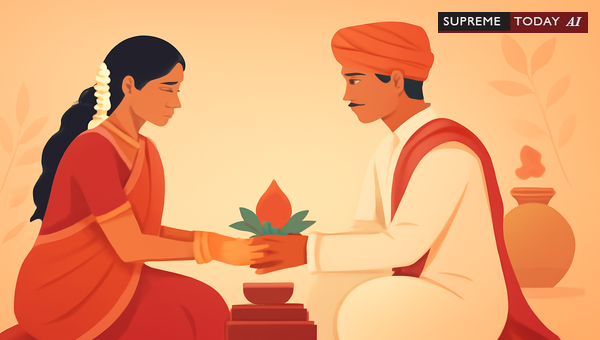
In family law disputes, especially those involving , inheritance, or maintenance, customs play a pivotal role, particularly in communities governed by traditional practices. A common question arises: In the pleading, what are the customs of the marriage? Has to be pleaded. Is it mandatory? This query strikes at the heart of how courts in India handle , which often deviate from like the or .
Generally, when relying on marriage customs to support a legal claim, is not just advisable—it's typically required. Courts demand clarity and proof to recognize these customs as binding. This blog explores the legal standards, drawing from judicial precedents, to help you understand the nuances. Note: This is general information, not specific legal advice. Consult a qualified lawyer for your case.
Customary practices, especially in marriage, can override general laws if proven. However, courts won't accept vague assertions. The main legal finding is clear: customs must be explicitly pleaded with sufficient clarity and specificity, supported by clear and unambiguous evidence demonstrating their long-standing, recognized, and accepted existence within the community. Mere mention without details falls short. 1998 0 Supreme(Mad) 1463 2015 0 Supreme(HP) 169
Key points include:- : Detail the custom's ingredients and scope. 1998 0 Supreme(Mad) 1463 2015 0 Supreme(HP) 169- Proof requirements: Show long usage via instances and community recognition. 1998 0 Supreme(Mad) 1463 2015 0 Supreme(HP) 169 2024 0 Supreme(All) 815- No vague references: Concrete evidence of existence, continuity, and acceptance is essential. 1998 0 Supreme(Mad) 1463 2024 0 Supreme(All) 815
Failing this can doom a case, as seen in disputes over or .
Courts insist on specific pleading of the custom's nature, scope, and recognition. In one landmark observation: It should be recognized that many of the agricultural tribes in the Punjab are governed by a variety of customs, which depart from the ordinary rules of Hindu and Muhammadan Law; in regard to inheritance and other matters mentioned in . And further: A custom, in order to be binding must derive its force from the fact that by long usage it has obtained the force of law... All that is necessary to prove is that the usage has been acted upon in practice for such a long period and with such invariability as to show that it has, by common consent, been submitted to as the established governing rule of a particular locality. 2015 0 Supreme(HP) 169
This means pleadings must go beyond saying per our custom; describe how the marriage is performed, its rituals, and community acceptance. For instance, in tribal contexts, parties may need to plead if they follow Hinduized customs or pure tribal rites. 2022 0 Supreme(Chh) 430
Relatedly, where marriage factum is disputed, must be pleaded and proved. It follows, therefore, that unless the marriage is celebrated or performed with proper ceremonies and due form, it cannot be said to be ''. Where the is disputed, constituting the marriage must be pleaded and proved to show that the marriage was valid. 2021 0 Supreme(Ker) 470
Pleading alone isn't enough; clear, unambiguous evidence of long-standing practice is mandatory. This includes:- Specific instances of observance. 2024 0 Supreme(All) 815- Community recognition, via testimonies or official records like , which are admissible as strong proof. 2015 0 Supreme(HP) 169- Witness statements from knowledgeable community members. 2015 0 Supreme(HP) 169
In a key case: In the absence of specific pleadings, evidence and proof of the alleged custom making the second marriage void, no offence under can possibly be made out against the respondent. 2024 0 Supreme(All) 815
Other sources reinforce this. For Scheduled Tribes, exempts them unless Hinduized customs are pleaded and proven. On record plaintiff has not brought any evidence to establish custom which denies widow and daughter to inherit succession in property. 2022 0 Supreme(Chh) 430 In , customary law governs unless specific pleadings show applicability of Hindu Acts. 2017 0 Supreme(Chh) 64
Even in like maintenance, loose pleading may suffice for general marriages, but customs demand substantiation: Opposite party categorically pleaded, and also laid evidence to substantiate the pleading, that her marriage with the petitioner was as per Hindu rites and customs. 2010 0 Supreme(Ori) 104
Not all customs qualify:- Illegal, immoral, or against : Rejected outright. 1998 0 Supreme(Mad) 1463- Short-term or disputed: Must show long, uninterrupted acceptance. 2024 0 Supreme(All) 815- Vague claims: General assertions without evidence are dismissed. 1998 0 Supreme(Mad) 1463
In disputed second marriages, alone doesn't presume validity without pleaded and proven rites: The essentials of a valid marriage applicable to the parties according to their customary rites has to be pleaded and proved. 2005 0 Supreme(Ker) 66
Amendments to pleadings, like claiming non-solemnization per Hindu rites, highlight how specifics matter in petitions. 2013 0 Supreme(MP) 284
To strengthen your case:1. Plead specifically: Outline the custom's nature, performance, and ingredients.2. Gather evidence: Collect instances, records (e.g., ), and testimonies.3. Verify legality: Ensure the custom aligns with .4. Anticipate disputes: In tribal or caste-specific cases, address statutory overrides via proof.
In family court suits for , proof under —customary rites—is key. 2021 0 Supreme(Ker) 470
Pleading marriage customs is typically mandatory when central to your claim, backed by rigorous proof. Courts prioritize specificity to uphold justice without ambiguity. Vague pleadings risk dismissal, as precedents like 1998 0 Supreme(Mad) 1463, 2015 0 Supreme(HP) 169, and 2024 0 Supreme(All) 815 illustrate.
Key Takeaways:- Always explicitly plead customs with details.- Prove via long usage, recognition, and evidence.- Avoid reliance on presumptions in disputed cases.
For tailored guidance, reach out to a family law expert. Stay informed on evolving jurisprudence to navigate these complexities effectively.
References:1. 1998 0 Supreme(Mad) 1463: Pleading and proving customs clarity.2. 2015 0 Supreme(HP) 169: and evidence, .3. 2024 0 Supreme(All) 815: Specific pleadings for custom acceptance.
(Word count approx. 1050)
#MarriageCustoms #FamilyLawIndia #LegalPleading


The suit was for declaration of the status of the parties, by way of pleading customary divorce, which has been pleaded by the plaintiff, and which has not been denied by the defendant. Both the parties agrees of customs prevalent in the community of taking divorce in a customary way. ... It is required to be noticed that the plaintiff had pleaded about the customs prevalent in the caste of both the parties to obtain customary divorce. ... It was pleaded that the plaintiff belongs to ‘....

He deposed in his examination-in-chief that his marriage was solemnized with the Respondent-wife about 30 years back as per Hindu rites and customs. ... It is also equally settled that no party should be permitted to travel beyond its pleading and that all necessary and material facts should be pleaded by the party in support of the case set up by it. 31. ... 2 (ii) It is further pleaded that with the consent of the Respondent-Defendant-wife, the Appellant-Plaintiff-husband solemnized second ....

customs. ... A pleading of Customary Divorce must be proved by documentary or oral evidence. 25. ... The next pleading made by the respondent was in his Counter to O.P.No.539 of 2021 (filed by the appellant in the Family Court). The pleading of the respondent is as follows: “... on advise of both side well wishers respondent and his first wife Smt. ... Moreover, though Rule 8(1) mandates the presence of a co-respondent, it does not make such requirement mandatory for a petition to be maintained und....

customs. ... A pleading of Customary Divorce must be proved by documentary or oral evidence. 25. ... The next pleading made by the respondent was in his Counter to O.P.No.539 of 2021 (filed by the appellant in the Family Court). The pleading of the respondent is as follows: “... on advise of both side well wishers respondent and his first wife Smt. ... Moreover, though Rule 8(1) mandates the presence of a co-respondent, it does not make such requirement mandatory for a petition to be maintained under s....
It is also equally settled that no party should be permitted to travel beyond its pleading and that all necessary and material facts should be pleaded by the party in support of the case set up by it. 70. ... As per the petition, the Plaintiff/Appellant had pleaded adultery of the Defendant/Respondent-Wife with one Manoj Kumar Mandal, who was also impleaded as Defendant No. 2 in the petition. However, such pleading has not been made in the present divorce petition. ... It is further averred that his marriage#HL....

Hindu Marriage Act, 1955 has held that the custom cannot be only pleaded but it has to be proved that the parties were entitled for a customary divorce.

It may be emphasised that mere pleading of a custom stressing for monogamy by itself was not sufficient unless it was further pleaded that second marriage was void by reason of its taking place during the life of such husband or wife. ... ... 13 In this case the appellant filed a complaint in the Court of Chief Metropolitan Magistrate, New Delhi stating therein that her marriage was solemnised with the respondent in Delhi "according to Hindu rites and customs". ... It is conceded even by the appellan....

As customs, when pleaded are mostly at variance with the general law, they should be strictly proved. ... Jambu Prasad, (1910) ILR 32 247, Privy Council held that: “The custom alleged in the pleading was this: “Among the Jains Adoption is no religious ceremony and under the law or custom there is no restriction of age or marriage among them.” ... When specific question was put to him how marriage is performed in their community then he has stated that similar to Hindu marriage. He has....

... 3) Without there being any pleading, during her cross-examination as R.W-1 before the lower Court, the appellant deposed that in two ways her marriage with the respondent was solemnised; firstly on 20.06.1986 as per Hindu rites and customs ... There is no pleading on the part of the husband that his wife has got faith in Hinduism and was following Hindu customs in her life. In the absence of valid plea and evidence, finding of the lower Court on this aspect is baseless. ... The expression may used i....
Once it is found that the parties are governed by the Customary Law, the parties are required to plead and prove the customs, by which, they are governed in matters concerning marriage and divorce etc. 17. ... Appellant/wife has moved application with the averment that she and respondent/husband (for brevity ‘husband’) belong to Scheduled Tribe and their marriage was solemnized in the year 2012 as per their social rituals and customs and from their wedlock they were blessed with a girl child. ... The husband has filed re....

It follows, therefore, that unless the marriage is celebrated or performed with proper ceremonies and due form, it cannot be said to be 'solemnized'. Where the factum of marriage is disputed, essential ceremonies constituting the marriage must be pleaded and proved to show that the marriage was valid.
Further, it has been pleaded that the marriage of the appellant was performed in accordance with the rituals and customs prevalent in their caste shows the omission in pleading that the marriage was solemnized in accordance with the Hindu Customary Rights. Section 2(2) of Hindu Adoptions and Maintenance Act provides: 'Notwithstanding anything contained in sub-section (1), nothing contained in this Act shall apply to the members of any Scheduled Tribe within the meaning of clause (25) of Article 366 of the Constitution unless the Central Government, by notification in the Of....

By amendment it is pleaded that marriage of respondent has not been solemnized according to Hindu customs and rites. Therefore, the petition under section 10 of the Act is not maintainable.

In his written statement, the petitioner did not deny such averments made in the application. In the present case, opposite party categorical¬ly pleaded, and also laid evidence to substantiate the pleading, that her marriage with the petitioner was solemnized as per Hindu rites and customs. He also did not plead regarding his marriage with O.P.W.2. In Dwarika Prasad Satpathy v. Bidyut Prava Dixit and another (supra), it has also been laid down that in proceedings under Section 125 of the Cr.P.C., which are sum¬mary in nature, strict proof of performance of essential rites ....
According to him the plaintiff was only a domestic servant of Sanku Kumaran residing along with him and continuing to cling on to the house even after his death. This is a case where the defendant who is admittedly the son born to Sanku Kumaran in his first wife has emphatically denied the alleged marriage between the plaintiff and Sanku Kumaran. The essentials of a valid marriage applicable to the parties according to their customary rites has to be pleaded and proved.


An indispensable Tool for Legal Professionals, Endorsed by Various High Court and Judicial Officers
Please visit our Training & Support
Center or Contact Us for assistance

Scan Me!
India’s Legal research and Law Firm App, Download now!


For Daily Legal Updates, Join us on :



 Back to top


