



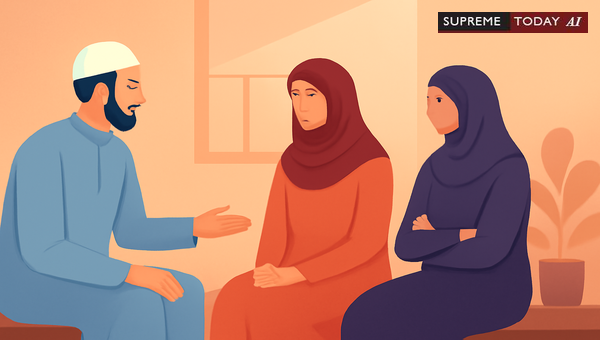
Is Legal in India? Muslim Law on Two Wives
In a diverse country like India, marriage laws can vary significantly based on religion and personal laws. A common question arises: Is it legal to have 2 wives without dissolving the 1st wife? This query often stems from cultural practices, particularly under , where has historical roots. While Hindu law strictly prohibits post-, Muslim men may marry up to four wives simultaneously—but not without legal caveats and protections for existing spouses. This post breaks down the legal framework, rights involved, and real-world implications, drawing from court precedents and statutes. Note: This is general information; consult a legal expert for personalized advice.
Overview of Laws in India
India's legal system recognizes personal laws for marriage, , and inheritance. Under the , is illegal and punishable, but permits for men, allowing up to four wives at once, provided they treat them equitably as per Islamic principles. This right is upheld in Indian courts 2010 0 Supreme(Ker) 154. However, the first wife's consent is not required, but her rights remain intact 1987 0 Supreme(SC) 402.
isn't unrestricted. Courts emphasize fairness, obligations, and potential grounds for dissolution if cruelty arises. For non-Muslims, attempting a second marriage without invites criminal charges under .
Muslim Law on : Key Principles
Right to Multiple Marriages
A Muslim man can legally marry a second wife without dissolving the first marriage 2010 0 Supreme(Ker) 154. This stems from Quranic allowances, recognized in India. As one source notes: A Muslim man has the legal right to marry up to four wives at the same time, as per Islamic law. This right is recognized under Indian law as well 2010 0 Supreme(Ker) 154.
However, equity is mandated—financially supporting all wives equally. Failure can lead to disputes.
Rights of the First Wife
The first wife isn't left vulnerable:- Rights: She retains the right to , even post-second marriage. Courts affirm: the first wife is entitled to claim even if her husband marries again. The courts have held that the first wife's claim for is not barred by the husband's right to remarry 2001 0 Supreme(Chh) 97.- Refusal of Cohabitation: She can refuse to live with a husband who takes another wife 1987 0 Supreme(SC) 402.- Grounds for : Remarriage may constitute , enabling petitions 2010 0 Supreme(Ker) 154. In , the court ruled: a husband cannot compel the first wife to accept a second wife, and if she does not wish to share her husband, she cannot be forced to do so 2010 0 Supreme(Ker) 154.
Second wives also have claims: The courts have also recognized that the second wife may claim if she is unable to live with her husband who is living with his first wife 1971 0 Supreme(Kar) 179.
Legal Precedents and Case Insights
Indian courts have shaped 's boundaries through judgments:- In disputes, even divorced wives (under certain personal laws) may claim support if destitute, highlighting legislative compassion: the term 'wife' under would include a divorced wife 2017 0 Supreme(Guj) 973. Though focused on Hindu contexts, this underscores broader protections.- Inheritance cases involving multiple wives illustrate complexities. For instance: It is claimed by the plaintiffs that Jayalakshmi is the 1st wife and the Kamalammal is the 2nd wife, whereas, the 1st defendant has stated that Kamalammal is the 1st wife and Jayalakshmi is the 2nd wife 2022 Supreme(Online)(MAD) 5060. Such disputes over legal heirship often require adjudication 2022 Supreme(Online)(MAD) 24900.- In property partitions: Mithu Sao had two wives, namely, Temni (1st wife) and Bilaso Devi (2nd wife) 2017 3 Supreme 610, showing joint family shares persist despite multiple marriages, with under for heirs.
These cases reveal that while is permissible for Muslims, it triggers inheritance, , and heirship battles, often pitting first and second wives' children against each other
V. SANKAR vs V. ULAGANATHAN
.Implications of a Second Marriage Without Dissolution
- For the Husband: Must provide equal ; neglect invites claims from both wives.
- For the First Wife: Remedies include:
- suits.
- on cruelty grounds 2014 0 Supreme(All) 1890.
- Separate residence without forfeiting support 2001 0 Supreme(Chh) 97.
- For Children: All offspring from both marriages are legitimate heirs, but proving status can lead to litigation, as in: the petitioners are the of the deceased Sri D. Yadagiri and the 1st petitioner is the
.
Post- scenarios add layers: Even if a first marriage dissolves, may continue if the wife is unable to sustain herself, per expansive interpretations of 'wife' under CrPC 2017 0 Supreme(Guj) 961.
Broader Context from Other Cases
Non-Muslim examples highlight contrasts. In Hindu joint families with alleged second wives: The said first wife Qamarbano had a son... Mr. Hamid Ali Khan had two wives Qamarbano (1st wife) and Zeban Bano (2nd wife) 2017 0 Supreme(Bom) 1600. But such unions are invalid, affecting heirship. Civil courts resolve: disputes between the first and second wives claiming Legal Heirship Certificate, have to be adjudicated only before the 2022 Supreme(Online)(MAD) 24900.
Under Hindu law evolution: Cases like Yamunabai Anantrao v. Anantrao Shivaram exclude 'informal' wives from , unlike Muslim law 2017 0 Supreme(Guj) 973.
Conclusion and Key Takeaways
Yes, under in India, it is generally legal for a man to have two (or up to four) wives without dissolving the first marriage 2010 0 Supreme(Ker) 154. However, this comes with strict obligations: equitable treatment, for all wives, and respect for the first wife's right to refuse cohabitation or seek on cruelty grounds 1987 0 Supreme(SC) 402 2001 0 Supreme(Chh) 97. Courts protect vulnerable parties, ensuring no one is left destitute.
Key Takeaways:- is religion-specific; illegal for Hindus, Christians, etc.- First wife: , no forced sharing 2010 0 Supreme(Ker) 154.- Consult lawyers before second marriages to navigate , inheritance 2014 0 Supreme(All) 1890.- Disputes often involve CrPC Section 125 and civil suits.
Recommendations:- Seek legal counsel for compliance.- First wives: Know your remedies under law.
References: 2010 0 Supreme(Ker) 154 1987 0 Supreme(SC) 402 2001 0 Supreme(Chh) 97 2014 0 Supreme(All) 1890 1971 0 Supreme(Kar) 179 2022 Supreme(Online)(MAD) 5060 2017 0 Supreme(Guj) 973 2017 3 Supreme 610
This overview empowers informed decisions in complex family matters. For tailored advice, contact a family law specialist.
#PolygamyIndia, #MuslimFamilyLaw, #SecondMarriageRights







