


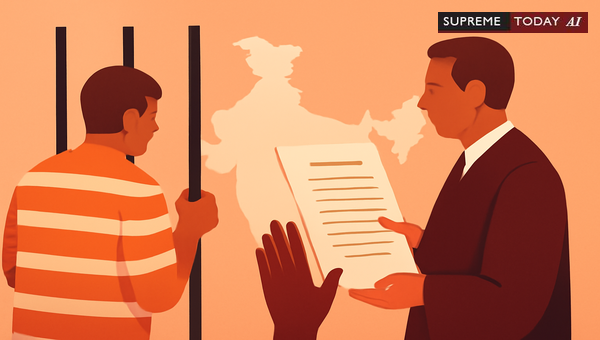
How Prisoners File Civil Suits in India: A Comprehensive Guide
Prison life in India is tough, but it doesn't strip away constitutional protections. Many wonder: How can a prisoner file a ? The answer is yes—they can seek damages for violations of , even inside prison walls. This guide breaks down the legal pathways, drawing from key judgments and principles under Indian law. Whether it's causing injury or by officials, prisoners have remedies. We'll explore rights, procedures, limitations, and contrasts with other jurisdictions for a full picture.
Note: This is general information based on case law and not specific legal advice. Consult a lawyer for your situation.
Prisoners Retain
Incarceration doesn't mean forfeiting basic human rights. guarantees the , encompassing dignity and protection from harm. Courts have consistently held that prisoners do not forfeit their upon incarceration and prisoners retain their , including the Right to Life, even when confined 2000 4 Supreme 742.
This means violations like inadequate medical care, assault by staff, or leading to death can trigger . For instance, in cases of harm within prisons, courts award compensation, affirming these rights persist behind bars 2000 4 Supreme 742.
Key Protections Under
- Right to Dignity: Prisoners entitled to humane treatment.
- Remedies for Violations: Civil suits for damages from or malice.
- No Forfeiture on Imprisonment: Rights continue, enabling legal action 2000 4 Supreme 742.
Filing a : Step-by-Step Insights
Prisoners or their representatives can initiate civil suits in appropriate courts for by state officials. The process mirrors standard civil litigation but with prison-specific nuances:
- Identify the Violation: Acts like causing injury or death qualify as torts.
- Draft the Plaint: Allege breach of , seek damages.
- File in : Jurisdiction based on cause of action; no bar for prisoners.
- Overcome Defenses: doesn't apply.
Courts have ruled that a prisoner can file a for damages arising from acts or omissions that violate their rights, including or by officials 2000 4 Supreme 742. In one pivotal case, death due to prison led to compensation, as the suit wasn't barred by limitation—acts were tortious, not statutory duties 2000 4 Supreme 742.
: No Shield for State Wrongs
A common defense—the —holds no water in India. The plea of or the archaic maxim that does not apply in Indian law, and state officials can be held liable for 2000 4 Supreme 742. Power resides with the people via elected representatives; government must answer for constitutional breaches.
This rejection extends to prison contexts: or malfeasance by officials invites civil suits. The doctrine that or that the Crown is not answerable in has no place in Indian jurisprudence 2000 4 Supreme 742.
When Immunity Fails
- or : No protection 2000 4 Supreme 742.
- Tortious, Non-Statutory Acts: Full liability.
- Resulting Harm or Death: Damages awardable.
Limitation Periods and Procedural Hurdles
Suits follow the . Generally, one year for torts, but not barred if not pursuant to . The limitation period for such suits is governed by the , and the limitation is not necessarily barred by , provided the suit is for acts not in pursuance of any enactment 2000 4 Supreme 742.
Exceptions:- Immunity inapplicable for non-statutory torts.- Prompt filing advised to avoid bars 2000 4 Supreme 742.
Insights from Related Cases
While Indian law empowers prisoners, contrasts exist elsewhere. In the US, the imposes hurdles like the three strikes rule: In no event shall a prisoner bring a civil action or appeal... if the prisoner has, on 3 or more prior occasions... 2022 Supreme(US)(ca11) 18. Prisoners must pay fees upfront or in installments under , unlike India's more accessible approach 2025 Supreme(US)(ca9) 127.
Domestically, civil suits appear in varied contexts. For property rights, can only be questioned or set aside by a . The or any revisional authority cannot annul 2021 0 Supreme(Raj) 901. The State may file suits if needed: Needless to observe that State shall be free to file a (if so desired) in accordance with law 2021 0 Supreme(Raj) 901 2021 0 Supreme(Raj) 1054.
Prisoner leave cases highlight compliance: A convict absconding after emergency leave was denied ordinary leave under Tamil Nadu rules, underscoring discipline's role 2024 0 Supreme(Mad) 1288. These reinforce that while suits are viable, prison conduct matters.
In insurance disputes, courts scrutinize claims, but principles align—unjust repudiation leads to liability
Sree Veera Venkata Satyanarayana Straw Boards Pvt. Ltd. VS United India Insurance Company Ltd.
. Share rectification suits face bars, showing jurisdiction limits: all the cases arising out of the breach and must fall within the of 2005 0 Supreme(Bom) 1635. Yet, for prisoner rights, civil courts remain open.Practical Recommendations
- Act Promptly: File within limitation to secure remedies.
- Gather Evidence: Document or violations.
- Seek Legal Aid: NGOs or prison paralegals can assist.
- Authorities' Duty: Prisons must prevent liabilities via better security 2000 4 Supreme 742.
Courts urge: Prisoners or their representatives should file civil suits promptly... Governments and prison authorities should ensure adequate security 2000 4 Supreme 742.
Key Takeaways
- Prisoners can sue for rights violations; no bar 2000 4 Supreme 742.
- protects life and dignity inside prisons.
- by officials lead to damages, not shielded by outdated doctrines.
- Contrast US PLRA restrictions—India favors access to justice.
In sum, Indian jurisprudence empowers prisoners to hold the state accountable. For personalized guidance, reach out to a legal expert. Justice isn't locked away.
References:1. 2000 4 Supreme 742: Core judgment on rights, suits, immunity.2. 2025 Supreme(US)(ca9) 127, 2022 Supreme(US)(ca11) 18: US contrasts.3. 2021 0 Supreme(Raj) 901, 2021 0 Supreme(Raj) 1054, 2024 0 Supreme(Mad) 1288,
Sree Veera Venkata Satyanarayana Straw Boards Pvt. Ltd. VS United India Insurance Company Ltd.
, 2005 0 Supreme(Bom) 1635: Related contexts. #PrisonerRightsIndia, #CivilSuitGuide, #FundamentalRights















