


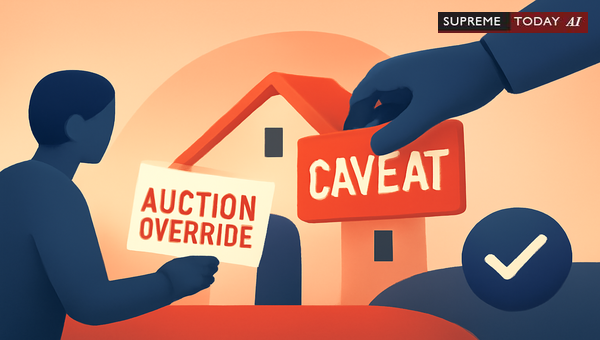
Can an Auction Override a Private Caveat on Property?
Purchasing property at an auction can be an exciting opportunity, but what happens when a private caveat clouds the title? Many buyers wonder: Can an auction override a private caveat? This question arises frequently in real estate transactions, especially in court-ordered sales where speed and finality are key. In this post, we explore the legal nuances, drawing from established case law to provide clarity.
While auctions transfer property rights to the highest bidder, they do not automatically erase existing caveats. The outcome hinges on the caveat's validity and the purchaser's status. Let's break it down step by step.
What is a Private Caveat and When Does It Matter?
A private caveat is a statutory notice lodged against a property title to protect a claimant's interest, such as an equitable right or pending legal claim. It alerts potential buyers and prevents dealings with the land without notice. However, its power depends on legitimacy.
Courts emphasize that
. Without this, the caveat can be deemed wrongful and removed.
In property auctions—particularly public or court-ordered ones—the presence of a caveat raises concerns for bidders. Does the auction's momentum supersede it? Typically, no.
Does an Auction Automatically Override a Private Caveat?
No, an auction does not inherently override or nullify a private caveat. A successful auction establishes the purchaser's rights, but existing caveats persist unless challenged and invalidated.
Key considerations include:- Purchaser as '' Party: A buyer who obtains a court order and pays the full price becomes an '' party if the caveat hinders their rights
. Knowledge of the caveat beforehand does not bar this status.- Caveat Based on Pending Suits: Mere pending civil suits do not create caveatable interests unless proving a wrongful act or entitlement
.
For instance, courts have ruled that ' party if a caveat adversely affects their legal rights
. This protects bona fide buyers.
The Nature of Caveats in Auction Contexts
Caveats serve as protective notices but must stem from genuine interests. Wrongful lodgment of a caveat can be challenged and removed
. Even post-auction, invalid caveats do not stand.
In one analyzed case, a defendant's caveat—tied to a pending suit—was deemed wrongful because the suit lacked caveatable merit, allowing removal after the auction
.
Purchaser Protections Beyond Caveats
Auction purchasers often benefit from doctrines limiting prior liabilities, akin to but distinct from caveat issues. For example, in insolvency auctions under frameworks like the , ' cannot be applied in the case of the auction purchaser in an asset sale, because it is not possible for an auction purchaser to have a prior idea of any existing liability which, in any event, was not there'2023 0 Supreme(Cal) 83.
Here, an auction buyer was not liable for the prior owner's electricity dues, as they lacked nexus to the default. Courts held: 'The writ petitioner, being an auction purchaser under the , cannot be unfairly classified as 'any consumer'... Such an application would be discriminatory'2023 0 Supreme(Cal) 83. This underscores protections for strangers to prior disputes.
Similarly, ''2017 0 Supreme(Bom) 155. These principles reinforce that auctions confer clean(ish) titles, subject to valid claims.
In mortgage enforcement sales, title documents may be withheld pending title disputes, but auction certificates generally stand unless overturned 2020 3 Supreme 661.
Key Legal Principles Summarized
- Auctions do not automatically extinguish caveats; validity is scrutinized independently.
- Caveats require legitimate interests—pending claims alone suffice not
.
- Purchasers qualify as '' post-payment, enabling caveat removal applications
.
- Knowledge does not preclude challenges
.
Exceptions and Limitations
Valid caveats with proven interests survive auctions. Conversely:- Wrongful caveats are removable post-sale
.- Auction buyers enjoy safeguards against hidden liabilities, as ' applies' but with limits for innocents 2020 3 Supreme 661.
Public interest can influence related policies, but core property rights prevail unless statutorily overridden.
Practical Recommendations for Buyers and Claimants
- For Purchasers: Perform thorough due diligence—land searches, title checks. If a caveat appears, assess its basis before bidding. Post-purchase, apply to court as an party if needed.
- For Caveat Lodgers: Ensure claims demonstrate clear caveatable interests to withstand scrutiny
.
- General Advice: Consult professionals early. Auctions demand speed, but validity trumps finality.
Conclusion: Proceed with Caution
In summary, an auction does not automatically override a private caveat. Its fate rests on legal validity, with courts empowering purchasers to seek removal of invalid ones. While protections exist—like exemptions from prior dues—buyers must navigate caveats diligently.
This is general information based on precedents and not specific legal advice. Laws vary by jurisdiction (e.g., Malaysian Torrens system influences here). Always seek tailored counsel from a qualified lawyer.
Key Takeaways:- Validate caveats pre-auction.- Leverage '' status post-purchase.- Auctions protect innocents, but due diligence is essential.
For more on property law, stay tuned!
References
: Caveatable interest necessity and removal.
: purchaser rights.
: Pending suits insufficient.
- 2023 0 Supreme(Cal) 83: Auction purchaser liability limits.
- 2017 0 Supreme(Bom) 155: Court auction protections.















