


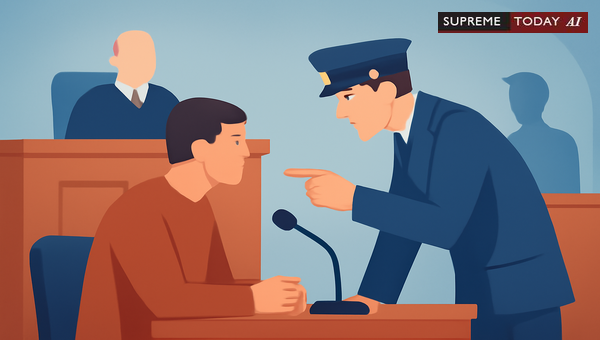
Prosecution Can't Talk to Witnesses During Court Breaks?
In high-stakes proceedings, maintaining the sanctity of is paramount. Imagine a witness has just stepped down from the box after giving evidence—can the prosecution pull them aside during a court break for a quick chat? The answer, grounded in principles of , is typically no. This post explores the legal boundaries around , delving into why unauthorized communication undermines fair trials. We'll break down key rulings, precedents, and protocols to clarify this nuanced issue.
Understanding the Core Issue in Trials
Court-martials, governed by military law, demand unwavering adherence to standards, much like civilian courts. Once a witness enters the witness box and testifies, they fall under the court's protective umbrella. Any off-the-record interaction risks tainting evidence and violating the accused's rights. 2020 1 Supreme 141
The question arises: Does the prosecution's inability to freely communicate with such witnesses justify withdrawing the case? Generally, no—procedures exist to recall or summon witnesses formally, but casual breaks don't qualify. As highlighted in precedents, the shows scenarios where witnesses, after entering the box, shift stances or produce documents, emphasizing the need for controlled environments.
Principles of and Witness Protection
rights, enshrined in , prohibit improper influence on witnesses post-. The court's duty is to shield testimonies from external pressures. The right of the accused to a includes protection from improper influence or communication with witnesses during proceedings. 1999 8 Supreme 364
Judgments stress that witnesses, once sworn, are off-limits for informal talks. For instance, in cases where prosecution witnesses fail to support the story after entering the box, courts scrutinize the process rigorously.
The star witness appearing as PW-1 underscores how sanctity prevents undue sway.
- No explicit provisions for break-time chats: Court protocols lack rules allowing parties to converse with examined witnesses during adjournments.
- Risk of prejudice: Even benign questions could subtly influence recall, eroding .
- Court's control: Post-examination, witnesses are under judicial supervision to ensure untainted evidence. 1997 10 Supreme 377
Judicial Precedents on Witness Handling
Indian courts, including those addressing military matters, reinforce these boundaries. In 2022 3 Supreme 294, the power under to summon witnesses aims to find the truth and not to fill lacunae or influence witnesses improperly. This extends to breaks—informal contact circumvents formal channels.
Related rulings echo this:- Witnesses must complete without interruptions; reopening requires court orders, not ad-hoc discussions. 2021 0 Supreme(Mad) 385 Only thereafter can the witness graze the witness box. They cannot simply come to the witness box and invite... them.- Prosecution can't casually engage post-examination; doing so invites challenges to trial fairness. 2011 0 Supreme(MP) 819 In enquiries, followed by cross is sequential to prevent contamination—one witness completes before the next enters.
In military contexts, like Air Force inquiries, statements given under formal questioning are protected, and additional evidence requests are tightly controlled.
Communication During Court Breaks: A Clear Prohibition?
While documents don't explicitly ban break-time talks, the implication is strong. The general legal stance... is that any communication outside the court’s supervision risks prejudicing the trial process. 1997 10 Supreme 377 discusses proper conduct, cautioning against improper influence.
Consider scenarios where witnesses contradict earlier statements—courts probe for external factors. In 2022 0 Supreme(All) 420, last-seen witnesses' credibility falters post-examination, highlighting why isolation post-box entry matters.
Civil offences in court-martials further illustrate: lapses in evidence handling don't excuse procedural shortcuts. 2023 0 Supreme(Cal) 1076 Civil offences not triable by ... Such lapse on the part of the investigating agency will not affect...
Exceptions, Risks, and Best Practices
Are there exceptions? Rarely. Section 311 allows recalling for truth-finding, but only via court order—not breaks. Applications for scientific experts or further cross need robust grounds. 2021 0 Supreme(MP) 569 Application does not contain sufficient pleadings... necessary ingredients for invoking power under section 311 not established.
Risks of violation:- Trial invalidation: Breach could lead to claims.- : Courts may draw negatives against non-compliant parties. 2017 0 Supreme(P&H) 1416- Disciplinary fallout: Parties face misconduct charges.
Recommendations for compliance:1. Stick to formal channels—use Section 311 for needs.2. Courts should monitor breaks to prevent contact.3. Parties: Document all witness interactions pre-trial only.
In appeals, non-examination of key officers weakens chains, as in murder cases where IO gaps doom prosecutions. 2023 0 Supreme(Chh) 249 It is desirable for the prosecution to produce the at the trial...
Broader Implications for Military and Civilian Trials
These rules transcend court-martials, influencing applications. In cases like assault or murder, witness credibility hinges on procedural purity. Related military jurisdiction note: If armed forces members are involved, courts defer unless claimed.
For instance, in a conviction under , civil courts proceeded sans military intervention, upholding witness testimonies. Echoing ethos.
Key Takeaways
- Prohibited Contact: Post-, no party should engage witnesses during breaks in or similar trials. 1999 8 Supreme 364
- Paramount: Protects accused from influence, ensures truth via formal means.
- Precedents Guide: Section 311 is for truth, not influence; breaches risk appeals.
- Practical Tip: Courts and parties must vigilantly uphold protocols.
This analysis draws from established judgments, but laws evolve—consult a qualified lawyer for case-specific advice. This is general information, not legal counsel. Stay informed on evolving military justice standards.
References:1. 2020 1 Supreme 141 - procedures in court-martials.2. 1999 8 Supreme 364 - Protection from undue influence.3. 2022 3 Supreme 294 - Section 311 for truth-finding.4. 1997 10 Supreme 377 - Proper trial conduct.
#CourtMartial #FairTrial #WitnessRights

















