


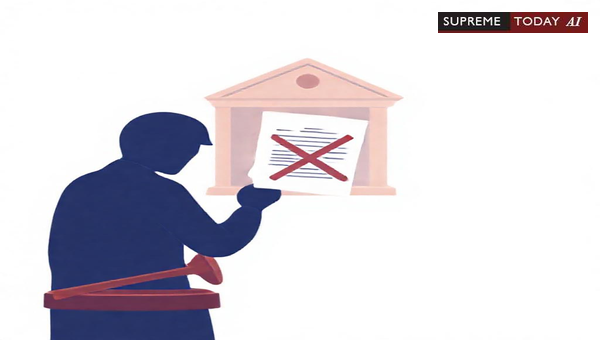
When a Criminal Compromise Cannot Rescue a Defective Property Title in India
Property disputes in India frequently travel on two parallel tracks — a civil suit questioning the validity of a sale deed, and a criminal complaint alleging cheating, forgery, or criminal breach of trust. A recurring question before the courts is whether the quashing of a criminal case on the basis of a compromise between the parties has any effect on the legality of the sale deed itself. The settled position is that it does not. A compromise in a criminal proceeding has no legal authority to validate a sale deed that is void or voidable under substantive civil law, because criminal proceedings and civil disputes over property instruments operate in entirely distinct spheres.
Why Criminal and Civil Remedies Remain Independent
The judiciary maintains a firm separation between the adjudication of property rights and the prosecution of criminal offences. Even where a sale deed is alleged to be forged or fraudulent, the remains the primary authority for determining the validity of the instrument. As one judgment clarifies, the shall decide the civil suit pending between the parties on its own merits and on the basis of the evidence that may be led by both the sides. 2023 1 Supreme 750
Two foundational principles flow from this separation:
- Simultaneous proceedings are permitted. A civil suit and a criminal proceeding can both be maintainable and run at the same time, but the Result in one proceeding would not be binding on the court determining the issue before it in another proceeding. 2009 0 Supreme(SC) 973
- Criminal outcomes do not bind civil courts. The doctrine of does not apply to criminal proceedings, so an acquittal, a quashing order, or a compromise in a criminal case cannot be used to affirm the legality of a conveyance in a civil dispute.
This means that even if the parties settle their criminal complaints and the case is quashed, the underlying defect in the sale deed — whether it stems from fraud, impersonation, minority, lack of authority, or violation of a statutory bar — remains untouched and must be dealt with in a civil forum.
The Limits of Quashing Under Section 482 CrPC
The inherent power of the High Court under exists to prevent and to secure the ends of justice. It is not a forum for adjudicating the validity of property transfers. Courts have repeatedly cautioned that are not meant to be used for settling scores or pressurize parties to settle civil disputes. 2023 3 Supreme 570
Where a dispute is essentially civil in nature — for example, a disagreement over whether consideration was paid, or whether a seller breached an agreement to sell — the criminal process should not be invoked as leverage. However, criminal proceedings may properly be quashed where the complaint fails to disclose the such as cheating or forgery, and merely dresses up a civil disagreement in criminal language.
Significantly, quashing a criminal case produces no restorative effect on title. If the deed was void from inception, the compromise cannot breathe life into it; if it was merely voidable, the compromise cannot substitute for a decree of cancellation.
Void Versus Voidable: Why the Distinction Matters
The legal character of a document is governed by substantive law, principally the and the Specific Relief Act, 1963.
- A remains valid against the whole world until it is formally set aside. As the case law puts it, A is valid against whole world till avoided. A voidable document has to be actually set aside before taking its legal effect. 2019 2 Supreme 745 For instance, a registered transfer made in contravention of land ceiling laws has been held to be voidable rather than void, and remains binding on until cancelled by a competent . 2026 0 Supreme(SC) 722
- A void document is a . Sale deeds executed in violation of an injunction order, for example, have been held void, with the doctrine of applying to such transactions. 2021 0 Supreme(All) 1722 Where a document is void ab initio, a formal decree setting it aside may not strictly be necessary, but the burden still rests on the party asserting invalidity to prove it in appropriate proceedings. 2014 0 Supreme(AP) 682
prescribes the limitation period for suits to cancel voidable instruments — documents that are prima facie valid but are attacked on grounds of coercion, undue influence, or fraud. That Article does not apply to instruments that are . 2014 0 Supreme(AP) 682 Parties challenging a registered deed must therefore be careful both about the correct characterisation of the document and about filing within the prescribed limitation period.
Why Compromises Cannot Cure Title Defects
The logic against validating a defective deed through compromise is the same logic that prohibits ratification of a void transaction by any authority. In an old but instructive line of authority, the Privy Council-era principle was affirmed that where a sale was void in its inception — executed before the extinction of the decree and before the Collector's powers terminated — the subsequent action of the Collector in accepting the adjustment could not validate it. 1940 0 Supreme(Nagpur) 70 If a transfer was void at inception, no subsequent ratification, permission, or settlement can cure it.
The same reasoning applies to criminal compromises. A settlement memo recorded in a criminal case, or the quashing of the FIR pursuant to that settlement, is simply not the judicial process that the law requires for nullifying or confirming a conveyance. Notably, even court-recorded compromises in civil proceedings carry consequences of their own — a compromise deed once lawfully recorded can bar a subsequent suit challenging the decree under 2023 0 Supreme(Del) 4260, and parties cannot casually resile from compromise memos recorded after the court examined them 2021 0 Supreme(Mad) 3135. But these effects operate within the civil framework; they do not convert a void deed into a valid one, nor does a criminal settlement achieve anything of the sort.
There is also an equitable caution running through the case law: courts will not assist a party who seeks to benefit from his own wrong, for instance by asking that his own tainted transaction be declared void while claiming consequential relief flowing from that very wrong 2025 5 Supreme 731.
Practical Steps for Challenging a Defective Sale Deed
For anyone questioning the validity of a sale deed, the following approach is generally advisable:
- File a civil suit for declaration and cancellation under , rather than relying on criminal complaints as the primary remedy.
- Act within limitation. Suits to cancel voidable instruments are typically governed by , and courts will not entertain time-barred claims; knowledge of the transaction can be relevant to computing limitation 2015 0 Supreme(Kar) 517.
- Plead the correct characterisation. Where a deed is asserted to be , the plaintiff may not need a formal , but the pleadings and evidence must still establish the nullity 2014 0 Supreme(AP) 682.
- Do not treat a criminal compromise as conclusive. The outcome of a quashing or settlement in a criminal case leaves the civil questions — title, possession, and the deed's validity — entirely open.
- Remember that collateral challenges have limits. A bare suit for partition, for example, may not lie where a sale deed casts a that must first be set aside 2018 0 Supreme(AP) 700.
Key Takeaways
The answer to the question posed is clear: quashing a criminal case on the basis of a compromise does not validate a . Criminal and civil remedies are independent; the result of one proceeding is not binding on the other; and the validity of a conveyance can only be determined — and, where necessary, set aside — by a competent . A voidable deed remains good against the world until avoided by decree, and a void deed is a nullity that no settlement can revive. Because the correct remedy, limitation period, and characterisation of the document can be fact-specific, anyone facing such a dispute may wish to consult a qualified advocate before proceeding.
#VoidSaleDeed #CriminalCaseQuashing #PropertyLawIndia #SpecificReliefAct #SaleDeedCancellation









