


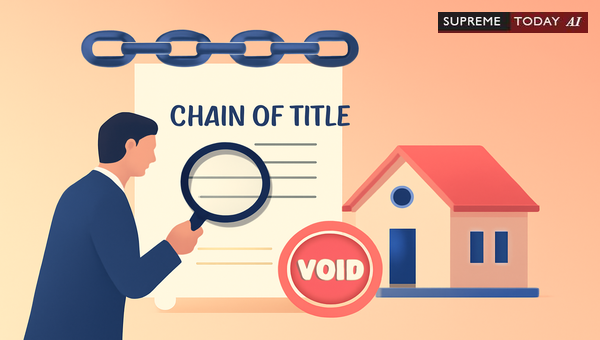
Does Lack of Void Property Sales?
In the complex world of real estate transactions, few issues can derail a deal faster than problems with the . Imagine purchasing your dream property, only to discover later that the seller lacked valid ownership, rendering your transaction potentially worthless. This raises a critical question: Absence of Clear Void the Sale Transaction?
This blog post delves into Indian property law principles, exploring how a defective —particularly stemming from a —impacts subsequent sales. We'll cover key legal tenets, landmark cases, and practical advice. Note: This is general information, not legal advice. Consult a qualified attorney for your specific situation.
Understanding and Void Sales
The refers to the sequence of historical transfers of property ownership, documented through deeds and records. A clear chain ensures the seller has legitimate rights to convey title. When this chain is broken—often due to a executed by someone without title—the consequences ripple through future transactions.
Key Legal Principles
A sale deed by a vendor lacking title is typically , meaning it has no legal effect from the start. Subsequent sales based on such a deed are equally invalid. As established in judicial rulings, a vendor without the right to sell cannot confer any valid title to a subsequent purchaser 2021 0 Supreme(Mad) 536 2005 0 Supreme(Ori) 560 2017 0 Supreme(UK) 385.
- Void Sale Deeds: These convey no rights, leaving the true owner unaffected. A void document does not strip the rights of the real owner, and such a document can be ignored as if it never existed 2005 0 Supreme(Ori) 560.
- Subsequent Purchasers: Even innocent buyers acquire no title if the root transaction is void 2005 0 Supreme(Ori) 560 2017 0 Supreme(UK) 385.
- Suits: To challenge a void deed or seek enforcement, the original vendor must be joined as a party; otherwise, the suit may fail for 2006 0 Supreme(AP) 1012.
- : Courts may consider for value without notice, but this rarely overrides a fundamentally void original sale 1953 0 Supreme(SC) 110 1998 0 Supreme(Mad) 239.
In scenarios involving fraud, titles can be . For instance, under frameworks like the , indefeasibility of land title... is subject to provisions regarding fraud, and the burden of proof lies on the purchaser to establish good faith and valuable consideration
. Failure to prove due diligence often leads to loss of title.
Landmark Case Law Insights
Indian courts have consistently upheld these principles through pivotal judgments:
- : The ruled that a void sale conveys no title, making any subsequent sale equally void 1998 0 Supreme(Mad) 239 2008 2 Supreme 847.
- : Reinforced that void instruments are non-binding on true owners 2005 0 Supreme(Ori) 560.
Additional precedents highlight exceptions and nuances:
- In cases of unauthorized sales, such as by a power agent without authority, plaintiffs can sue for partition without needing to set aside the deed, as when the instrument of sale is void, the title does not vest with the buyer 1999 0 Supreme(Mad) 2770.
- Sales of specific properties, like temple lands, require mandatory approvals (e.g., under ). Without them, even court-ordered sales are void, and subsequent transactions fall: the subsequent sale... are without any valid title and the said sale transactions are declared as void 2022 0 Supreme(Mad) 2010.
- For joint family property, a karta's sale may bind members if for legal necessity, but void deeds still fail: transactions by karta... are binding... when executed for legal necessity or benefit of estate 2024 0 Supreme(Jhk) 693.
These cases underscore that while equity protects good faith buyers generally, a defective trumps such claims if the foundational deed is void.
Impact on and Equity
Buyers often rely on the doctrine of bona fide purchaser for value without notice. However, if the prior sale was void due to lack of title, no amount of good faith salvages ownership. Courts emphasize due diligence: the appellant failed to prove it was a bona fide purchaser for value, and the fraudulent nature of the transactions rendered the titles
.
In scenarios (), transfers during litigation are valid but subservient to the suit's outcome. A subsequent buyer steps into the transferor's shoes: If the transferor has no right, he acquires none 2015 0 Supreme(Kar) 1226. This doesn't void the sale ab initio but subordinates it.
Practical Implications and Legal Recourse
A broken doesn't just void sales; it complicates enforcement:
- Verification Challenges: Title searches must trace back fully; gaps invite disputes.
- Litigation Risks: Suits for declaration or possession require all parties, including vendors, to avoid dismissal.
- Remedies: True owners can ignore void deeds and seek possession directly, as no court decree is needed to set aside a 1999 0 Supreme(Mad) 2770.
Recommendations for Buyers and Sellers
To mitigate risks:- Conduct Thorough Due Diligence: Review , , and historical deeds. Verify seller's title through revenue records.- Engage Legal Experts: Lawyers can spot red flags like unauthorized alienations or missing approvals 2022 0 Supreme(Mad) 2010.- Include Necessary Parties: In disputes, join all stakeholders to ensure judgments are binding 2006 0 Supreme(AP) 1012.- Title Insurance: Consider where available, though not standard in India.
Sellers should ensure their own title is impeccable, avoiding sales without authority, as in joint family or trust properties 2024 0 Supreme(Jhk) 693.
Conclusion: Prioritize Title Clarity
In summary, yes—absence of a clear , especially from a , typically voids the transaction and all subsequent ones. Core findings include:- Void deeds ab initio confer no title 2021 0 Supreme(Mad) 536 2005 0 Supreme(Ori) 560.- Subsequent buyers gain nothing, despite good faith 1953 0 Supreme(SC) 110.- Proper joinder and due diligence are essential.
Property transactions demand vigilance. By understanding these principles, you can safeguard investments. Always seek professional advice tailored to your case, as laws evolve and facts vary.
This post analyzes general Indian judicial trends; outcomes depend on specifics.
#ChainOfTitle, #PropertyLaw, #VoidSaleDeed


![LEONG KIM FONG vs CHONG KOOI HENG & ORS (ENCLS 1 2 12 13 16 17 18 23 24 26 27 & 28]](https://cdn.supremetoday.ai/static/img/news-place-holder.png)












