Searching Case Laws & Precedent on Legal Query.....!
Scanned Judgements…!



Searching Case Laws & Precedent on Legal Query.....!
Scanned Judgements…!
Regulation 155 governs provisional assessment for unauthorized electricity use under Electricity Act Section 126, part of Kerala Supply Code 2014 (under Act Section 50); courts critiqued overreach in related regs like 153(15), emphasizing statutory limits on rule-making ["2024 0 Supreme(Ker) 1368"] ["2024 Supreme(Online)(KER) 44536"] ["2024 Supreme(Online)(Ker) 85189"] ["2023 0 Supreme(Guj) 306"]. No full text or unrelated Cr.P.C. Section 155 applies here.
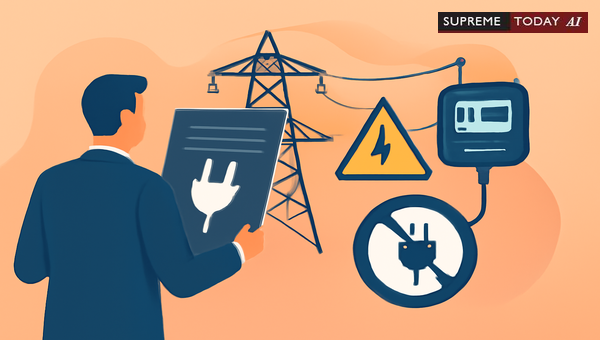
In the complex world of electricity regulations in India, consumers and distribution licensees often grapple with issues like . A common query arises: what does rule 155 of electricity code entail, and can it be enforced? This regulation, part of the framed under the , addresses for such unauthorised use under Section 126. However, courts have repeatedly deemed it invalid. This post breaks down the provision, its procedures, legal challenges, and practical implications, drawing from key judicial precedents. Note: This is general information; consult a legal expert for specific advice.
Regulation 155 specifically governs the provisional assessment of charges for under . It outlines a structured process for assessing orders, applying at twice the normal rate, and setting time periods—up to 12 months if the unauthorised period isn't conclusively proven. 2017 0 Supreme(Ker) 566
This regulation sits in Chapter IX of the Code, alongside rules for (Reg 153) and extensions (Reg 154). It differs from under Section 135, which involves criminal intent and is handled via . 2017 0 Supreme(Ker) 566
For instance, unauthorised extensions under may trigger Section 126 assessments, but minor domestic loads are often excluded. 2017 0 Supreme(Ker) 566
Despite its detailed framework, courts have consistently held Regulation 155 (beyond legal authority) and invalid. The Electricity Supply Code is framed under , which empowers to regulate matters like recovery of charges, billing, disconnection, and tampering prevention—but not assessments for unauthorised use under Section 126. 2017 0 Supreme(Ker) 566 2024 0 Supreme(Ker) 1368 2022 0 Supreme(SC) 1265
In the landmark case Uttar Pradesh Power Corporation Limited v. Anis Ahmad (2013) 8 SCC 491, the clarified: From reading Section 50, it is clear that under the Electricity Supply Code provisions are to be made for recovery of electricity charges... But the said Code need not provide provisions relating to... assessment of charges for under Section 126... 2022 0 Supreme(SC) 1265
This ruling extends to Code provisions like Reg 155, deeming them thoroughly misconceived and beyond Section 50/126. Delegated legislation cannot create substantive rights absent in the parent Act. 2022 0 Supreme(SC) 1265
Lower courts have applied this directly: Regulation 155 provides for provisional assessment under Section 126... However, it is noticed that, the Code is framed under the powers available to the commission under Section 50... Section 50... does not provide for making regulations with reference to unauthorized use of electricity. 2024 0 Supreme(Ker) 1368
Another ruling echoes: From reading Section 50... the said code need not provide provisions relating to... assessment of charges for unauthorized use of electricity under Section 126... 2013 5 Supreme 642
The doctrine is clear: If a rule goes beyond the rule making power... the same has to be declared invalid... Delegated legislation should not travel beyond the purview of the parent Act. 2022 0 Supreme(SC) 1265
Regulation 155 applies to civil unauthorised use (no required), not theft under Section 135. Courts emphasise this . In one case, allegations of fell under Section 135, excluding Section 126 applicability: The Court ruled that cases of alleged fall under Section 135 rather than Section 126 of the Electricity Act, stressing the importance of jurisdiction in disputed factual matters. 2016 Supreme(Online)(MP) 4
Related issues like service connections amid title disputes highlight that is key under and Code clauses, but mere possession isn't enough during litigation. 2024 0 Supreme(Jhk) 765
Occupiers generally have a right to supply under , regardless of landlord disputes, which must be resolved civilly. Distribution licensees must supply to proven occupiers. 2025 0 Supreme(Telangana) 313
For theft investigations, Section 135 offences are post-amendments to Section 151, allowing police FIRs alongside complaints. and Electricity Act procedures align with 2023 0 Supreme(All) 612 2014 1 Supreme 326
No exceptions salvage Regulation 155; its invalidity ties to Section 50's limits, even barring reliance on its 12-month period (Reg 155(9)). 2024 0 Supreme(Ker) 1368
Licensees can still proceed directly under Section 126, but cannot invoke the Code. Broader Code elements like recovery () remain valid if within scope. 2017 0 Supreme(Ker) 566
Key Recommendations:- Avoid relying on Regulation 155 for assessments or defenses—it's .- Challenge proceedings citing it via , referencing UP Power Corp and allied cases.- For unauthorised use, adhere to standalone Section 126/127 procedures.- Verify facts before disconnection; disputed matters like theft vs. unauthorised use need proper jurisdiction. 2016 Supreme(Online)(MP) 4
Regulation 155 of the , while procedurally detailed, stands invalidated as . Courts prioritise the Electricity Act's statutory boundaries, preventing overreach via Codes. This protects against arbitrary double-tariff impositions but requires direct Act compliance.
Takeaways:- Assessments under Section 126 bypass invalid Code regs. 2024 0 Supreme(Ker) 1368- Distinguish unauthorised use from theft (Sections 126 vs. 135).- Resolve occupancy/title disputes civilly before seeking connections. 2024 0 Supreme(Jhk) 765
Stay informed on evolving electricity laws to avoid pitfalls. This overview draws from precedents like 2017 0 Supreme(Ker) 566, 2024 0 Supreme(Ker) 1368, 2022 0 Supreme(SC) 1265, and others—always seek tailored legal counsel.
#ElectricityLaw,#Regulation155,#UltraVires


In Ext.P6, one of the main objections raised by the petitioner was with reference to the provisions under Regulation 155(9) of Kerala Electricity Supply Code, 2014 (hereinafter referred to as the ‘Code’ for short). ... Section 50 of the Electricity Act reads as under: “50.The Electricity Supply Code.- The State Commission shall specify an Electricity Supply Code to provide for recovery of electricity#HL_....

Nil dated 10.07.2014 for Rs. 20/- and receipt No. 346 dated 20.10.2014 for Rs. 155/- and a receipt of Rs. 40/- on account of Service connection no. 486074 dated 20.10.2014 and accordingly; a meter has been allotted, which was further installed within the premises and thereby admitted as consumer but ... JB1256800 for Rs. 1240/- dated 20.10.2014, receipt No. ... the electricity connection is being sought for, the title over the same is in dispute since a Title Suit No. 139 of ....

In Ext.P6, one of the main objections raised by the petitioner was with reference to the provisions under Regulation 155(9) of Kerala Electricity Supply Code, 2014 (hereinafter referred to as the ‘Code’ for short). ... Regulation 155(1) of the Code reads as under: “155.Provisional assessment under Section 126 of the Act. ... Section 50 of the Electricity Act reads as under: “50.The Electricity Supply Co....
In Ext.P6, one of the main objections raised by the petitioner was with reference to the provisions under Regulation 155(9) of Kerala Electricity Supply Code, 2014 (hereinafter referred to as the ‘Code’ for short). ... Regulation 155(1) of the Code reads as under: “155.Provisional assessment under Section 126 of the Act. ... Section 50 of the Electricity Act reads as under: “50.The Electricity Supply Co....

the Code 2014. ... We have quoted Regulation 153(15) of the Code 2014 in the earlier part of our judgment. We do not find any merit in the submission canvassed on behalf of the consumers in regard to the applicability of Regulation 153 (15) of the Code 2014. ... The Electricity Supply Code. ... of electricity’ covered under Section 126 of the Code. ... The Code 2014 is framed und....
the Code 2014. ... We have quoted Regulation 153(15) of the Code 2014 in the earlier part of our judgment. We do not find any merit in the submission canvassed on behalf of the consumers in regard to the applicability of Regulation 153 (15) of the Code 2014. ... The Electricity Supply Code. ... of electricity’ covered under Section 126 of the Code. ... The Code 2014 is framed und....

Section 155 of the Cr. P.C. is clear to that extent as given hereunder: "155. ... Chhatisgarh Electricity Board and another, (2014) 3 SCC 696. ... Lot of submissions are made about applicability of Rule 12 of the Electricity Rules, 2005. It is further submitted that there is no provision of making such Rule of investigation and arrest by the police. We have seen the rule making power under S. 176 of the Act. ... The word "cognizance" under the #HL_ST....

Electricity Act, 2003 (for brevity, the 'Act') and clause 9.1.1 of the Code. Shri Katare submits that along with the return, the respondents have filed the document dated 9.7.2014 (Annexure R / 1), whereby petitioner's representation dated 5.7.2014 is rejected. ... Reliance is placed on Chap.10 of the Code and S.155 and S.154 of the Act. The allegations of malafide are specifically denied. It is submitted that there is no thread relation between the incident of Shri Manglik and the ac....

Moreover, said I.A.No.155 of 2014 in O.A.No.64 of 2013, was ordered only on 30-09-2014, it is pertinent to mention here that, said Khsuru Ali Baig was appointed as Hon. ... That, even if seen with Magnifying glass said Order in I.A.No.155 of 2014 in O.A.No.64 of 2013, nowhere mentions that all the actions of said Khsuru Ali Baig as Hon. Secretary of Petitioner Wakf done prior to said Order in I.A.No.155 of 2014 in O.A.No.64 of 2013 are invalid. ... However, it is to b....

Moreover, said I.A.No.155 of 2014 in O.A.No.64 of 2013, was ordered only on 30-09-2014, it is pertinent to mention here that, said Khsuru Ali Baig was appointed as Hon. ... That, even if seen with Magnifying glass said Order in I.A.No.155 of 2014 in O.A.No.64 of 2013, nowhere mentions that all the actions of said Khsuru Ali Baig as Hon. Secretary of Petitioner Wakf done prior to said Order in I.A.No.155 of 2014 in O.A.No.64 of 2013 are invalid. ... However, it is to b....
Regulation 155(7) provides further that, if the period of unauthorised use of electricity can be conclusively established, the assessment shall be done for the entire period for which the unauthorised use has taken place and if the period of such unauthorised use is not known or cannot be conclusively established, the period of assessment shall be limited to twelve months immediately preceding the date of inspection. As per Regulation 155(1), the assessing officer shall take a final decision considering all the facts and evidence and shall, within thirty days from the date of provisional ass....

These offences under any other law could also be investigated, inquired into or tried with according to the provisions of the Code except in case of an offence where the procedure prescribed there-under is different than the procedure prescribed under the Code. Rather, the procedure contained in the Code is made applicable for the offences to be tried under the Electricity Act as well.” “23. It is so specifically provided under Section 155 of the Electricity Act also. Thus, it is not a case where any special or different procedure is prescribed.

Thus, it is not a case where any special or different procedure is prescribed. It is so specifically provided under Section 155 of the Electricity Act also. Rather, the procedure contained the Code is made applicable for the offences to be tried under the Electricity Act as well. Thus, it is not a case where any special or different procedure is prescribed. Rather, the procedure contained the Code is made applicable for the offences to be tried under the Electricity Act as well. These offences under any other law could also be investigated, inquired into or tried with accor....

Rule 29(5) and (6) of the Tamil Nadu Electricity Distribution Code, 2004 specifically implores upon the board to extend the supply to the other consumers. The consumer shall provide free of cost to the licensee adequate land/space in his/her premises, as may be considered necessary by the engineer and afford all reasonable facilities for bringing in not only cables or overhead lines from the licensee's system for servicing the consumer but also cables or overhead lines connecting other consumers. Rule 29(5) and (6) of the Tamil Nadu Electricity Distribution Code, 2004 reads as foll....

Thus, it is not a case where any special or different procedure is prescribed. Rather, the procedure contained the Code of Criminal Procedure is made applicable for the offences to be tried under the Electricity Act as well. It is so specifically provided under Section 155 of the Electricity Act also. The Court noted that Section 466A of the Delhi Municipal Corporation Act specifically lays down that the Code of Criminal Procedure shall apply to the offences prescribed under various provisions of the said Act as if it were a cognizable offence for the purpose of investigati....


An indispensable Tool for Legal Professionals, Endorsed by Various High Court and Judicial Officers
Please visit our Training & Support
Center or Contact Us for assistance

Scan Me!
India’s Legal research and Law Firm App, Download now!


For Daily Legal Updates, Join us on :



 Back to top


