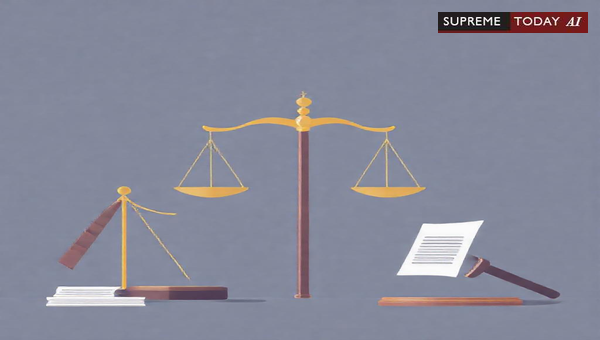
Understanding the Legal Supremacy of Parent Acts Over Subordinate Rules in Statutory Interpretation
In the complex architecture of a legal system, laws are not created in a vacuum. Typically, a legislature passes a broad piece of legislation—known as an Act—which sets out the primary goals, principles, and substantive powers of a government body. However, because the legislature cannot anticipate every minute detail of implementation, the Act often grants delegated power to an executive authority to create specific rules, regulations, or bylaws to carry out the Act's objectives. This creates a potential point of friction: what happens when a specific rule contradicts the very Act that gave it life? This leads us to the pivotal legal question: can rules override an act in law?
The Fundamental Principle of Subordinate Legislation
To understand the relationship between an Act and the rules derived from it, one must first understand the concept of subordinate legislation. An Act is primary legislation, passed by a legislative body and approved through a formal constitutional process. Rules, on the other hand, are secondary or subordinate legislation. They are designed to fill in the gaps and provide the machinery for the Act to function.
The legal consensus is clear: rules cannot override or supersede an Act. Because rules derive their authority from the parent Act, they cannot possess more power than the source from which they flow. As emphasized in various judicial findings, rules cannot override the Act or Rules 1984 0 Supreme(Ker) 71. The logic is straightforward: if a rule could override an Act, the executive branch could effectively rewrite laws passed by the legislature, violating the principle of the separation of powers.
Courts have consistently reinforced that these subordinate instruments are meant to supplement, not replace or override, the law 1984 0 Supreme(Ker) 71 and 2001 0 Supreme(Ori) 176. When a rule is used to expand, restrict, or contradict the scope of the parent Act, it is often viewed as ultra vires (beyond the powers) and may be declared invalid by a court of law.
Navigating the Legal Hierarchy and Conflict Resolution
When a direct conflict arises between the provisions of a statutory rule and the provisions of the parent Act, the legal hierarchy dictates that the Act always prevails. The substantive law—the core mandate of the legislation—takes precedence over the procedural or administrative rules.
Judicial precedents have repeatedly established that rules made under an Act cannot override the substantive provisions of the Act itself, or other statutory laws 1984 0 Supreme(Ker) 71 and 2001 0 Supreme(Ori) 176 and 1962 0 Supreme(Cal) 107. For instance, if an Act provides that a certain benefit is available to all citizens, a rule created by a department cannot arbitrarily restrict that benefit to only a small subset of citizens. If the rule attempts to do so, it clashes with the substantive provision of the Act and must be discarded in favor of the Act.
This hierarchy ensures stability in the law. If rules could override Acts, the legal landscape would be dangerously volatile, as administrative bodies could change the substantive rights of citizens through simple rule-making without legislative oversight.
Limitations on Delegated Powers and Constitutional Boundaries
The exercise of delegated power is subject to strict limitations. Authorities cannot use their power to create rules to introduce new obligations or restrictions that the parent Act did not authorize. A prime example of this limitation is seen in cases where subordinate rules attempt to impose requirements that lack a statutory foundation. For example, it has been held that subordinate rules requiring production of original documents lacked statutory authority and were invalid 2025 Supreme(Online)(Mad) 27841. This demonstrates that even a seemingly minor procedural rule can be struck down if it exceeds the authority granted by the legislation.
Furthermore, this hierarchy extends to the highest level of law: the Constitution. Rules made under constitutional authority are still subject to the laws of the land and the Constitution itself. For example, rules formulated under Article 225 of the Constitution of India cannot override existing laws 2016 2 Supreme 450. The courts have clarified that in such instances, rules cannot prevail over law in force 2016 2 Supreme 450. This underscores the fact that regardless of the source of the rule-making power, the substantive law—whether it be a statutory Act or a constitutional provision—remains supreme.
Specific Statutory Contexts and Procedural Nuances
While the general rule is that Acts prevail over rules, there are specific contexts where certain statutes provide a comprehensive framework that overrides general laws or general procedural rules. For instance, the Mines and Minerals (Development and Regulation) Act, 1957, possesses specific provisions that may override general law and procedural rules in particular contexts, such as departmental proceedings or matters concerning land 2014 1 Supreme 218 and 2016 2 Supreme 450.
However, it is critical to distinguish this from a rule overriding an Act. In these cases, it is one Act (the Mines and Minerals Act) overriding other general laws or general rules, not a subordinate rule overriding its own parent Act. Even in these specialized scenarios, the authorities must still ensure that their actions follow due process under the Act and rules 2014 1 Supreme 218 and 2016 2 Supreme 450. The requirement for due process ensures that administrative actions remain tethered to legal authority.
Key Takeaways for Legal Interpretation
When analyzing whether a particular rule is valid or whether it can be challenged, the following principles generally apply:
- Supremacy of the Act: The parent Act is the primary authority. Any rule that contradicts the substantive provisions of the Act is typically invalid 1984 0 Supreme(Ker) 71 and 1962 0 Supreme(Cal) 107.
- Supplementation, Not Substitution: Rules are designed to facilitate the implementation of the law, not to alter its core intent 1984 0 Supreme(Ker) 71 and 2001 0 Supreme(Ori) 176.
- Ultra Vires Doctrine: Rules that impose requirements without specific statutory authorization are likely to be struck down by courts 2025 Supreme(Online)(Mad) 27841.
- Constitutional Primacy: Rules cannot supersede the Constitution or existing laws in force, even when created under constitutional authority 2016 2 Supreme 450.
In summary, the legal hierarchy is designed to protect the legislative intent and the rights of individuals from arbitrary administrative changes. While rules are essential for the day-to-day operation of government, they must always remain subordinate to the Acts they are intended to support. This framework ensures that the law remains predictable, transparent, and rooted in democratic legislative processes. As this is general information based on legal principles, specific cases should be evaluated based on the unique facts and applicable jurisdiction.
#AdministrativeLaw #LegalHierarchy #StatutoryInterpretation #LawAndRules