


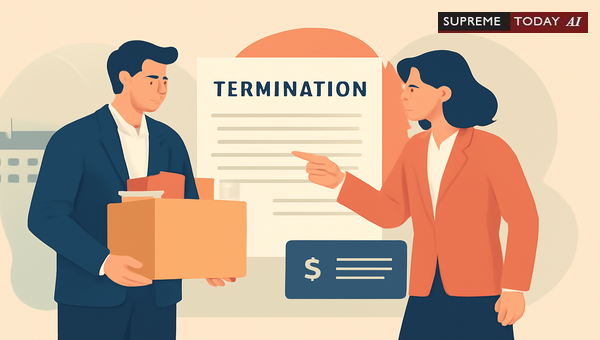
Employee Entitled to Full Salary After ?
In today's fast-paced work environment, disputes over termination and unpaid wages are common. Imagine an employee terminated abruptly, only for a court to later declare it illegal. The burning question arises: Whether Employee is Entitled to Full of Salary of more than Three Years once his Termination is Held Illegal? This issue often intersects with , , and practices.
This blog post breaks down the legal principles, court precedents, and practical advice. While this is general information based on key rulings and not specific legal advice, it aims to guide employees and employers on navigating these complexities. Consult a legal professional for your situation.
Understanding and Salary
When a termination is deemed illegal—whether due to procedural lapses, lack of notice, or —employees typically seek or . spanning more than three years raise questions about , but courts often award full dues if the termination is set aside 2005 7 Supreme 209.
The core issue ties into resignation and . Employers sometimes treat short-notice resignations as justification for withholding salary, but this is not always lawful. An employer cannot unilaterally withhold salary for a short notice resignation if the resignation is validly tendered and conditions like are met, unless contracts explicitly allow it 1989 0 Supreme(SC) 91 2022 0 Supreme(Bom) 327.
Key Legal Principles on Resignation and Salary Payment
Resignation is a voluntary act. Once properly communicated and accepted, it terminates employment. However, employees remain entitled to salary for the service period unless they breach obligations like serving notice 2005 7 Supreme 209.
For example, courts have held: resignation becomes effective when the link between the employee and employer is severed, and the employee is entitled to benefits for the period they are in service, including salary, unless they have not performed duties or have violated contractual obligations 2005 7 Supreme 209. Similarly, an employee's resignation, once accepted, results in the termination of employment, and the employer's obligation to pay salary depends on compliance with the contractual or regulatory conditions 1989 0 Supreme(SC) 91.
If termination is later ruled illegal (e.g., forced resignation under ), —including those over three years—may be awarded, provided claims are timely filed.
Conditions Where Employers Can Withhold Salary
Withholding is permissible only under specific circumstances:- Failure to serve notice period2022 0 Supreme(Bom) 327- No payment of salary in lieu of notice1998 0 Supreme(SC) 434- Non-performance during notice if not waived2005 7 Supreme 209
In one ruling: when an employee tenders resignation without fulfilling the notice period or paying the equivalent salary, the employer is justified in withholding salary for that period 1998 0 Supreme(SC) 434.
However, arbitrary withholding post-acceptance is unlawful, amounting to 1998 0 Supreme(SC) 434.
Insights from Additional Precedents
Other cases reinforce this. For instance, employees must give notice or salary in lieu, but employers cannot demand it unilaterally after acceptance: This Rule nowhere lays down that the employer... on unilateral acceptance of resignation without even seeking the option of the employee to either give three months' notice or to pay three months' salary, can demand three months' salary 2019 0 Supreme(Del) 1977.
In scenarios of alleged misconduct, It is the employee who has to give a notice period to the employer for resigning or else agree to pay the amount equivalent to the salary for 3 months period. If the employer waives... 2016 0 Supreme(Bom) 1017.
Further, if resignation is forced: the formulation of the words used by the employer... are relevant insofar as they go to show that the employer has made it quite plain to the employee that he will be fired if he did not tender his resignation
WONG KAM CHEONG vs DIMERCO EXPRESS (MALAYSIA) SDN BHD - Industrial Court Kuala Lumpur
. This could render termination illegal, entitling full .Courts emphasize: once resignation is accepted, the relationship ends, and withholding without basis is unjustified 2017 0 Supreme(Del) 42: Once, the appellant/plaintiff had tendered his resignation... and the same was accepted... the relationship of an employee and employer stood terminated.
When Withholding Becomes Illegal
If an employer accepts resignation without enforcing notice or in-lieu payment upfront, later withholding is typically unlawful 2005 7 Supreme 209 1989 0 Supreme(SC) 91. Employees may claim even for extended periods if termination is invalidated.
From broader sources: Generally, an employer is not entitled to withhold salary if an employee resigns without serving the full notice period, especially if the resignation is considered valid and effective 2022 0 Supreme(P&H) 683. The employment persists until formal relief, entitling salary until then.
In observations: employees at certain levels must give three months’ notice or salary in lieu, mirroring employer obligations IND_Delhi_LPA-285_2021_Delhi_LPA-285_2021 2022_DHC_3579-DB.
Exceptions include:- Employee withdrawal not permitted post-acceptance 2024 7 Supreme 93- Discretion to waive notice: there could be discretion exercised by the employer to waive the notice period... and accept the resignation immediately 2019 0 Supreme(Kar) 1347
Specific Court Rulings and Examples
- 2005 7 Supreme 209 : Employee entitled to salary unless notice obligations unmet.
- 1989 0 Supreme(SC) 91 : Acceptance doesn't auto-allow withholding without compliance.
- 2022 0 Supreme(Bom) 327 : Withholding valid only for unserved notice.
- 1998 0 Supreme(SC) 434 : Unlawful without basis.
Additional rulings highlight: The employer would then certainly have been entitled to accept the resignation... waiving the notice period 2022 0 Supreme(Bom) 1005, but forcing early exit changes this.
Practical Recommendations for Employers and Employees
- For Employers:
- Specify withholding conditions clearly in contracts.
- Document acceptance and any waivers.
Avoid unilateral demands post-resignation 2019 0 Supreme(Del) 1977.
For Employees:
- Comply with notice or pay in lieu to safeguard .
- Challenge illegal withholding promptly.
- If termination feels coerced, seek remedies for full , even over three years.
Key Takeaways and Conclusion
Generally, employees are entitled to full salary —including spans over three years—when termination is held illegal, provided contractual duties are met. Employers cannot arbitrarily withhold for short-notice resignations without legal grounds; it must align with contracts or statutes 2005 7 Supreme 209 1989 0 Supreme(SC) 91 2022 0 Supreme(Bom) 327 1998 0 Supreme(SC) 434.
In summary, lawful withholding hinges on notice compliance. Illegal actions expose employers to back-pay claims. Stay informed, document everything, and seek professional advice to protect your rights.
This post draws from precedents like WONG KAM CHEONG vs DIMERCO EXPRESS (MALAYSIA) SDN BHD - Industrial Court Kuala Lumpur















