


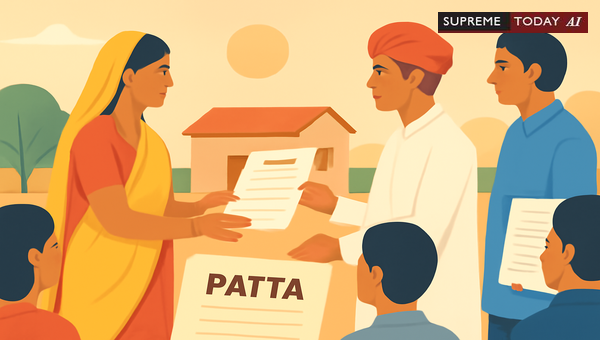
Can Sarpanch Grant to Family Relatives? Essential Legal Insights
In rural India, land titles or pattas are crucial for securing property rights, especially in village areas governed by Gram Panchayats. But what happens when a Sarpanch—the elected head of the —issues a to family relatives? This raises serious questions about legality, transparency, and potential abuse of power. Can a Sarpanch grant in favour of family relatives? The short answer is generally no, without strict adherence to procedures and oversight, as courts have repeatedly ruled such actions improper due to conflicts of interest.
This blog post dives deep into the legal framework under the Rajasthan Panchayati Raj Act and Rules, drawing from court judgments and official documents. We'll cover key principles, exceptions, and practical recommendations. Note: This is general information based on precedents and should not be taken as specific legal advice—consult a qualified lawyer for your situation.
Legal Framework Governing Grants by Sarpanch
grants for (residential) land fall under the , and rules like the , and . A Sarpanch's authority is not absolute; it requires resolutions, public notices, eligibility checks, and transparency.
Key issues arise when relatives are involved:- Procedural Compliance: Pattas must follow due process, including inviting applications and (site inspections). Skipping this renders grants invalid. For example, in a case involving Smt. Radha, the Sarpanch issued a without applications or rule adherence, leading to cancellation as improper 2014 0 Supreme(Raj) 375 2014 0 Supreme(Raj) 550.- : Sarpanchs are barred from decisions benefiting relatives. Grants to self or family have been annulled, as seen in multiple rulings 2006 0 Supreme(Raj) 2786 2006 0 Supreme(Raj) 523.
Key Court Findings on Improper Grants
Courts have consistently struck down pattas issued to relatives without oversight. Here's a breakdown:
Unauthorized Allotments to Relatives: In one instance, after land diversion for , the Sarpanch, issued pattas to many persons including his relatives 2021 0 Supreme(Raj) 488. Such actions were challenged for lacking authority.
Family Definition Limitations: Rules define family narrowly, excluding adult relatives of parents or married sons. Grants outside this may be contested 2014 0 Supreme(Raj) 375 2014 0 Supreme(Raj) 550.
Higher Authority Requirement: For close relatives, powers shift to bodies like the to prevent collusion 1999 0 Supreme(AP) 1137.
Lack of Jurisdiction: Even otherwise, the counsel for the petitioners could not point out any jurisdiction of the Sarpanch to grant without there being any decision by the 2023 Supreme(Online)(MP) 22345. Courts emphasize approval is mandatory.
Additional precedents highlight irregularities:- Pattas without verified signatures or records are dubious. One 's legitimacy was questioned due to missing details and unverified Sarpanch signature 2023 0 Supreme(Raj) 771.- Grants predominantly to Sarpanch relatives, without eligibility, face allegations of malpractice 2023 0 Supreme(Raj) 1238 2023 0 Supreme(P&H) 3461.
Exceptions and Valid Scenarios
While restrictive, exceptions exist if procedures are followed:
Landless or BPL Families: Sarpanchs may allot to eligible landless persons or Below Poverty Line (BPL) families, but only with due process 2014 0 Supreme(Raj) 375. For instance, The respondent No.3, Sarpanch, , Chohtan, after preparing the mauka report and complying the procedure, resolved to allot in favour of respondent No.4 under 2023 0 Supreme(Raj) 1175.
Long-Standing Possession: Historical claims with proven possession (e.g., over 20 years) and proper procedures may hold, even for relatives 2010 0 Supreme(Raj) 1825.
Female Head of Family: Under , pattas can go to the female head, potentially including family contexts, if rules are met 2023 0 Supreme(Raj) 1238.
However, courts invalidate grants exceeding powers or to ineligible persons 2023 0 Supreme(Raj) 799 2022 Supreme(Online)(MP) 13300 2022 Supreme(Online)(MP) 13007.
Risks of Unauthorized Grants and Court Interventions
Illegal pattas invite cancellations:- Procedural Violations: Without official records or approvals, grants are unauthorized 2025 Supreme(Online)(CHH) 3664.- Joint Family Contexts: Even in families, individual grants don't imply family benefit unless specified. It is not a case where the was granted in favour of one of the members of the family 2009 0 Supreme(Raj) 921 2009 5 Supreme 446 2009 0 Supreme(Raj) 927.
Property from government grants is self-acquired unless for family benefit 2025 Supreme(Online)(Mad) 74248. Courts intervene to ensure fairness, often restoring land or dismissing claims.
Practical Recommendations for Compliance
To avoid challenges:- Follow Due Process: Issue public notices, conduct hearings, and record resolutions.- Recuse from Relative Cases: Sarpanchs should abstain; escalate to higher authorities.- Document Everything: Maintain , eligibility proofs, and minutes.- Verify Eligibility: Prioritize landless, BPL, or long-possessors per rules.
In joint family disputes, clarify if benefits the whole family, as in cases where the manager () holds for all 2011 0 Supreme(AP) 220.
Conclusion and Key Takeaways
Generally, a Sarpanch cannot validly grant to family relatives without rigorous procedures, approval, and higher oversight. Conflicts of interest and procedural lapses make such grants vulnerable to cancellation, as evidenced by numerous judgments 2014 0 Supreme(Raj) 375 2014 0 Supreme(Raj) 550 2023 0 Supreme(Raj) 799.
Key Takeaways:- Always prioritize transparency and eligibility.- Relatives' grants require extra scrutiny.- Long possession may protect valid pattas, but documentation is key.- Seek or court guidance for disputes.
For personalized advice on Rajasthan land laws or Panchayati Raj matters, consult a local legal expert. Stay informed to protect your property rights!
(Word count: 1028. Sources cited are from official legal documents; interpretations are general.)
#SarpanchPatta, #LandLawIndia, #PanchayatiRaj












