


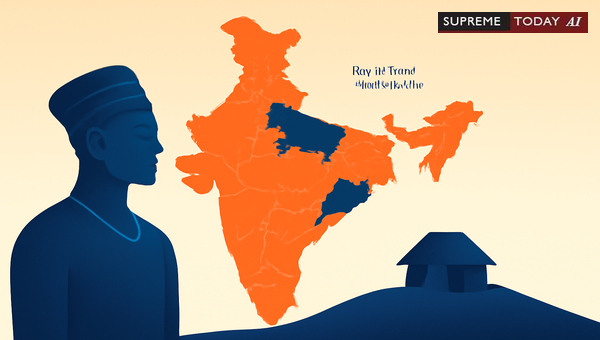
Understanding the Act : A Cornerstone of Tribal Governance in India
In the vast tapestry of Indian law, few statutes bridge colonial history and modern tribal administration as profoundly as the . Enacted during British rule, this Act addressed the unique challenges of administering justice in remote, tribal-dominated regions. But what exactly is the ' Scheduled District Act,' and why does it still matter today? This blog post dives deep into its provisions, historical context, extensions, and enduring legacy, drawing from key legal documents and cases.
Whether you're a legal professional, researcher, or someone interested in India's tribal laws, understanding this Act sheds light on how ''—now linked to and —continue to shape governance. Note: This is general information and not specific legal advice. Consult a qualified lawyer for personalized guidance.
Historical Background and Enactment
The Indian (Act XIV of ), emerged to resolve uncertainties in applying general laws to tribal and agency regions in British India. Its preamble highlights that many parts of India had not been brought under the operation of general Acts and Regulations, necessitating a structured approach. 2005 0 Supreme(Gau) 544
Enacted in the colonial era, the Act provided a framework for declaring which enactments applied in these districts. Initially, were listed in its First Schedule, covering areas in Madras, Bengal, and other provinces. 2005 0 Supreme(Gau) 544
Over time, notifications extended its reach. For instance, districts in Assam, Ganjam, Visakhapatnam, and others were included via declarations, specifying laws in force or excluded. 2014 0 Supreme(AP) 489
This flexibility allowed tailored administration, respecting tribal customs while maintaining order. A notification under declared the Act in force in the Kolhan area of Singhbhoom district. 2000 0 Supreme(Pat) 8
Definition and Scope of
The Act defines as territories in its First Schedule. Key features include:- Initial Coverage: Districts in Madras and other provinces. 2005 0 Supreme(Gau) 544- Extensions: Through notifications, e.g., to Assam and Visakhapatnam agency areas. 2014 0 Supreme(AP) 489- : Often overlapped with tribal regions, forming the basis for special judicial mechanisms. 2014 0 Supreme(AP) 487
empowers the local government to declare enactments in force and extend laws to districts or parts thereof. This created an evolving framework suited to tribal needs. 2005 0 Supreme(Gau) 544
Post-independence, these principles influenced under the . The President and Governors issued orders formalizing districts like Ganjam and Palamau as , referencing the Act. 2018 0 Supreme(Jhk) 1836
Key Provisions and Powers
Power to Declare and Extend Laws
is central: the local government to declare which enactments are in force in and to extend laws across districts or parts thereof. 2005 0 Supreme(Gau) 544
Administration of Justice
The Act regulated officer appointments and justice procedures, especially in agency areas. addresses this, governing also known as agency areas. 2000 0 Supreme(AP) 432
, linked to the Act, were debated for statutory force but upheld in practice for Kolhan area's civil justice, directing the government to frame suitable rules. 2000 0 Supreme(Pat) 8
notifications excluded , rendering decrees from suits with causes arising there null and void. 2000 0 Supreme(AP) 432
Post-Independence Relevance and Modern Applications
The Act's legacy persists. Principles continued via regulations for and . 2014 0 Supreme(AP) 487
Related laws like the build on this. barred Part IX Panchayats in until PESA lifted it. Including in municipal limits under , doesn't cease PESA applicability. 2026 Supreme(Online)(Raj) 81
In Telangana, allocations reserving Sarpanch and ward seats for Scheduled Tribes must align with PESA and . 2025 Supreme(Online)(Tel) 38158 2025 Supreme(Online)(Tel) 64706
Restoration cases under , intersect with coal laws, emphasizing jurisdiction limits. 2023 0 Supreme(Bom) 1411
Lakshadweep's Kalpeni Island, once a Scheduled District under a notification, retained protections as a 'backward tract' post-repeal. partitions were analyzed per capita. 2006 0 Supreme(Ker) 90
Judicial Recognition and Constitutional Validity
Courts affirm the Act's rules as valid law under of the Constitution. They uphold justice administration in tribal areas, balancing order and customs. 1966 0 Supreme(SC) 90
In Kolhan, , though lacking full statutory backing, were recognized as valid for over 150 years, saved by subsequent legislation. applicability post- amendment was nuanced by notifications. 2000 0 Supreme(Pat) 8
Kerala Tribunal cases on Scheduled Tribe Promoters' retention highlighted employment contract adherence, dismissing improper continuations. 2025 Supreme(Online)(Ker) 44068
Arunachal Pradesh invoked the Act with for inner line restrictions, controlling non-native land acquisition and foreigner stays. 1992 0 Supreme(Gau) 83
Exceptions, Limitations, and Practical Recommendations
- Notification-Dependent: Application hinges on specific orders; areas may be excluded over time.
- Judicial Validation: Rules upheld generally but subject to review. 1966 0 Supreme(SC) 90
- Scope Limits: Confined to declared /.
Recommendations:- Verify latest notifications for district status.- Apply Act principles in proceedings within these areas.- Ensure compliance for legislative/administrative actions. 2007 0 Supreme(AP) 781
Temple trustee panels under certain Acts require Scheduled Tribe representation, per . 2026 Supreme(Online)(Mad) 3571
Key Takeaways
The Act remains foundational for India's tribal legal framework, evolving from colonial tool to constitutional ally. Its mechanisms ensure culturally sensitive governance, influencing PESA and beyond. While historical, its principles guide modern disputes, underscoring notification precision and judicial deference.
Stay informed on tribal laws to navigate these complexities. For tailored advice, reach out to legal experts.
References: Key documents include 2005 0 Supreme(Gau) 544, 2014 0 Supreme(AP) 489, 2014 0 Supreme(AP) 487, 1966 0 Supreme(SC) 90, 2007 0 Supreme(AP) 781, 2000 0 Supreme(Pat) 8, 2006 0 Supreme(Ker) 90, 2026 Supreme(Online)(Raj) 81, 2025 Supreme(Online)(Ker) 44068, and others cited inline.
#ScheduledDistrictsAct #TribalLawIndia #IndianLegalHistory












