


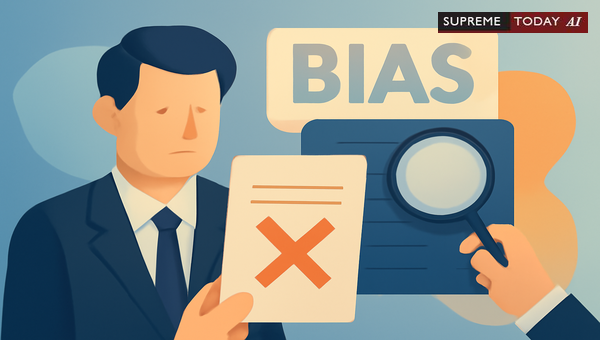
Can Bias Claims Scrap a Commissioner Report?
Imagine filing a petition to scrap a commissioner’s report, claiming bias against the commissioner based on a newspaper article. Sounds compelling? In , it typically isn’t enough. Many petitioners try to challenge reports from commissions or alleging bias, but without solid evidence, such petitions are often dismissed outright. This post explores the legal question: alleging bias without evidence. We’ll break down key rulings, requirements for proof, and lessons from related cases.
Disclaimer: This is general information based on case laws and not specific legal advice. Consult a qualified lawyer for your situation.
The Core Legal Issue: Bias Allegations in Commissioner Reports
Commissions under the , or court-appointed play crucial roles in fact-finding. Their reports guide judicial decisions but aren’t always binding. Petitioners often seek to scrap these reports by alleging bias, especially when outcomes don’t favor them. However, courts consistently hold that mere allegations—like newspaper reports or family ties—don’t suffice.
The threshold is high: Courts require clear, credible proof of before invalidating proceedings. Newspaper reports alone? Newspaper item without any further proof is of no evidentiary value 2020 7 Supreme 391.
Main Legal Finding
Allegations of bias against commission members, based solely on unsubstantiated assertions or media, generally fail. In a pivotal case, the court dismissed a petition relying on a The Wire article dated , stating: allegations of bias made by him against members of the Commission merely on the basis of newspaper reports and nothing more, are liable to be rejected outright 2020 7 Supreme 391.
Commissions are fact-finding bodies; their recommendations aren’t enforceable and shouldn’t be dismissed lightly without proof 2020 7 Supreme 391.
Key Points from Leading Judgments
- Newspaper reports lack evidentiary value: They’re not substantive proof of bias 2020 7 Supreme 391.
- Relationships alone don’t prove bias: A relative being a legislator or police official requires evidence of actual influence. There is no indication whatsoever as to the nature of influence such of those relatives would be able to exert 2020 7 Supreme 391.
- Repeated unsubstantiated claims hinder proceedings: Courts view them as impediments to justice 2020 7 Supreme 391.
- High constitutional positions don’t imply bias: Without proof, they’re irrelevant 2020 7 Supreme 391.
Detailed Analysis: Why Evidence Matters
Newspaper Reports as Evidence? Unlikely
Courts are wary of media-driven claims. In the main case, reliance on a single article failed because it lacked corroboration. This aligns with broader judicial caution against misrepresentation or lack of authenticity in reports 2020 7 Supreme 391.
Family Ties and Positions: Proof of Influence Needed
Claims like a chairman’s relative supporting a ruling party or a member related to an IG of Police were rejected. Mere association isn’t enough; petitioners must show undue pressure or dominance 2020 7 Supreme 391.
Scope of Commissions Under the 1952 Act
These bodies investigate and recommend, not enforce. Scrapping them on flimsy grounds hampers the inquiry process 2020 7 Supreme 391.
Abuse of Process Through Repetition
Petitioners raising unnecessary apprehensions and repeated applications face dismissal. One court noted such tactics as an and a wastage of judicial time, imposing costs of Rs.2,00,000 2022 0 Supreme(Del) 1822.
Insights from Related Cases
Other judgments reinforce this stance:
In a case, defendants alleged bias against an advocate commissioner after reports were filed. The dismissed the removal application for lack of merit, upheld on review: Allegations of bias against a commissioner must be supported by evidence; reports serve as evidence to be evaluated during the trial
.
Disciplinary proceedings saw similar rejection: Petitioner’s bias claim against the authority, based on prior involvement, was deemed meritless after earlier writs failed. The petitioner’s repeated attempts to raise the same issue... were unwarranted 2022 0 Supreme(Del) 1822.
In another, allegations against an inquiry officer were ignored without referral to revisionary authority, leading to upheld penalties. Bias claims need substantiation 2018 Supreme(Online)(CAT) 4511.
A bank disciplinary case dismissed bias pleas outright: No ground alleging bias has been made out in the petition 2020 0 Supreme(Cal) 288.
These cases show a pattern: Courts prioritize evidence over conjecture, especially in commissions, inquiries, and disciplinary matters.
Reports must be challenged at trial, not preemptively without proof
. Even in , unsubstantiated bias doesn’t sway judges: requires reasonable foundation 2022 0 Supreme(Ker) 650.
Exceptions: When Bias Claims May Succeed
While rare, courts recognize if well-founded. For instance:- Tangible proof of influence, like direct financial ties or threats.- Dominant positions exerting undue pressure.
However, mere relationships or media reports without supporting evidence do not meet this threshold 2020 7 Supreme 391. Perception matters, but only if evidenced.
Practical Recommendations for Petitioners
To strengthen a petition to scrap a report:- Gather concrete evidence: Documents, witness statements, not just articles.- Demonstrate influence: Show how relationships led to biased outcomes.- Avoid repetition: Substantiate first; repeated filings risk costs 2022 0 Supreme(Del) 1822.- Time it right: Challenge reports during trial evidence stage
.
Courts urge caution: require clear proof before invalidating... based on bias claims 2020 7 Supreme 391.
Key Takeaways and Conclusion
Filing a petition to scrap a commissioner report alleging bias without evidence is a high-risk move, typically failing in . Landmarks like 2020 7 Supreme 391 and supporting cases 2024 1 Supreme 76
2022 0 Supreme(Del) 1822 emphasize evidence over speculation. Commissions serve public interest; frivolous challenges undermine them.
If facing a potentially biased report, build a robust case with proof. For personalized guidance, seek legal counsel. Stay informed—justice demands substance, not shadows.
References:- 2020 7 Supreme 391: Core case on newspaper-based bias claims.- 2024 1 Supreme 76: Substantiation of reports and allegations.- Additional cases as cited above.
#CommissionerBias #LegalBiasClaims #IndianLaw












