


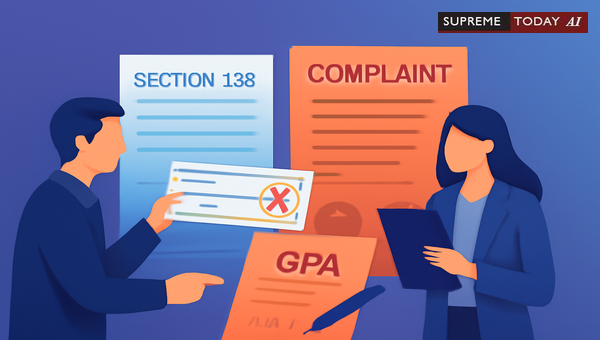
: When Filing Without Proper Leads to Dismissal
In the fast-paced world of business transactions, bounced cheques remain a common issue, often leading to complaints under (). But what happens if 138 Ni Comp Filed Without Leads Tp Dismissal? This shorthand query captures a critical pitfall: filing a under Section 138 without proper authorization, such as a valid (), can result in the complaint being dismissed or by courts. This article breaks down the legal requirements, consequences, exceptions, and best practices, drawing from key judicial precedents to help payees, holders, and their representatives navigate these proceedings effectively.
Note: This is general information based on court rulings and not specific legal advice. Consult a qualified lawyer for your case.
Main Legal Finding
Filing a complaint under without proper authorization, like a duly executed , typically leads to dismissal. The complaint must be filed by the payee or , and any representative, such as a holder, needs explicit legal standing and compliance with procedures. Courts have consistently held that deviations render the proceedings liable to be 2017 0 Supreme(AP) 380.
Key Requirements for Filing a Section 138 Complaint
To maintain a valid complaint:- It must be filed in the name of the payee or with the signatory having proper authority.- Filing through a holder is allowed if the is properly executed and grants specific authority to initiate criminal proceedings 2017 0 Supreme(AP) 380 2023 0 Supreme(HP) 301.- The cannot delegate functions under a general power without specific clauses permitting delegation2023 0 Supreme(HP) 301.- Procedural compliance with and , including and , is mandatory 2010 0 Supreme(Cal) 953.
Failure in these areas often results in dismissal, as courts prioritize statutory adherence.
Detailed Analysis: Holder's Role and Legal Standing
Who Can File the Complaint?
The , including in A.C. Narayanan, has clarified that a holder can initiate proceedings if they have personal knowledge of the transaction and the explicitly authorizes it 2017 0 Supreme(AP) 380. However, functions under a cannot be delegated without specific clauses permitting such delegation 2023 0 Supreme(HP) 301. The complaint must be signed by the holder with proper and affidavit.
Common Pitfalls Leading to Dismissal
If the lacks explicit authority for criminal filings or isn't duly executed, courts quash proceedings. For instance, complaints signed without requisite authority have been dismissed, emphasizing that the complaint filed without proper authorization or in violation of legal requirements... can be grounds for quashing or dismissal 2017 0 Supreme(AP) 380. Similarly, procedural defects under and make complaints unsustainable 2010 0 Supreme(Cal) 953.
Consequences of Non-Compliance
Courts rigorously scrutinize filings. Without compliance:- Proceedings are under 2017 0 Supreme(AP) 380.- The complaint is deemed not maintainable due to lack of authority 2023 0 Supreme(HP) 301.- This protects accused from frivolous or unauthorized prosecutions while upholding the 's compensatory purpose.
In broader contexts, such dismissals align with judicial encouragement of amicable resolutions. As noted, the compensatory aspect of the remedy under Section 138 of the must be preferred and has encouraged litigants to resolve disputes amicably 2022 0 Supreme(Guj) 672 2022 0 Supreme(AP) 58 2021 7 Supreme 305. Improper filings burden the system, already strained by high pendency of Section 138 cases.
Exceptions and Limitations
Not all filings fail. Key exceptions include:- Explicit authority: If the specifically permits filing criminal complaints and is verified properly, it's upheld 2017 0 Supreme(AP) 380.- Payee/holder name retention: The complaint must still be in the principal's name 2010 0 Supreme(Cal) 953.- No delegation under general without clauses 2023 0 Supreme(HP) 301.
Additionally, settlements can moot complaints. Once parties enter a compromise, proceedings in original complaint cannot be sustained and a fresh accrues to complainant under terms of 2021 7 Supreme 305. Courts discourage parallel prosecutions, prioritizing compensation over punishment 2022 0 Supreme(Guj) 672. In one case, quashing was set aside because settlement agreement effaces original complaint unless proven void 2022 0 Supreme(Guj) 672.
Integrating Settlements and Broader Insights
Section 138 cases often resolve via compromise, benefiting all: complainants recover funds quickly, accused avoid conviction, and courts reduce backlog. Equally, the accused is benefited as it leads to avoidance of a conviction and sentence or payment of a fine. It also leads to unburdening of the judicial system 2022 0 Supreme(AP) 58. However, post-settlement cheque dishonors create new causes of action, not revivals of old ones 2021 7 Supreme 305.
under requires specific averments; mere directorship post-resignation doesn't suffice 2020 0 Supreme(Del) 1515. must be timely, e.g., within 15 days of dishonor knowledge 2016 0 Supreme(Bom) 1972.
Practical Recommendations
To avoid dismissal:- File in the payee/holder's name with authorized signatory.- Ensure has specific clauses for criminal proceedings, properly executed 2023 0 Supreme(HP) 301.- Support with , , and proof of knowledge 2017 0 Supreme(AP) 380.- Consider amicable settlements early, as encouraged by courts 2022 0 Supreme(Guj) 672.- Courts: Scrutinize authority before proceeding 2010 0 Supreme(Cal) 953.
Key Takeaways and Conclusion
Filing a complaint without proper risks dismissal, as courts demand strict compliance for maintainability 2017 0 Supreme(AP) 380 2023 0 Supreme(HP) 301 2010 0 Supreme(Cal) 953. While GPAs offer flexibility, they must be precise. Integrating settlements can resolve matters efficiently, aligning with the 's compensatory focus 2021 7 Supreme 305.
In summary, prioritize authorization and procedure to safeguard your complaint. For cheque bounce issues, proactive compliance prevents costly setbacks. Always seek professional legal counsel tailored to your facts.
References
- 2017 0 Supreme(AP) 380: Emphasizes compliance for Section 138 complaints.
- 2023 0 Supreme(HP) 301: No delegation without specific clauses.
- 2010 0 Supreme(Cal) 953: Procedural defects lead to dismissal.
- 2022 0 Supreme(Guj) 672, 2022 0 Supreme(AP) 58, 2021 7 Supreme 305: Promote settlements in cases.
- 2020 0 Supreme(Del) 1515, 2016 0 Supreme(Bom) 1972: Related procedural insights.












