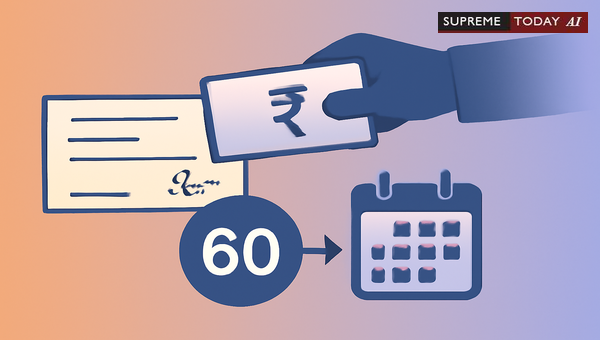
NI Act Section 143A: Understanding the Maximum Time for Interim Compensation Payments
In the fast-paced world of commercial transactions, cheque dishonour cases under Section 138 of the Negotiable Instruments (NI) Act, 1881, remain a common legal battleground. One critical aspect that often arises is interim compensation under Section 143A. But what is the maximum time prescribed for the accused to pay this amount to the complainant? This question—Interim Compensation Amount NI Act Maximum Time to Pay to Complainant—is pivotal for defendants, complainants, and legal practitioners alike.
This blog post breaks down the statutory provisions, judicial interpretations, and practical implications, drawing from key case laws. Note: This is general information based on legal precedents and not specific legal advice. Consult a qualified lawyer for your case.
What is Interim Compensation Under Section 143A NI Act?
Introduced via the 2018 Amendment, Section 143A empowers courts to order interim compensation up to 20% of the cheque amount in cheque dishonour proceedings. The goal? Provide swift relief to payees while discouraging frivolous litigation. As highlighted in one ruling, it emphasizes the prospective operation of Section 143-A of the Negotiable Instruments Act and its aim to provide relief to payees of dishonoured cheques, discouraging frivolous litigations. 2021 0 Supreme(P&H) 1056
However, timely payment is mandatory, with strict timelines to ensure efficiency.
Statutory Provisions: The 60 + 30 Days Rule
Section 143A(3) explicitly mandates that interim compensation shall be paid within sixty days from the date of the order. Courts may extend this by up to thirty days if sufficient cause is shown, capping the total at ninety days. 2022 0 Supreme(Bom) 825 2025 0 Supreme(Bom) 491 2019 0 Supreme(Ker) 691 2022 0 Supreme(Kar) 583 2019 7 Supreme 223
- Base Period: 60 days from order date.
- Extension: Discretionary, up to 30 days, only on recorded sufficient cause.
- Maximum Total: 90 days—no further leeway without justification.
This timeline underscores the provision's intent for expeditious justice in NI Act cases.
Judicial Interpretations Reinforcing the Timeline
Courts have consistently upheld these limits, demanding reasoned orders.
Supreme Court Guidance
The Supreme Court in Rakesh Ranjan Shrivastava (2024) SCC 419 clarified: the 60-day period is a maximum limit, extendable by 30 days only if justified. 2019 0 Supreme(Ker) 691
Speaking Orders Essential
Orders must be speaking orders, specifying reasons for the amount, timeline, and any extension. Failure to do so risks the order being unlawful. 2022 0 Supreme(Bom) 825 2025 0 Supreme(Bom) 491 2021 0 Supreme(Del) 1247 2019 7 Supreme 223
In a practical application, one court directed: Accused is directed to pay 20% of the cheque amount as interim compensation to the complainant on 13.03.2020. 2021 0 Supreme(P&H) 1056 This aligns with the strict adherence to timelines post-order.
Consequences of Non-Compliance
Exceeding 90 days without justification may invite challenges. Courts recover unpaid amounts as fines, emphasizing enforcement. 2019 0 Supreme(Ker) 691
Practical Implications for Parties Involved
For the Accused
- Verify the order specifies a clear deadline within 60 days.
- Seek extension only with proven sufficient cause (e.g., financial hardship), documented upfront. 2017 0 Supreme(Ker) 1215 notes pleas for extension due to financial difficulties but stresses adherence to limits.
- Non-payment risks recovery as arrears of fine, plus potential interest in compounding cases.
For the Complainant
- Monitor timelines; prompt enforcement if delayed.
- In related NI contexts, courts have adjusted compensation with interest for delays, e.g., The compensation amount would be paid to the complainant... failing which it would bear interest at the rate of 9%. 2015 0 Supreme(P&H) 1675
Court Responsibilities
Issue reasoned orders fixing timelines strictly. 2001 1 Supreme 124 reinforces: the Court's order for interim compensation must be supported by reasons, and the maximum period is 60 days, extendable to 90 days with proper justification.
Exceptions, Limitations, and Related Contexts
While 60 days is the norm, courts may record reasons for slight delays, but not beyond 90 days. Extensions are discretionary and must be justified. 2025 0 Supreme(Bom) 491
Broader compensation timelines in NI and consumer cases offer context:- In cheque-related compensation, directions like The entire compensation amount shall be paid within eight weeks... failing which... interest @ 9% p.a.
State Bank of India VS Vallu Sowjanya
show similar enforcement mechanisms.- Under
CrPC Section 357, double cheque amounts as compensation must be deposited within 30 days, or interest accrues.
2015 0 Supreme(P&H) 1675- Even in non-NI matters, like consumer disputes, payments are capped (e.g., two months post-settlement), highlighting judicial preference for defined periods.
Varun Goyal VS Suncity Pvt. Ltd.
Key Limitation: Orders lacking reasons or exceeding limits are challengeable.
Recommendations for Compliance
- Courts: Always specify timelines and reasons in orders. Adhere to 60/90-day caps.
- Parties: Review orders meticulously. Contest unlawful extensions; enforce promptly if delayed.
- Legal Strategy: In cheque cases, factor in interim payments early to avoid escalation. If facing payment issues, file for justified extensions immediately.
Key Takeaways
| Aspect | Timeline | Notes ||--------|----------|-------|| Standard Payment | 60 days | From order date 2022 0 Supreme(Bom) 825 || Maximum Extension | +30 days | Sufficient cause required 2019 7 Supreme 223 || Absolute Max | 90 days | No further without challenge risk || Order Requirement | Speaking order | Reasons mandatory 2025 0 Supreme(Bom) 491 |
In summary, the maximum time for paying interim compensation under Section 143A NI Act is 60 days, extendable to 90 days with justification. This framework balances complainant relief with accused fairness, backed by robust judicial oversight. 2022 0 Supreme(Bom) 825 2019 0 Supreme(Ker) 691 2019 7 Supreme 223
Stay informed on evolving NI Act jurisprudence to navigate cheque disputes effectively. For personalized guidance, reach out to a legal expert.
#NIACT143A #ChequeBounce #InterimCompensation