


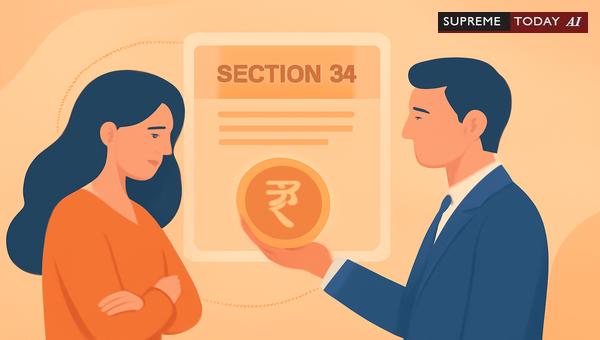
Court Rejects Plea: Wife Can't Maintain Herself Under Section 24
In the realm of family law in India, maintenance during divorce proceedings is a critical right designed to prevent hardship for dependent spouses. A pivotal question often arises: Judgment in which the court rejected the plea of Section 24 on the ground that wife is able to maintain herself? This issue strikes at the heart of (HMA), which empowers courts to grant to a spouse without sufficient income while matrimonial cases are pending. Recent and historical judgments underscore that courts typically reject defenses claiming a wife can support herself unless robust evidence proves otherwise. This blog delves into a landmark case, key findings, and supporting precedents to clarify when such pleas fail.
Disclaimer: This article provides general information based on judicial precedents and is not a substitute for professional legal advice. Consult a qualified lawyer for advice tailored to your circumstances.
Understanding Section 24 of the Hindu Marriage Act
Section 24 HMA is a protective provision aimed at ensuring financial equity during litigation. It states that if a spouse lacks independent income to support themselves and cover litigation costs, the court may order the other spouse to pay (during pendency) and expenses. The provision applies to both husbands and wives but is most invoked by wives in practice.
Courts interpret unable to maintain herself broadly, considering not just current income but overall financial dependency, including responsibilities toward children. As noted in various rulings, the husband's financial difficulties or claims of no income do not absolve his duty if he is capable of earning. Similarly, pleas that the wife can maintain herself must be substantiated with concrete evidence; mere assertions fall short. 2023 0 Supreme(Kar) 508 2022 0 Supreme(Jhk) 171
Landmark Case: Rejection of Self-Maintenance Plea
In a significant judgment, the court addressed a wife's application for maintenance under Section 24 HMA, where the husband contested it claiming she could maintain herself. The proceedings highlighted the nuanced assessment of financial status.
Initial Proceedings and Grant of Maintenance
The court initially determined the wife had no sufficient independent income, granting her Rs. 31 per month pendente lite and Rs. 200 in litigation expenses on . 1961 0 Supreme(Cal) 91
Her subsequent stay application on the —pending payment—was rejected due to her absence at the hearing. The court observed she could have defended herself, underscoring procedural fairness. 1961 0 Supreme(Cal) 91
Assessment of Wife's Financial Status
The wife alleged the husband concealed his income and assets. Despite this, evidence showed she lacked independent income and bore responsibility for her unmarried daughter. The court emphasized Section 24's intent: to support spouses unable to maintain themselves, extending to dependents like children. 1997 7 Supreme 642 2002 0 Supreme(SC) 1040
Final Ruling and Adjustment
Rejecting the plea that the wife could maintain herself, the court upheld her entitlement based on her financial need and the husband's capacity. Maintenance was enhanced to Rs. 5,000 per month, balancing her requirements with his means. 1997 7 Supreme 642
This ruling exemplifies how courts prioritize evidence over unsubstantiated claims, ensuring the provision's protective purpose.
Key Factors Courts Consider in Section 24 Claims
Judgments consistently outline criteria for evaluating maintenance pleas:
Wife's Inability to Maintain Herself: The onus shifts to the husband to prove sufficient means once she claims dependency. In the present case, the respondent/wife before the trial court, had categorically came out with a plea that she was unable to maintain herself and consequently, the onus fell on the Revision Petitioner/Husband to establish that she has sufficient means to maintain herself. 2016 0 Supreme(Mad) 1187
Husband's Capacity to Earn: Even without current income, an able-bodied, educated husband is presumed capable. Financial hardship isn't a valid ground to deny . 2022 0 Supreme(Jhk) 171 2024 0 Supreme(Kar) 111 2023 0 Supreme(Kar) 900
Evidence and Adverse Inferences: Failure to disclose bank statements or assets leads to adverse inferences under . Since, even after the direction of the learned trial court, the husband failed to submit relevant statements of his bank accounts, the learned trial court was certainly justified in drawing against the petitioner husband under . Hence, the petitioner's plea that he is not able to maintain the wife was rightly rejected. 2011 0 Supreme(Raj) 423
During Enquiry: The wife must demonstrate inability from the application date, supported by material evidence. The wife approaches the Court claiming maintenance by filing the application on the ground that she is not able to maintain herself. During the enquiry she has to prove her inability to maintain herself and children even from the date of the application. 1998 0 Supreme(Mad) 1300 1998 0 Supreme(Mad) 1295
No Record of Wife's Means: Courts reject self-maintenance pleas absent proof. The wife established by satisfactory evidence that she is unable to maintain herself and the husband could not bring any thing on record to show that she is able to maintain herself... There is nothing on record to show that the wife is able to maintain herself. 2007 0 Supreme(Ker) 679
These factors ensure decisions are evidence-based, preventing vagrancy and upholding moral obligations. 2023 0 Supreme(Kar) 10
2023 0 Supreme(Raj) 1734
Broader Judicial Trends and Precedents
Multiple cases reinforce rejection of such pleas:
Courts dismiss husband's no-income defense if he's employable: The plea of the respondent that he does not have any source of income and he could not maintain the wife is no answer as he is mat... 2023 0 Supreme(Kar) 508
Education and health presume earning capacity: Able-bodied husbands with qualifications must support family standards. 2023 Supreme(Online)(KAR) 23670 2024 0 Supreme(Cal) 1401
Moral and legal duty prevails over temporary difficulties. 2024 0 Supreme(Kar) 111
These precedents create a robust framework, presuming liability unless disproven.
Practical Recommendations for Litigants
To navigate Section 24 applications effectively:- Full Financial Disclosure: Submit accurate income proofs, assets, and bank statements to avoid adverse inferences.- Evidence of Need: Wives should document expenses, lack of income, and child responsibilities.- Anticipate Scrutiny: Husbands claiming wife's self-sufficiency need concrete proof like salary slips or business records.- Seek Interim Relief Promptly: Early applications prevent procedural delays.
Accurate disclosures mitigate disputes and align with judicial expectations. 1997 7 Supreme 642
Conclusion and Key Takeaways
The discussed judgment and allied precedents affirm that courts under Section 24 HMA reject pleas asserting a wife's ability to maintain herself without compelling evidence. The focus remains on actual financial disparity, dependency, and earning potential, safeguarding vulnerable spouses during divorce.
Key Takeaways:- Section 24 prioritizes support for income-deficient spouses and dependents.- Onus lies on the contesting party to disprove claims with evidence.- Husband's earning capacity trumps unemployment pleas.- Full disclosure is mandatory; non-compliance invites rejection.
This evolving jurisprudence promotes fairness in matrimonial disputes. For personalized guidance, engage a family law expert.
References:1961 0 Supreme(Cal) 91 1997 7 Supreme 642 2002 0 Supreme(SC) 1040 2023 0 Supreme(Kar) 508 2022 0 Supreme(Jhk) 171 2016 0 Supreme(Mad) 1187 2011 0 Supreme(Raj) 423 2007 0 Supreme(Ker) 679 1998 0 Supreme(Mad) 1300 1998 0 Supreme(Mad) 1295 2024 0 Supreme(Kar) 111 2023 0 Supreme(Kar) 900 2023 Supreme(Online)(KAR) 23670 2023 0 Supreme(Kar) 10
2023 0 Supreme(Raj) 1734 2024 0 Supreme(Cal) 1401 #Section24HMA, #WifeMaintenance, #DivorceLawIndia















