Searching Case Laws & Precedent on Legal Query.....!
Analysing the retrieved Case Laws
Scanned Judgements…!



Searching Case Laws & Precedent on Legal Query.....!
Analysing the retrieved Case Laws
Scanned Judgements…!
Section 94 BNSS Cannot Be Invoked by Accused Alone - The provision is primarily intended for use by courts or police officers during investigation, not directly by accused persons at pre-charge stages. The court clarified that accused cannot unilaterally invoke Section 94 to access evidence such as CCTV footage, which may be deleted over time without proper protection. Instead, applications under Section 94 should be treated under Section 95 of BNSS, emphasizing its procedural limitations. 2024 Supreme(Online)(RAJ) 4650, 2023 Supreme(Online)(Ker) 55659 2023 Supreme(Online)(Ker) 55659, 2025 Supreme(Online)(Del) 7651
Section 94 BNSS Is Limited to Court or Police Officer Use - Courts have held that notices under Section 94/179 BNSS are meant to be issued to witnesses, not accused persons. The issuance of such notices to accused individuals is generally unsustainable unless specifically authorized, reflecting that the section is not a tool for accused persons to obtain evidence directly. 2025 Supreme(Online)(Tel) 14629, 2025 Supreme(Online)(Kar) 33492
Bail and Default Provisions Under BNSS - Several cases demonstrate that accused persons in criminal cases (e.g., Crime No.94/2025) are entitled to seek bail under Section 483 of BNSS. Courts also emphasize that if an accused absents themselves without sufficient cause, proceedings may be initiated against them under Section 269 of BNSS, and default can be treated as abuse of liberty. Proper court appearances are mandated for trial progression. 2025 Supreme(Online)(Chh) 5874, 2025 Supreme(Online)(CHH) 1374, 2025 Supreme(Online)(P&H) 4755, 2025 Supreme(Online)(Chh) 6812
Protection of Evidence and Investigation Procedures - Courts have emphasized the importance of safeguarding evidence, such as CCTV footage and location data, which are crucial during investigation. Orders have been set aside or modified to ensure such evidence is preserved, especially when applications are filed at pre-charge stages. This underscores procedural safeguards to prevent evidence loss. 2024 Supreme(Online)(RAJ) 4650, 2023 Supreme(Online)(Ker) 55659 2023 Supreme(Online)(Ker) 55659, 2025 Supreme(Online)(Del) 7651
Legal Limitations on Pre-charge Applications - The Supreme Court and High Courts have clarified that applications under Section 94 BNSS at pre-charge stages are generally not entertainable unless explicitly permitted, and such applications are to be considered only within the scope defined by case law. This prevents misuse of the section for fishing expeditions. 2024 Supreme(Online)(RAJ) 4650, 2023 Supreme(Online)(Ker) 55659 2023 Supreme(Online)(Ker) 55659
Appeals and Victim Rights - Victims or complainants have rights to appeal or file special leave petitions, but their standing depends on their role in the case. For instance, victims cannot appeal as accused but can seek remedies through appeals if they are complainants, with deadlines specified for filing such appeals. 2025 Supreme(Online)(MP) 6465
The sources collectively establish that Section 94 of BNSS is designed for use by courts or police officers during investigation, not directly by accused persons. Accused individuals seeking evidence access, such as CCTV footage, must do so through appropriate procedural channels, and their applications are often treated under Section 95 or dismissed at pre-charge stages. Courts are cautious to prevent misuse of Section 94, emphasizing the need to preserve evidence and uphold procedural safeguards. Bail provisions and default proceedings under BNSS follow standard legal principles, with courts ensuring accused persons' rights to appear and defend. Overall, the legal framework limits the scope of Section 94 BNSS primarily to investigative authorities, reinforcing the importance of procedural correctness and evidence preservation.

In the evolving landscape of Indian criminal procedure under the (), questions about the accused's rights, particularly opportunities to be heard under , have gained prominence. A common query from legal practitioners and individuals involved in cases is: Any Recent Case Laws Regarding 223 of Regarding Opportunities to the Accused to Hear? (Note: This appears to reference , akin to provisions for summoning documents or persons, often linked to proceedings in the accused's absence.) Recent judgments clarify when courts can proceed under without the accused's physical presence, emphasizing , judicial scrutiny for , and safeguards against misuse. This post delves into these rulings, providing clarity for better navigation of procedures.
Disclaimer: This article offers general information based on recent case laws and is not a substitute for professional legal advice. Consult a qualified lawyer for case-specific guidance.
empowers courts or police officers to issue summons for producing documents or persons during investigations or trials, similar to old provisions. However, its application in the accused's absence raises critical questions about and the . Courts have ruled that proceedings under can be allowed in the absence of the accused, provided certain conditions are met, specifically that the accused has voluntarily appeared before the court or has been taken into custody, and that the order for issuance of was based on appropriate of the necessity of the accused’s presence.
J. Chandra Lekha VS State of - Crimes ()
This provision balances investigative needs with the accused's fundamental rights, preventing arbitrary actions.
Recent judgments highlight strict conditions for invoking without the accused:
J. Chandra Lekha VS State of - Crimes ()
J. Chandra Lekha VS State of - Crimes ()
These principles draw from equivalents like Sections 88 Cr.P.C. and 91 , where bonds for appearance are exercisable only in the accused's presence.
J. Chandra Lekha VS State of - Crimes ()
The cornerstone is . The provisions of Sections 88 Cr.P.C. and 91 specifically stipulate that the power to take bonds for appearance or bail bonds is exercisable only when the accused is present in court.
J. Chandra Lekha VS State of - Crimes ()
In (referenced in judgments), courts deemed the accused's presence a for such proceedings, invalidating NBWs without it.J. Chandra Lekha VS State of - Crimes ()
Without surrender, courts cannot effectively exercise jurisdiction, ensuring fairness.
NBWs aren't automatic for absconders. The courts have consistently held that issuance of NBWs cannot be based solely on the fact that an accused is shown as absconding. There must be an independent to determine whether the presence or custody of the accused is necessary for the investigation or trial.
J. Chandra Lekha VS State of - Crimes ()
The in struck down mechanical NBW orders lacking necessity evaluation.J. Chandra Lekha VS State of - Crimes ()
This prevents abuse, aligning with 's procedural rigor.
Deliberate absconding undermines claims under Section 94. The courts have dismissed applications or refused relief when the accused is deliberately avoiding court proceedings, as this indicates a lack of or appearance.2025 Supreme(RAJ) 291 Mere NBWs without assessment don't justify absence-based proceedings.
J. Chandra Lekha VS State of - Crimes ()
2025 Supreme(RAJ) 291Other judgments reinforce 's scope, limiting it primarily to courts or police, not accused persons directly. Cannot Be Invoked by Accused Alone - The provision is primarily intended for use by courts or police officers during investigation, not directly by accused persons at pre-charge stages.2024 Supreme(Online)(RAJ) 4650 2023 Supreme(Online)(Ker) 55659 2025 Supreme(Online)(Del) 7651
Accused seeking CCTV or documents via Section 94 often face rejection: The court clarified that accused cannot unilaterally invoke Section 94 to access evidence such as CCTV footage, which may be deleted over time without proper protection. Instead, applications under Section 94 should be treated under .2024 Supreme(Online)(RAJ) 4650 2023 Supreme(Online)(Ker) 55659 2025 Supreme(Online)(Del) 7651
Notices under Section 94/179 target witnesses, not accused. 2025 Supreme(Online)(Tel) 14629 2025 Supreme(Online)(Kar) 33492
Courts stress protecting evidence: Investigation is certainly necessary and in the absence of , the entire mode in which the misappropriation was carried out will not unravelled.2025 Supreme(Online)(Ker) 43769 Pre-charge applications risk dismissal to avoid . 2024 Supreme(Online)(RAJ) 4650 2023 Supreme(Online)(Ker) 55659
Accused may seek bail under , but absence triggers for . 2025 Supreme(Online)(Chh) 5874 2025 Supreme(Online)(CHH) 1374 2025 Supreme(Online)(P&H) 4755 2025 Supreme(Online)(Chh) 6812
Courts allow flexibility:- Genuine inability (e.g., sickness) may permit proceedings.
J. Chandra Lekha VS State of - Crimes ()
- Orders based solely on absconding status are set aside without assessment.J. Chandra Lekha VS State of - Crimes ()
- Willful absence precludes Section 94 relief absent proper process. 2025 Supreme(RAJ) 291Recommendations include courts mandating independent reviews before NBWs.
J. Chandra Lekha VS State of - Crimes ()
J. Chandra Lekha VS State of - Crimes ()
2025 Supreme(RAJ) 291In conclusion, recent cases under underscore procedural safeguards, ensuring the accused's while facilitating justice. Voluntary engagement with courts remains pivotal. Stay informed on these developments to protect rights effectively.
#BNSS #Section94BNSS #CriminalLawIndia


It was thus, not open for the accused to invoke Section 94 of BNSS. ... Application filed by the petitioner accused under Section 94 and 348 of BNSS seeking CCTV footage, Call location & Tower location was dismissed vide the impugned order. 2. ... As an upshot, the impugned order dated 18.07.2024 is set aside and application filed by the petitioner before learned trial Court under Sectio....

This Court in W.P.No.7333 of 2021 had held that notice under Section 94 /179 of BNSS can be issued to a witness and not to an accused. ... is arrayed as an accused. ... In view of above, this Court is of the view that the impugned notice dated 21-06-2025 issued to the petitioner under Section 94 /179 of BNSS cannot be sustained. ... Shorn of unnecessary details, the case of the petitione....

This is the first bail application filed under Section 483 of the Bharatiya Nagarik Suraksha Sanhita, 2023 (for short ‘BNSS’) for grant of regular bail to the applicant who has been arrested in connection with Crime No.94/2025 registered at Police Station Khamtarai Raipur, District - Raipur (CG) for ... In case of his absence, without sufficient cause, the trial court may proceed against him under Section 269 of Bharatiya ....

Criminal Petition No.101826/2025 is filed by accused No.4 under Section 483 of Bharatiya Nagarik Suraksha Sanhita, 2023, for grant of regular bail as he is in judicial custody in Crime No.94/2025 pending on the file of the learned II JMFC, Hubballi. 4. ... RAMESH CHIGARI, AGA) THIS CRIMINAL PETITION IS FILED UNDER SECTION 483 OF BNSS SEEKING TO ENLARGE THE PETITIONER/ACCUSED NO.4 ON REGULAR BAIL AS ATTACH....
In case of his absence, without sufÏcient cause, the trial court may proceed against them under Section 269 of Bharatiya Nyaya Sanhita. ... Accordingly, the bail application is allowed. Let the applicant Nos. 1 and 2 - Ramkhilawan and Devraj, involved in Forest Crime No.(P.O.R. ... During investigation it was found that the spot where the dead body of the wild elephant was found belonged to the co accused, namely, Kamal Singh and Manoj and ....

Sections 94 (4), 94(4A) and 94(8) of the Kerala Co-operative Societies Act , 1969. Bharatiya Nagarik Suraksha Sanhita , 2023 (for short ‘ BNSS ’). 2. ... thereby accused committed the offences alleged. ... Investigation is certainly necessary and in the absence of custodial interrogation, the entire mode in which the misappropriation was carried out will not unravelled.....

Petition is allowed to the extent mentioned above. All pending applications, if any, stand disposed of. ... Dated Police Station Sections 94 09.10.2018 Khilchian, District 420 & 120 B IPC Amritsar BNSS , 2023 (Analogous to Section 82 of CrPC, 1973). He submits that the petitioner was not served in terms of S. 84 of BNSS . Bharatiya Nagarik Suraksha Sanhita, 2023 , [ BNSS ], 2. Counsel a....

The applicant has preferred this First Bail Application under Section 483 of the Bharatiya Nagarik Suraksha Sanhita, 2023 for grant of regular bail, as he has been arrested in connection with Crime Nos. 93/2024, 94/2024 and 95/2024, registered at Police Station – Podi, District – Manendragarh-Chirmiri-Bharatpur ... In case of his absence, without sufÏcient cause, the trial court may proceed against him under Section 269 of Bharatiya Nyaya S....

Petition is accordingly allowed. ... Debendra Nath Padhi (2005) 1 Supreme Court Cases 568, submits that Section 94 BNSS does not give any right to the accused to approach the court at pre-defence stage. ... The impugned order dated 16.07.2025 is therefore set aside and application filed under Section 94 BNSS dated 26.04.2025 stands allowed with direction that the CDRs....
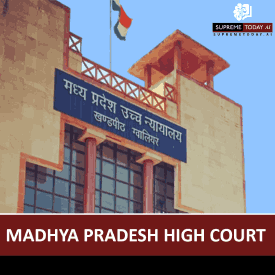
A person who is a complainant under Section 200 of the CrPC who complains about the offence committed by a person who is charged as an accused under Section 372 , a victim of an offence could not have filed an appeal as such, unless he was also a complainant, in which event he could maintain an appeal if special leave to appeal had been granted by the High Court and if no such special leave ... Act against judgment dated 25.11.2024 passed by Judicial Magistrate First Class, J....


An indispensable Tool for Legal Professionals, Endorsed by Various High Court and Judicial Officers
Please visit our Training & Support
Center or Contact Us for assistance

Scan Me!
India’s Legal research and Law Firm App, Download now!


For Daily Legal Updates, Join us on :



 Back to top


