



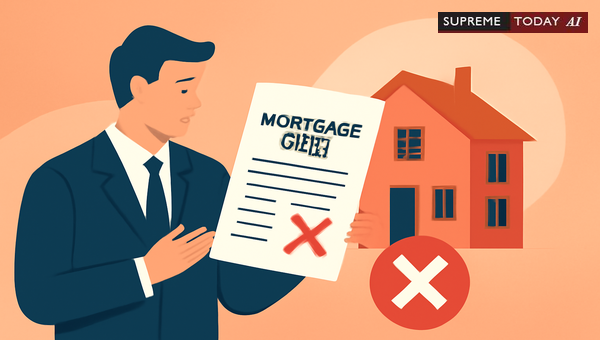
Sham Mortgage Deeds: What Makes a Transaction Invalid?
In property law, few issues spark as much contention as the validity of a . Imagine signing a document labeled as a mortgage, only for it to be later challenged as a . What does this mean, and how do courts decide if a seemingly legitimate deal is actually a facade? This blog dives deep into the legal principles governing sham mortgages, drawing from key judicial precedents to help you understand the nuances.
Whether you're a property owner, buyer, or creditor, grasping these concepts can protect your interests. Note: This is general information based on legal precedents and not specific legal advice. Consult a qualified attorney for your situation.
Defining a Sham Mortgage Transaction
A transaction characterized as a sham mortgage is one where all parties involved share a that the transaction does not create or transfer any real legal rights or obligations, but rather is intended to give a false appearance of a legitimate mortgage or transfer 2021 0 Supreme(SC) 45. Courts look beyond the document's form to the substance, using evidence such as the transaction's form, surrounding circumstances, and the parties' conduct to determine if it's a genuine security interest or a sham designed to deceive creditors or authorities 2021 0 Supreme(SC) 45.
As Diplock LJ emphasized, a sham involves acts or documents executed with the of giving a false appearance of creating legal rights and obligations different from the actual intention of the parties2021 0 Supreme(SC) 45. Crucially, this requires shared intent; unilateral deception doesn't qualify.
Key Legal Principles and
Here are the core elements courts consider:
- Required: A involves acts or documents executed with the of not creating the legal rights they appear to confer 2021 0 Supreme(SC) 45.
- Burden on Challenger: The party alleging sham must prove it, and oral evidence is admissible to show the transaction wasn't intended as a genuine mortgage 2021 0 Supreme(SC) 45 1988 0 Supreme(P&H) 44.
- : The true nature is determined by parties' intention from documents, conduct, and circumstances, not the label 2021 0 Supreme(SC) 45 1999 3 Supreme 102.
- Ulterior Motives: If executed to defeat creditors or circumvent laws, and parties didn't intend real security, it's a sham 2021 0 Supreme(SC) 45 2006 2 Supreme 561.
Oral evidence plays a pivotal role. Under , it's admissible to prove a document was executed but never meant to operate as a mortgage 2021 0 Supreme(SC) 45 1988 0 Supreme(P&H) 44. Mere execution of a titled mortgage doesn't suffice if evidence reveals collusion.
Evidence and Court Scrutiny
Courts meticulously examine intent through:
- Document Contents and Conduct: In 2021 0 Supreme(SC) 45, a mortgage to avoid creditors was deemed fictitious. Similarly, 2006 2 Supreme 561 reclassified a sale deed with re-transfer condition as a , not mortgage, based on intent.
- Surrounding Circumstances: Absence of witnesses or supporting evidence weighs in but isn't conclusive unless overall facts indicate sham 2008 0 Supreme(HP) 356. Oral evidence and account books helped affirm genuineness there.
From other cases, consider 2017 0 Supreme(P&H) 1607, where a registry clerk's testimony noted no paid before the sub-registrar, arguing the deed was a . Yet, courts upheld it as genuine based on broader evidence, showing proof burdens are high.
In
Premchand Lakichand Jain Died through his L. Rs. VS Bansilal Manikchand Jain Since deceased thr. his Lrs.
, the court distinguished sale deeds from mortgages by under : Type of mortgage depends upon terms of contract – Oral evidence of intention is not admissible in interpreting covenants of deed, but contemporaneous conduct isPremchand Lakichand Jain Died through his L. Rs. VS Bansilal Manikchand Jain Since deceased thr. his Lrs.
. This reinforces that while oral evidence aids sham claims, it can't rewrite clear terms.Exceptions, Limitations, and Real-World Examples
Not every suspicious deal is sham:
- Genuine intent with survives even collateral uses.
- Mere suspicion fails without proof; burden stays on challenger.
- Formalities like registration matter but yield to true intent.
In 2005 0 Supreme(All) 1936, defendants called a mortgage fictitious and sham deed without any , but courts assessed against auction contexts under Transfer of Property Act sections like 70, 81, 91. The auction purchaser steps into the mortgagor's shoes, but subsequent mortgagees retain if genuine 2005 0 Supreme(All) 1936.
Another example: 2012 0 Supreme(Pat) 473 dismissed sham claims on a mortgage and sale as inoperative without , tying into disputes. Meanwhile, 2012 0 Supreme(Del) 2483 noted a registered mortgage wasn't sham, as conceded in court statements.
Redemption cases like 2002 0 Supreme(P&H) 85 and 2002 0 Supreme(P&H) 86 highlight that receipts alone don't extinguish mortgages without registered deeds, aiding sham analyses by stressing formalities' role alongside intent.
Practical Recommendations
To navigate these issues:
- Challengers: Collect evidence of conduct, circumstances, oral agreements 2021 0 Supreme(SC) 45 1988 0 Supreme(P&H) 44.
- Parties Drafting: Ensure documents reflect true intent to preempt disputes.
- Courts' Role: Prioritize .
In disputes like lease rights sales prohibited by law 2023 Supreme(Online)(AP) 21387, or forged redemptions under 2002 0 Supreme(P&H) 85, thorough evidence is key.
Conclusion: Protecting Your Property Interests
Sham mortgage deeds undermine trust in property transactions, but courts provide clear tests centered on shared intent and evidence. By focusing on substance—documents, conduct, circumstances—valid security is upheld, while facades crumble. Key takeaway: Always document true intentions to avoid sham allegations.
This overview draws from established precedents; outcomes vary by facts. For tailored guidance, seek professional legal counsel.
References:- 2021 0 Supreme(SC) 45: Sham concepts, common intent.- 1988 0 Supreme(P&H) 44: Oral evidence admissibility.- Others integrated as noted.
#ShamMortgage #PropertyLaw #LegalInsights










