Searching Case Laws & Precedent on Legal Query.....!
Analysing the retrieved Case Laws
Scanned Judgements…!



Searching Case Laws & Precedent on Legal Query.....!
Analysing the retrieved Case Laws
Scanned Judgements…!
Main Points and Insights:
Parties and Nature of Dispute: Shivangi Bansal and Sahib Bansal are involved in multiple legal proceedings across India, including family, criminal, and constitutional matters. Shivangi filed for divorce under Section 13(1) of the Hindu Marriage Act, and there are related cases of domestic violence and criminal allegations ["2025 6 Supreme 169"] ["2023 0 Supreme(All) 727"].
Marriage Details: The marriage between Shivangi and Sahib Bansal was solemnized on December 5, 2015, without dowry demand, but disputes arose subsequently, including allegations of harassment, assault, and dowry demands ["
Mukesh Bansal VS State of U. P. - Crimes (2022)
"] ["2022 0 Supreme(All) 672"] ["2023 Supreme(Online)(All) 22033"].Legal Proceedings and Jurisdiction: Shivangi filed cases in Delhi and Uttar Pradesh, including family court petitions, criminal FIRs, and writ petitions. Some cases involve transfer petitions seeking to move proceedings to different courts or jurisdictions, with the Supreme Court and High Courts involved in adjudication ["2025 6 Supreme 169"] ["2025 Supreme(Online)(SC) 7230"] ["MUKESH BANSAL vs State of U.P. AND ANOTHER - Allahabad"].
Transfer of Cases: Shivangi Bansal has filed transfer petitions (notably C.P. No. 2367/2023) before the Supreme Court, seeking to transfer matrimonial and related cases from courts in Delhi or Rohini to courts in other jurisdictions like Hapur, indicating ongoing jurisdictional disputes applicable across India ["2025 6 Supreme 169"] ["2025 Supreme(Online)(SC) 7230"]].
Legal Strategies and Mediation: The courts have suggested mediation and settlement, and some proceedings have been disposed of or are pending, reflecting ongoing attempts to resolve disputes at various levels ["2025 6 Supreme 169"].
Broader Legal Context: The cases involve constitutional and procedural issues, including the interpretation of laws related to domestic violence, criminal procedure, and jurisdiction, with references to Supreme Court rulings and constitutional protections ["2026 Supreme(Online)(Tel) 2598"] ["MUKESH BANSAL vs State of U.P. AND ANOTHER - Allahabad"] 2021_DHC_3485.
Analysis and Conclusion:
Shivangi Bansal and Sahib Bansal's disputes encompass family, criminal, and constitutional matters, with proceedings initiated across multiple courts in India, including Delhi and Uttar Pradesh. The disputes involve allegations of dowry, harassment, and criminal conduct, with cases often transferred or sought to be transferred to different jurisdictions for convenience or strategic reasons.
The Supreme Court has been actively involved in adjudicating transfer petitions, emphasizing the importance of proper jurisdiction and the possibility of mediation to resolve matrimonial issues ["2025 6 Supreme 169"] ["2025 Supreme(Online)(SC) 7230"].
The widespread nature of these cases highlights the applicability of legal principles across India, with courts balancing jurisdictional concerns, procedural fairness, and the rights of parties involved.
Overall, the cases of Shivangi Bansal vs. Sahib Bansal exemplify complex inter-jurisdictional family and criminal litigation in India, with ongoing legal efforts to resolve disputes through judicial and alternative means.
References:
Mukesh Bansal VS State of U. P. - Crimes (2022)
"]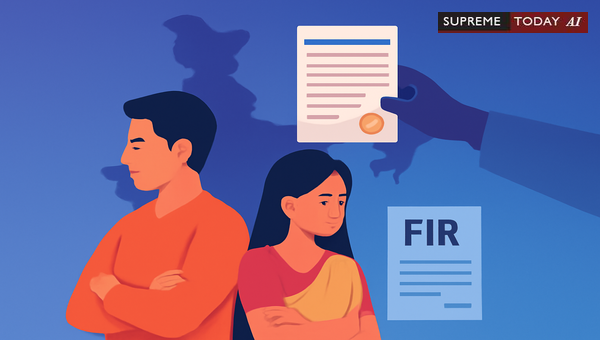
In the realm of Indian family law, often lead to a web of , court battles, and questions about precedent. One such case that has drawn attention is Shivangi Bansal vs Sahib Bansal. Couples facing discord frequently wonder: Is Shivangi Bansal vs Sahib Bansal applicable to the whole of India? This question touches on critical issues like the scope of , , and principles such as and .
This blog post breaks down the case's context, analyzes key legal findings, and examines whether its principles extend nationwide. We'll draw from relevant judgments and sources to provide clarity—note that this is general information, not specific legal advice. Consult a qualified lawyer for your situation.
The marriage between Shivangi Bansal and Sahib Bansal took place on , according to Hindu rites and rituals.
As per court observations, there is no chance of any interference in the matrimonial or personal matter of Sahib Bansal and Shivangi Bansal.
This highlights the private nature of such disputes, which typically remain confined to the facts and courts involved.
The case encompasses allegations of , criminal charges under , validity of FIRs, , and like . Courts including the , , and references to principles have addressed these, but always in a fact-specific manner. 2009 1 Supreme 677 2003 7 Supreme 43 1991 0 Supreme(SC) 132
The core takeaway is straightforward: the rulings in Shivangi Bansal vs Sahib Bansal are not binding across all of India. Legal principles derived from the case—such as , FIR scrutiny, and —are applied contextually, depending on jurisdiction, facts, and evidence.
As noted, the legal issues addressed—such as the validity of FIRs, , and the applicability of —are context-specific. This underscores that blanket application doesn't hold.
bars re-litigating decided issues. In 2009 1 Supreme 677, the applied it to property and management disputes, stating it prevents issues that have attained finality in previous suits.
Mukesh Bansal VS State of U. P. - Crimes (2022)
This principle is pan-Indian but fact-dependent—not a direct export from Shivangi Bansal.In matrimonial cases, courts scrutinize FIRs for genuineness. 2022 0 Supreme(All) 672 evaluates allegations and medical evidence... based on the facts presented. 2003 7 Supreme 43 The emphasized jurisdictional issues, but findings remain case-bound.
Relevant to criminal angles, 1991 0 Supreme(SC) 132 clarifies age via school records and medical reports: courts required to analyze the evidence in each case. This illustrates evidence-driven decisions, not universal rules.
Other rulings provide context on similar themes without extending Shivangi Bansal's reach:
These show recurring themes like delay, evidence, and specificity, but none link directly to nationwide applicability for Shivangi Bansal.
Indian courts operate hierarchically:
| Court Level | Role in Shivangi Bansal Context | Example Citation ||-------------|--------------------------------|------------------|| Allahabad HC | in disputes 2009 1 Supreme 677 | Management issues || Delhi HC | FIR/medical evidence 2003 7 Supreme 43 | Matrimonial FIRs || Supreme Ct | Age determination guidelines 1991 0 Supreme(SC) 132 | Evidence analysis |
Precedents from higher courts may persuade, but only on identical facts. Local laws and benches govern application. For instance, Uttar Pradesh observations on non-interference
reinforce privacy.
While principles like are generally recognized nationwide:- Fact-Driven: Always subject to case evidence.- Higher Court Influence: binds all, but Shivangi lacks such elevation.- Jurisdictional Nuances: State-specific procedural rules apply.
Recommendations:- Tailor arguments to your facts and local precedents.- File promptly to avoid , as in 2013 0 Supreme(Del) 953.- Seek jurisdiction-appropriate counsel.
The Shivangi Bansal vs Sahib Bansal saga illustrates matrimonial law's intricacies but does not apply uniformly across India. It's a reminder that justice is fact- and forum-specific. Key takeaways:- Rulings are contextual, not universal. 2003 7 Supreme 43 2009 1 Supreme 677- Principles like aid but don't dictate outcomes.- Prioritize evidence and timeliness.
For those navigating similar disputes, understanding these limits empowers better decisions. This analysis draws from cited documents; professional advice is essential. Stay informed, and remember—each case writes its own story.
References:1. 2022 0 Supreme(All) 672 - FIR and evidence in disputes.2.
Mukesh Bansal VS State of U. P. - Crimes (2022)
- applications.3. 2009 1 Supreme 677 - Property disputes.4. 2003 7 Supreme 43 - Matrimonial FIRs.5. 1991 0 Supreme(SC) 132 - Age evidence.6.- Marriage details. #ShivangiBansalCase, #MatrimonialLawIndia, #IndianJudiciary


Sahib Bansal (Transfer Petition (C) No. 2367/2023): Petition seeking transfer of HMA No. 1395/2020 from Family Court, Rohini, Delhi to Family Court, Hapur; pending before Supreme Court of India. (x) Shivangi Bansal vs. State of UP & Ors. (SLP (Crl.) ... The Transfer Petition (C) No. 2367 of 2023 has been filed by the wife - Shivangi Bansal/Shivangi Goel for transfer of HMA No. 1395/2020, titled as Sahib Bansal vs. ....
(C) No. 2367 of 2023 titled as “Shivangi Bansal Vs. Sahib Bansal” along with connected matters was pronounced on 22.07.2025 by Hon’ble Mr. Justice Augustine George Masih for the Bench comprising Hon’ble the Chief Justice of India and His Lordship. ... (C) No. 2367 of 2023 titled as “Shivangi Bansal Vs. Sahib Bansal” along with connected matters was pronounced on 22.07.2025 by Hon’ble Mr. Justice Augustine George Masih for the Bench ....

Shivangi Bansal was married with Sahib Bansal on 05.12.2015 according to Hindu rites and rituals. ... is no chance of any interference in the matrimonial or personal matter of Sahib Bansal and Shivangi Bansal. ... [9] As such, it is clear that the couple Sahib Bansal and Shivangi Bansal was married in December, 2015. ... Shivangi Bansal....

matter of Sahib Bansal and Shivangi Bansal. ... As such, it is clear that the couple Sahib Bansal and Shivangi Bansal was married in December, 2015. ... Shivangi Bansal was sent to the office of the Prime Minister, Government of India, Chief Minister, State of U.P., Police Commissioner, New Delhi, D.G.P. ... On the same date, husband-Sahib Bansal also gave a det....

matter of Sahib Bansal and Shivangi Bansal. ... As such, it is clear that the couple Sahib Bansal and Shivangi Bansal was married in December, 2015. ... Shivangi Bansal was sent to the office of the Prime Minister, Government of India, Chief Minister, State of U.P. Police Commissioner, New Delhi, D.G.P. ... On the same date, husband-Sahib Bansal also gave a deta....

It is further submitted that opposite party no.2 has initiated the proceedings of Complaint Case No.248 of 2019 (Shivangi Bansal Vs. Sahib Bansal and others), under Section 12 of the Protection of Women from Domestic Violence Act. ... It is submitted by learned Senior Counsel that the marriage of the applicant Sahib Bansal was solemnized with opposite party no.2- Shivangi Bansal on 5.12.215 without demand of any dowry and after sometime the dispute a....

in the matters of Lalita Kumari Vs State of U.P reported in (2014) 2 SCC 1, Arnesh Kumar Vs State of Bihar and another reported in (2014) 8 SCC 273 and Shivangi Bansal Vs Sahib Bansal reported in 2025 SCC OnLine SC 1494. ... in the matters of Lalita Kumari Vs State of U.P reported in (2014) 2 SCC 1, Arnesh Kumar Vs State of Bihar and another reported in (2014) 8 SCC 273 and Shivangi Bansal Vs Sahib Bansal reported in 2025 SCC OnLine SC 1494.” ... Bri....
It is submitted by learned Senior Counsel that the marriage of the applicant Sahib Bansal was solemnized with opposite party no.2- Shivangi Bansal on 5.12.215 without demand of any dowry and after sometime the dispute arose between husband no.2- Shivangi Bansal has lodged an F.I.R. ... It is further submitted that the first information report was lodged against Mukesh Bansal (father-in-law), Manju Bansal (mother-in-law), S....

Singh, Advocates versus UNION OF INDIA & ANR. .....Respondents Through: Mr. Bhagwan Swarup Shukla, CGSC with Mr. Ashutosh Pathak and Ms. Shivangi Pandey, Advocate for UOI. Mr. Sanjay Jain, Sr. Advocate with Mr. Sanjay Katyal, Ms. Kritika Gupta, Ms. ... Ritika Bansal, Mr. Vidur Mohan and Mr. Kaushal Singh, Advocates versus VISHAWAJEET SINGH & ORS. .....Respondents Through: Mr. Bhagwan Swarup Shukla, CGSC with Ms. Shivangi Pandey and Mr. Yash Baralia, Advocates for UOI. Mr. ... Ritika Bansal, Mr. Vidur Mo....

Of India) Entop Hill Area, Near Old Post Office And Metro Station Mumbai. ... (SUDESH BANSAL),J SACHIN/74 ... JUSTICE SUDESH BANSAL Order 14/09/2023 1. ... Shivangi Arvindbhai Rana, Associate Manager, Pmuid 2573 Near Chanakyapuri Overbridge, Ghatlodiya, Ahmedabad. Shivangirana.adv@gmail.com, 2. Prof. Dr. Unnat P. Pandit, Registrar Of Trade Marks (Govt.

Though the order impugned in the present case also has been issued after three years of the election, but the petitioner has filed this petition after another two years and of which delay as aforesaid, there is no explanation. Even otherwise that is no explanation for the delay of over two years in preferring the petition and which delay considering the nature of the order, is found to be fatal. The State Election Commissioner where on an examination of the Scheme of Rules 89 & 92 it was held that even though no time limit is prescribed for passing an order of disqualification but the Electi....

Madan Bansal vs. Ramnarayan Sharma, considered the similar point and observed as under:- This Court, while deciding application vide order dated 09.03.2006, filed by landlord-respondent under Section 151, CPC in S.B. Civil Second Appeal No. 458/2001. “...........the criteria for admission of the appeal are altogether different than what adopted at the time of hearing of the appeal for final disposal. Even if the appeal is admitted by the first appellate Court being a statutory appeal or second appeal as substantial question of law arises then it does not mean that it will b....

As was noted by the Privy Council in Crawford Vs. Spooner, (1846) 6 Moore PC 1: ‘We cannot aid the Legislature’s defective phrasing of an Act, we cannot add or mend and, by construction make up deficiencies which are left there’. (See J.P.Bansal Vs. State of Rajasthan, JT 2003 (3) SC 169). The intention of the Legislature is primarily to be gathered from the language used, which means that attention should be paid to what has been said as also to what has not been said. As a consequence, a construction which requires for its support addition or substitution of words or whic....


An indispensable Tool for Legal Professionals, Endorsed by Various High Court and Judicial Officers
Please visit our Training & Support
Center or Contact Us for assistance

Scan Me!
India’s Legal research and Law Firm App, Download now!


For Daily Legal Updates, Join us on :



 Back to top


