


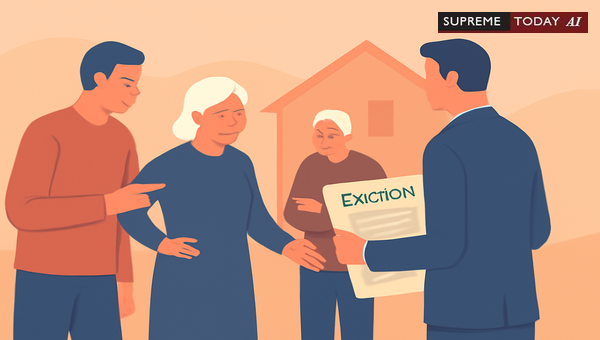
Can One Legal Heir Maintain an ? A Comprehensive Legal Guide
In property disputes, the death of a tenant or landlord often complicates eviction proceedings. A common question arises: Can one of the legal heirs maintain an ? This issue frequently surfaces in rental disputes, where pass to heirs, and landlords or heirs seek to evict occupants. Understanding this requires delving into Indian tenancy laws, precedents, and related statutes like rent control acts.
This article provides general insights based on judicial interpretations. Note: This is not legal advice; consult a qualified lawyer for your specific case. We'll explore key principles, exceptions, and case examples to clarify when one heir can represent the estate.
Understanding Rights
are hereditary, meaning they devolve upon all legal heirs of the deceased tenant upon their death. However, this does not mean every heir must be party to an . The has clarified that a single legal heir can maintain an on behalf of the deceased tenant, provided there is no or 2017 0 Supreme(Del) 2915 2006 0 Supreme(SC) 904.
As established in key rulings, A single legal heir can maintain an on behalf of the deceased tenant. The has established that unless there is or , the representation of one heir is sufficient to represent the entire estate 2017 0 Supreme(Del) 2915 2006 0 Supreme(SC) 904. This principle stems from the concept of among heirs, where the occupation of one is deemed the occupation of all 2018 4 Supreme 747.
In , there is , unlike where shares are distinct. On death of original tenant legal heirs inherit the tenancy as joint tenants. Occupation of one of the tenant is occupation of all the joint tenants – Hence not necessary for landlord to all legal heirs of the deceased tenant – Sufficient for the landlord to either of those persons who are occupying the property, as party 2018 4 Supreme 747.
Key Principles Governing Maintainability
Here are the foundational legal principles:
Representation by One Heir: One heir can file and pursue the suit, binding the estate unless challenged on grounds of 2017 0 Supreme(Del) 2915 2006 0 Supreme(SC) 904.
Binding Effect: A against one heir does not automatically bind others unless they were impleaded. However, unimpleaded heirs cannot later derail execution if applies 2000 0 Supreme(Bom) 503 1993 0 Supreme(SC) 751.
Legal Authority to Continue Proceedings: Heirs hold the property as representatives, not trespassers, allowing continuation of suits without fresh filings 2006 0 Supreme(Del) 1012 2016 0 Supreme(Mad) 1910.
Impleadment Sufficiency: Impleadment of one of the joint tenants is sufficient to maintain an eviction petition under the 2020 0 Supreme(Del) 1502. Courts have upheld this in cases like , emphasizing efficiency in proceedings.
These rules promote procedural economy while protecting actions.
Exceptions and Limitations
While one heir can generally maintain the suit, exceptions exist:
or : If the representing heir colludes with the landlord or neglects duties, the suit may be invalidated 2006 0 Supreme(SC) 904
. The maintainability of the is contingent upon the absence of or by the representative heir.
of Landlord: If eviction is sought for the original landlord's personal need and they pass away, the right may not survive to heirs 2012 0 Supreme(Bom) 162.
Senior Citizens Act Contexts: Under the , eviction petitions target children or legal heirs for non-maintenance. However, forums lack jurisdiction over Class-II heirs if primary obligation lies with children. The primary obligation to maintain a senior citizen lies on his children, and the forums under the Senior Citizens Act do not have jurisdiction to entertain an eviction petition against legal heirs 2024 0 Supreme(Del) 627. allows summary eviction of sons/daughters/heirs from self-acquired property, but only against direct obligors 2024 0 Supreme(Del) 409.
In one case, a senior citizen successfully evicted her son and daughter-in-law due to family acrimony and non-maintenance, overriding lower rejections 2024 0 Supreme(Del) 409.
Insights from Related Property Disputes
Other cases reinforce these principles:
Inheritance and Ownership Disputes: In a Mizoram property eviction, the court decreed eviction against a claimant son, upholding the plaintiff's purchase despite heir claims, as evidence favored ownership 2023 0 Supreme(Gau) 996. The defendant/appellant was the only son of the deceased... but the LSC No.CAD-658 of 2013 be inherited by him being the sole legal heir – yet dismissed due to lack of substantiation.
Requirement: Even in heir-inherited tenancies, landlords' genuine needs prevail. The landlord's requirement for the premises was considered , and the tenant could not dictate terms 2020 0 Supreme(P&H) 1567.
and : Heirs challenging sales by co-heirs may seek , but courts balance prima facie cases. There is no prima face case in favour of original plaintiff – Impugned order quashed where discretion was arbitrary
Harish Veljibhai Joshi through Poa Darshan Harishbhai Joshi VS Jitendra Veljibhai Joshi
. In another, a bonafide purchaser's rights were protected, with co-heir compensated monetarily 2022 0 Supreme(Guj) 346.Execution Objections: Belated objections by omitted heirs to defeat decrees are often rejected, especially in joint tenancies 2018 4 Supreme 747.
These examples show courts scrutinize facts like evidence of title, conduct, and good faith.
Practical Recommendations for Heirs and Landlords
To strengthen your position:
Verify No : Document independent actions to counter mala fide claims.
Key Parties: While not mandatory, include occupying heirs to avoid disputes 2020 0 Supreme(Del) 1502.
Address Other Heirs' Rights: Unimpleaded heirs retain claims; prepare for potential challenges 2000 0 Supreme(Bom) 503.
Senior Citizens: Leverage Rule 22 for swift eviction if applicable, focusing on maintenance obligations 2024 0 Supreme(Del) 409.
Seek Timely Relief: File promptly to avoid limitation bars 2023 0 Supreme(Gau) 996.
Conclusion and Key Takeaways
Generally, one legal heir can maintain an , representing the estate under principles, absent or neglect 2006 0 Supreme(SC) 904. Hereditary rights ensure continuity, but decrees bind judiciously 1993 0 Supreme(SC) 751.
Key Takeaways:- Representation by one heir suffices for maintainability.- Watch for exceptions like or Senior Citizens Act limits.- Courts prioritize bona fides and evidence.
For tailored advice, consult a legal expert. References include 2017 0 Supreme(Del) 2915, 2006 0 Supreme(SC) 904, 2000 0 Supreme(Bom) 503, 1993 0 Supreme(SC) 751, 2006 0 Supreme(Del) 1012, 2016 0 Supreme(Mad) 1910, 2020 0 Supreme(Del) 1502, 2018 4 Supreme 747, 2024 0 Supreme(Del) 627, 2024 0 Supreme(Del) 409. Stay informed on tenancy laws to protect your property rights.
#EvictionSuit #LegalHeirs #TenancyRights















