Searching Case Laws & Precedent on Legal Query.....!
Analysing the retrieved Case Laws
Scanned Judgements…!



Searching Case Laws & Precedent on Legal Query.....!
Analysing the retrieved Case Laws
Scanned Judgements…!
Pronouncement of Single Talaq and Iddat Observation - Under the Muslim Women (Protection of Rights on Marriage) Act, 2019, any form of Talaq, including a single talaq, is considered void and illegal if it violates the provisions of the Act, specifically Section 3 which prohibits certain forms of talaq ["Shehwaz Khan VS State of H. P. - Crimes (2024)"]; ["Shehwaz Khan VS State of H. P. - Current Civil Cases"]. The law emphasizes that the pronouncement of talaq must comply with legal procedures to be valid.
Filing of Petition under Section 3 of the Act - A divorced Muslim woman can file a petition under Section 3(2) of the Act to seek maintenance and enforce her rights post-divorce, especially if the marriage was dissolved in a manner that violates the Act's provisions ["Md. Atar Rahman VS Mustt. Sahajun Begum - Gauhati"]. The Act provides a specific remedy for women whose marriage has been unlawfully dissolved, including the right to claim reasonable and fair provisions beyond the iddat period.
Observation of Iddat and Maintenance Rights - When a talaq is pronounced, the wife is entitled to observe the iddat period, during which the husband is required to provide maintenance and mahar as per Section 3(1)(a) of the Act. The law clarifies that liability to pay maintenance extends beyond the iddat period if the divorce was valid and legal, and the wife can approach courts for such claims ["Raja Mohammed VS Moimoon - Crimes"]; ["RAJA MOHAMMED VS MOIMOON - Madras"].
Validity of Talaq and Legal Forms - The validity of a talaq depends on whether it is a proper form under Muslim law. Talaq-e-ahsan or talaq-e-hasan are still considered legal and valid, whereas Talaq-e-bidat (irrevocable and instant) is prohibited and punishable under the Act ["Mahaboob Basha VS Kasthuri Noorjahan & Others - Madras"]; ["Bulbul Khatoon VS State of Bihar - Patna"]. The law recognizes that pronouncing talaq thrice in one sitting (triple talaq) or in an irrevocable manner contravenes the Act, making such talaq void.
Entitlement to File Under Section 3 - If the marriage is dissolved through a talaq that complies with the Act's provisions, the woman is entitled to file a petition under Section 3 for maintenance and rights. Even if the marriage was dissolved in violation, she has recourse under the Act or under Section 125 CrPC, with the law permitting claims for fair provision and maintenance beyond the iddat period ["Shereefa Munvara D/o Ashraf vs Muhammed Kabeer S/o Koyammu - Kerala"]; ["SHANOOB MAMALAPARAMBIL SHERRIEF Vs STATE OF KERALA - Kerala"].
Analysis and Conclusion - Observing a single talaq and the subsequent observation of iddat alone do not automatically entitle the petitioner to file a petition under Section 3 of the Muslim Women (Protection of Rights on Marriage) Act, 2019, unless the talaq was issued in accordance with the law's requirements. If the talaq is found to be in violation of Section 3, such as a talaq-e-bidat or improper talaq, it remains void, and the petitioner may seek remedies under other provisions like Section 125 CrPC. However, if the talaq is valid under Muslim law, the petitioner’s rights to maintenance and other benefits can be pursued under Section 3 or related legal avenues.
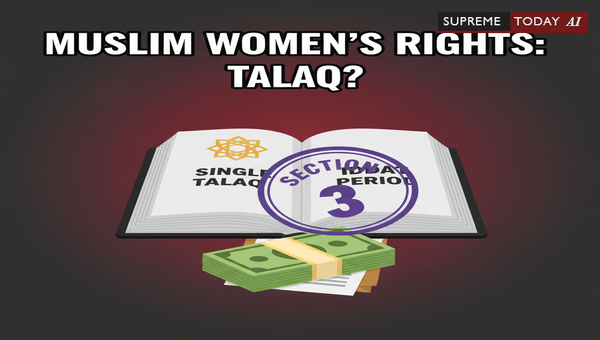
In the complex landscape of Muslim personal law in India, divorce through talaq remains a sensitive and often misunderstood process. Many women wonder: if a husband pronounces a and the wife observes the thereafter, does this automatically allow her to file a petition under ? This question arises frequently in family courts and highlights the interplay between Islamic traditions and statutory protections.
This blog post breaks down the legal nuances, drawing from key judgments and statutory provisions. Note: This is general information based on case law and should not be considered specific legal advice. Consult a qualified lawyer for your situation.
The query at hand is straightforward yet pivotal: Pronouncing and observing iddat thereafter. Will it entitle the petitioner to file petition under section 3 of muslim protectio act?
The short answer, as established in multiple rulings, is no—not automatically. Entitlement under Section 3 hinges on two critical factors:- The validity of the talaq under Muslim personal law.- The husband's failure to make a for the wife's future within the .
Mere pronouncement of a and observance of iddat does not trigger these rights on its own. Let's delve deeper.
Muslim law recognizes different forms of talaq, each with distinct legal effects:
For a to be valid (e.g., ), it must follow proper procedures: pronounced during , preferably with witnesses, and not in anger or violation of Islamic norms. If invalid, the marriage persists, and Section 3 does not apply.
mandates that upon divorce, the husband must make a within the for the divorced woman's future. This includes maintenance during iddat and provisions beyond, such as and other assets.
Key takeaway: Observance of iddat after a valid creates an opportunity for this obligation but does not confer filing rights unless the husband fails to comply.
As one ruling clarifies: A muslim husband liable to make extending beyond the for the future of the divorced wife which obviously included her maintenance as well — This liability is not confined to the .
Judgments consistently emphasize proof of validity and non-fulfillment:
For invalid talaq, claims fail. In one appeal, evidence of triple talaq communication was insufficient: PW-1 has stated that he did not pronounce Talaq nor he sent any himself to her by registered post... case of divorce being given was not established. (Para 25-26)
Other precedents reinforce these principles:
These cases show courts scrutinize evidence of talaq validity, iddat observance, and provision adequacy, often remanding for reassessment. (Paras 13-14)
If considering a Section 3 petition:- Prove Validity: Show talaq followed proper procedure (, witnesses). - Document Non-Provision: Evidence of no reasonable/fair payment during iddat.- Gather Proof: , witnesses, financial status at divorce.- Explore Alternatives: , domestic violence protections.
Courts assess based on living standards, husband's capacity: according to the standard of living during marriage and husband’s income. (Para 4)
Pronouncing a and observing iddat does not automatically entitle a petitioner to Section 3 relief. It requires a valid talaq and proof of the husband's default on provisions. This protects women while upholding Islamic procedures, as seen in rulings like and .
Divorce under Muslim law demands careful navigation. Women should document everything and seek professional guidance early. For personalized advice, contact a family law expert familiar with these nuances.
Disclaimer: Laws evolve, and outcomes depend on facts. This post summarizes precedents as of available data—verify with current statutes and counsel.
#MuslimDivorce #TalaqRights #Section3Act



Thereafter, the informant told the victim that the petitioner had issued the first notice of Talaq in April 2022. The police found after investigation that the petitioner had committed the offence punishable under Section 4 of the Act. ... Sections 3 and 4 of the Muslim Women (Protection of Rights on Marriage) Act, 2019 read thus: “3. ... —The petitioner has filed the present petition#....

In view of the fact that it was specifically alleged by the opposite party herein, in her application, made under Section 3(2) of the Muslim Women (Protection of Rights on Divorce) Act, 1986, that her marriage with the present Petitioner had been dissolved by pronouncing talaq thrice, and that this assertion ... The opposite party herein made an application, under Section 3(2) of the Muslim Women (Protection of Rig....
Thereafter, the informant told the victim that the petitioner had issued the first notice of Talaq in April 2022. The police found after investigation that the petitioner had committed the offence punishable under Section 4 of the Act. ... Sections 3 and 4 of the Muslim Women (Protection of Rights on Marriage) Act, 2019 read thus: “3. ... —The petitioner has filed the present petition#....
, he decided to dissolve the marriage by pronouncing Talaq three times. ... The Act came into force with effect from 19-5-1986; After the Act came into force the petition for maintenance under Section 125 of the Code is not maintainable and that in any event the application filed before the Family Court must be considered as one under Section 3 (1) of the Act. ... Clause (c) of Section 3(1) lays d....

The Act came into force with effect from 19-5-1986; After the Act came into force the petition for maintenance under Section 125 of the Code is not maintainable and that in any event the application filed before the Family Court must be considered as one under Section 3 (1) of the Act. ... Clause (c) of Section 3 (1) lays down that a divorced woman is entitled to an amount equal to the sum of mahar or dower agreed to be paid to her ....

Admittedly, the petitioner married the 3rd respondent on 6.9.2015 as per Muslim rites. The petitioner divorced the 3rd respondent by pronouncing talaq. ... What was declared illegal and void by Section 3 of the Act, 2019 and made as an offence by Section 4 thereof was the pronouncement of talaq-e-bidat or any other similar form of talaq resulting in instant and irrevocable divorce. ... The offence....

Such a reasonable and fair provision extending beyond the iddat period must be made by the husband within the iddat period in terms of Section 3(1)(a) of the Act. ... ... (2) Liability of Muslim husband to his divorced wife arising under Section 3(1)(a) of the Act to pay maintenance is not confined to iddat period." ... 12. ... Pointing out the said legal provisions, learned counsel for the revision pet....
That apart, the 1st petitioner, during evidence categorically admitted that she was divorced by the respondent by pronouncing talaq. ... period and the reasonable and fair provision for maintenance entitled by her under Section 3 of the Muslim Women Protection Act, 1986. ... It is submitted that the respondent had discharged his entire obligation under Section 3 of the Muslim Women Protection Act,....
Section 3 of the Muslim Women Protection Act, 1986 by paying reasonable and fair provision, future maintenance as well as the maintenance during the iddat period and thus the claim of the 1st petitioner for maintenance under st petitioner on 03.07.2010 by pronouncing talaq. The 1st petitioner, represented by her father, and the respondent entered Ext.D1 agreement on the same day, stipulating the post-divorce rights....

Section 3 of the Muslim Women Protection Act, he should be directed to pay the maintenance amount during the period of iddat and a fair provision for the future. ... However, the petitioner has disputed the case of the respondent that he has divorced her by pronouncing talaq. According to the petitioner, the respondent is not a divorced woman and, as such, the petition under Section 3#....

In this appeal, it has to be seen whether on the alleged date 29.6.2002, the appellant-petitioner validly effected divorce by pronouncing triple talaq under Muslim law?

It is alleged in the petition that the marriage between the petitioner herein and the respondent was solemnized as per the customary rites on 15.05.1983 and they were living together as husband and wife and three children were born to them in the relationship. Thereafter, the petitioner herein divorced her by pronouncing talaq by giving Ext.P1 letter dated 9.3.2005. So, she filed a petition under the provisions of the Act, claiming the reliefs mentioned above. Thereafter, no maintenance during Iddat period or fair and reasonable provision or value of mahar, had been paid as....

If the divorced Muslim lady unable to maintain herself, she can claim under Section 3 of the Muslim Women (Protection of Rights on Divorce) Act, 1986 during Iddat period and under section 4 of the Act a divorce muslim lady is entitled for maintenance after Iddat period. The muslim lady has been given option to be governed by the provisions of Sections 125 to 128 Cr.P.C. under the Muslim Women (Protection of Rights on Divorce) Act. The learned counsel for the petitioner has contended that although the option was given in the Family Court but the order dated 9.5.2008 was pass....

It is also necessary to refer to the rules of revocable and irrevocable Talaq and they are in sections 17, 18, 19 and 20 and they read, as under : "Section 17 : In a revocable Talaq the husband can take back the wife during "Iddat" without her consent and without a remarriage; but after the expiry of "Iddat" she will become irrevocably divorced and can be lawfully taken back only by a fresh marriage. Pronouncing three Talaqs in three months on a minor or a woman past menopause is also Talaq-e-hasan. Section 12 : Talaq-e-bid at (improper Talaq) includes : in a consummated marriage ....

Pronouncing three Talaqs in three months on a minor or a woman past menopause is also Talaq-e-hasan. Section 12 : Talaq-e-bid at (improper Talaq) includes : in a consummated marriage divorcing the wife during menstruation, or divorcing her in a tuhr after coitus, or pronouncing an irrevocable divorce, or pronouncing more than one Talaq in a single tuhr and in an unconsummated marriage pronouncing together more than one Talaq or pronouncing more than one Talaq in a single month on a minor or woman past menopause." In a non-consummated marriage pronouncing a single....


An indispensable Tool for Legal Professionals, Endorsed by Various High Court and Judicial Officers
Please visit our Training & Support
Center or Contact Us for assistance

Scan Me!
India’s Legal research and Law Firm App, Download now!


For Daily Legal Updates, Join us on :

 Back to top


