SupremeToday Landscape Ad

AI Overview

AI Overview...

Analysis and Conclusion:The legal framework emphasizes that stridhan is the woman’s sole property, protected by law, and her right to recover it is well-established. Remedies include civil suits for recovery and criminal complaints for breach of trust. The concept of a continuing offence underscores that wrongful retention or misappropriation can be prosecuted as long as the property remains in wrongful custody. Courts require clear evidence of entrustment and ownership, and the absence of such documentation can impact the case. Overall, the jurisprudence consistently affirms a woman's exclusive rights over her stridhan and provides multiple avenues for legal recourse in cases of deprivation or misappropriation.

Siraj Ahmed Judgment: Stridhan Rights in Hindu Law

Siraj Ahmed Judgment: Decoding Stridhan Rights in Hindu Law

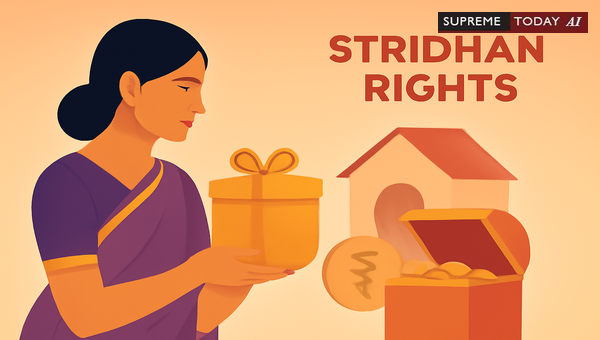
In the realm of Hindu family law, few concepts carry as much significance for women's property rights as Stridhan. The recent discourse around the Siraj Ahmed judgment highlights evolving judicial interpretations, particularly regarding items given at engagement (Sagai) and their status as a woman's exclusive property. If you've ever wondered, What does the Siraj Ahmed Judgement entail?, this post breaks it down, drawing from landmark cases and legal principles to provide clarity.

Stridhan isn't just traditional jewelry or gifts—it's a legally protected asset that empowers Hindu women. With rising matrimonial disputes, understanding these rights is crucial. This article analyzes core principles, key judgments like those referenced in Rajkumar Patni VS Smt. Manorama Patni - Madhya Pradesh (2000), and practical implications, while integrating insights from related cases.

What is Stridhan? Definition and Sources

Stridhan refers to property exclusively owned by a Hindu woman, acquired through gifts, inheritance, or marital ceremonies. It stands apart from joint family property and is her absolute domain. SHIPRA RAJ ROY VS STATE OF WEST BENGAL - Calcutta (2007)Rajkumar Patni VS Smt. Manorama Patni - Madhya Pradesh (2000)

Key sources include:- Gifts from relatives, strangers, or during marriage ceremonies like Sagai and weddings. Rajkumar Patni VS Smt. Manorama Patni - Madhya Pradesh (2000)MT JANKU VS ZEBOO - Nagpur (1926)- Inherited property from ancestors or self-earned assets. Rajkumar Patni VS Smt. Manorama Patni - Madhya Pradesh (2000)- Items given at engagement (Sagai), now judicially recognized as Stridhan, overturning narrower earlier views. Rajkumar Patni VS Smt. Manorama Patni - Madhya Pradesh (2000)

As noted in legal texts, Gifts of affectionate kindred, which are known by the name of saudayika stridhan, constitute a woman’s absolute property, which she has at all times independent power to alienate, and over which her husband has only a qualified right, namely, the right of use in times of distress. Bhartiben Bipinbhai Tamboli VS State of GujaratKrishna Bhatacharjee VS Sarathi Choudhury - 2015 Supreme(SC) 1065

This evolution reflects broader gender equality under the Indian Constitution.

Legal Status and Ownership Rights

Courts consistently affirm that Stridhan remains the woman's property, irrespective of marital status or temporary custody by husband or in-laws. Ownership doesn't transfer without explicit consent or abandonment. SHIPRA RAJ ROY VS STATE OF WEST BENGAL - Calcutta (2007)NIRMALA GUPTA VS RAVENDRA KUMAR ALIAS MUNNA GUPTA - Madhya Pradesh (1996)

Section 27 of the Hindu Marriage Act reinforces this, allowing civil relief via court powers. NIRMALA GUPTA VS RAVENDRA KUMAR ALIAS MUNNA GUPTA - Madhya Pradesh (1996)

In the Siraj Ahmed context, the judgment aligns with trends recognizing engagement gifts as Stridhan, modifying decrees in the wife's favor when evidence supports it. Rajkumar Patni VS Smt. Manorama Patni - Madhya Pradesh (2000)MT JANKU VS ZEBOO - Nagpur (1926)

Landmark Judicial Interpretations

Indian judiciary has shaped Stridhan law through pivotal rulings:

Supreme Court Precedents

  1. Pratibha Rani v. Suraj Kumar (1985) SCC (Cr) 180: Reaffirmed Stridhan as absolute property, even if held by in-laws. SHIPRA RAJ ROY VS STATE OF WEST BENGAL - Calcutta (2007)
  2. Rashmi Kumar v. Mahesh Kumar Bhada (1997) SCC (Cr) 415: Confirmed marriage and pre-marriage gifts as Stridhan.

These cases emphasize evidence like donor intent and customs. Bhola Ram VS Dhani Ram - Allahabad (1928)

Engagement Gifts Expansion

The primary analysis in Rajkumar Patni VS Smt. Manorama Patni - Madhya Pradesh (2000) explicitly includes Sagai items, stating they qualify unless custom proves otherwise. This progressive stance is echoed in scholarly views on Hindu Law evolution.

Insights from Related Cases

Other judgments reinforce these principles:- In a Delhi High Court ruling, mere bank locker operation post-bail didn't justify cancellation without tampering evidence, protecting accused in Stridhan-related probes. CHARU SONEJA vs STATE(NCT OF DELHI) AND ORS- Lists of items like Necklace 2 nos.-48 gms - Marriage Stridhan highlight typical claims. Priyanath Misra VS Additional Superintendent of Police, CBI/ACB/Chennai - 2018 Supreme(Mad) 939- Domestic violence cases note Stridhan retention by in-laws amid dowry demands, underscoring ongoing rights. Suman VS Vijay Kumar - 2018 Supreme(Raj) 2098- Under the Protection of Women from Domestic Violence Act, 2005, Stridhan retrieval remains viable post-judicial separation as a continuing offense. Deprivation of stridhan is a continuing offence. Krishna Bhatacharjee VS Sarathi Choudhury - 2015 Supreme(SC) 1065- Purchases from Stridhan savings retain its character across Hindu Law schools. Dinesh Jain VS Jeewanlal Lala Ram Brahmin - 2013 Supreme(MP) 116

These illustrate courts' evidence-based approach, protecting women from economic abuse.

Evidence and Strategies in Stridhan Disputes

Success hinges on proof:- Documentary Evidence: Receipts, photos, witness testimonies on gift intent.- Legal Arguments: Cite precedents like Pratibha Rani for absolute ownership.- Countering Claims: Address customs alleging joint property. Bhola Ram VS Dhani Ram - Allahabad (1928)

In Siraj Ahmed-like scenarios, courts modify decrees for wives when engagement items are substantiated. Rajkumar Patni VS Smt. Manorama Patni - Madhya Pradesh (2000)

Broader Implications and Trends

Judicial trends show expansion: engagement gifts now included, aligning with constitutional equality. Domestic violence laws bolster claims, even in strained marriages. Bhartiben Bipinbhai Tamboli VS State of Gujarat

Women face social stigma in reporting, yet laws empower them. Infidelity or dowry demands don't negate Stridhan rights. CHARU SONEJA vs STATE(NCT OF DELHI) AND ORS

Key Takeaways

Disclaimer: This post offers general insights based on case law and is not legal advice. Consult a qualified lawyer for personalized guidance, as outcomes depend on specific facts and jurisdiction.

The Siraj Ahmed judgment exemplifies how Hindu law adapts to safeguard women's assets. Stay informed—your rights matter.

#StridhanRights #HinduLaw #WomensProperty
Chat Download
Chat Print
Chat R ALL
Landmark
Strategy
Argument
Risk
Chat Voice Bottom Icon
Chat Sent Bottom Icon
SupremeToday Portrait Ad
logo-black

An indispensable Tool for Legal Professionals, Endorsed by Various High Court and Judicial Officers

Please visit our Training & Support
Center or Contact Us for assistance

qr

Scan Me!

India’s Legal research and Law Firm App, Download now!

For Daily Legal Updates, Join us on :

whatsapp-icon telegram-icon
whatsapp-icon Back to top