


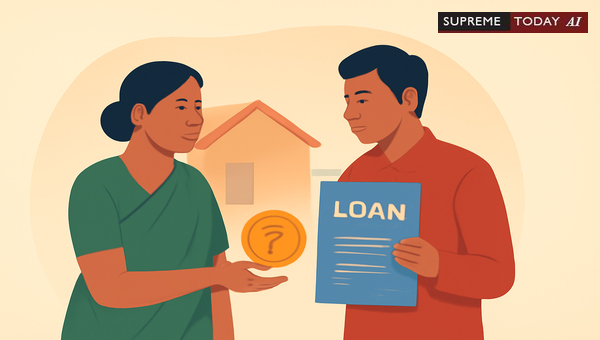
Can Son Recover Money Paid for Mother's Housing Loan?
In family matters, financial support often blurs lines between gifts and loans. Imagine a son stepping in to pay off his mother's housing loan out of goodwill, only to later seek reimbursement. A common query arises: Son Paid Bank Loan of Mother Voluntarily now Son can File Recovery of Money of Housing Loan. This post delves into Indian law on whether such recovery is possible, drawing from key principles and precedents. Note: This is general information, not specific legal advice. Consult a qualified lawyer for your situation.
Understanding the Scenario
Housing loans frequently involve family members as to secure better terms. Here, the son voluntarily cleared the loan taken by his mother. While generosity is commendable, questions of fairness emerge if no reimbursement agreement existed. Under Indian law, voluntary payments don't automatically forfeit recovery rights, especially in setups. Courts examine intent, documentation, and equity.
Key Legal Principles Supporting Recovery
1. and Shared Liability
When both mother and son are listed as borrowers, they share equal responsibility. Payments by one fulfill the joint obligation, but this doesn't preclude internal reimbursement claims. The paying party can seek from . 2008 0 Supreme(Guj) 105
2.
A cornerstone principle allows the son to step into the bank's shoes after payment. By discharging the debt, he acquires the creditor's rights against the mother. This is particularly relevant for voluntary payments benefiting another. Courts recognize this to prevent one party from unjustly benefiting. 2021 0 Supreme(Mad) 2486
In cases where one party pays off a loan for another, courts have recognized the right of the paying party to recover the amount paid, especially when the payment was made voluntarily and with the expectation of reimbursement. 2008 0 Supreme(Guj) 105
3.
Equity abhors one profiting at another's expense without justification. If the mother retains the property's benefit post-payment without compensating the son, she may be liable. This doctrine bolsters recovery suits, even absent explicit agreements. Similar family disputes highlight this, where courts mandate distribution per succession laws if rights are disputed. 2022 Supreme(Online)(KER) 33021
Application to the Son's Case
The son's voluntary payment establishes a strong foundation:- As Joint Borrower: His action satisfied a shared debt, entitling him to proportional recovery.- Evidence Matters: Bank statements, receipts, and loan documents prove payments. Authorities emphasize verifying transactions via statements over oral claims. 2024 0 Supreme(All) 399
Authorities should insist on the production of relevant bank statements to conclusively prove financial transactions, especially in cases involving denial of payment and normal banking channels. 2024 0 Supreme(All) 399
- Filing a Recovery Suit: He can sue for reimbursement, citing and . Limitation periods apply (typically 3 years from payment under the ), so act promptly.
Precedents affirm this. In housing loan disputes, courts remit matters for fresh review when proof lacks, underscoring documentation's role. 2024 0 Supreme(All) 399 Recovery from family loans succeeds when habits of borrowing without repayment are shown, defeating defenses like coercion. 2022 0 Supreme(Mad) 473
Challenges and Counterarguments
Defenses may include:- Pure Gift Claim: Mother might argue no repayment expectation. Courts assess circumstances; joint status weakens this.- Criminal Angles: Loan defaults don't automatically trigger claims without dishonest intent. Mere non-repayment isn't . 2016 0 Supreme(Pat) 930
The central legal point established in the judgment is that to prove or , it is essential to demonstrate , , and dishonest induceme.... 2016 0 Supreme(Pat) 930
- Limits: Not ideal for son vs. mother recovery; handle money suits. 2022 Supreme(Online)(KER) 33021
In or default cases, criminal complaints for recovery pressure are quashed if no offense exists. 2015 0 Supreme(Bom) 1234
Practical Steps for Recovery
- Gather Documentation: Collect loan agreements, payment proofs, bank communications. Essential for court.
- Send Legal Notice: Demand reimbursement formally, starting the limitation clock if needed.
- Mediation First: Family dynamics favor amicable resolution via lok adalat or counseling.
- File Suit: In civil court for recovery. Seek interest if applicable.
- Avoid Unauthorized Deductions: No self-help like property grabs; follow due process. Terminal benefits can't be deducted without authority.
Related Case Insights
- Disbursement Disputes: Proves need for bank records in housing loans. 2024 0 Supreme(All) 399
- Promissory Notes & Insolvency: Sons borrowing habitually face suits; documentation trumps denials. 2022 0 Supreme(Mad) 473
- NPS Succession: Nominees hold as trustees; heirs claim per law, akin to loan benefits. 2024 0 Supreme(Pat) 545
These reinforce: Prove payments, assert equity, litigate properly.
Conclusion and Key Takeaways
Generally, yes—the son may file for recovery, backed by , , and . Success hinges on evidence and timely action. While family ties complicate matters, law provides remedies to ensure fairness.
Key Takeaways:- Document everything.- have reimbursement rights.- Mediation before court preserves relationships.- Consult a lawyer; outcomes vary by facts.
This analysis draws from precedents like 2008 0 Supreme(Guj) 105 2021 0 Supreme(Mad) 2486, offering a roadmap. Protect your financial contributions legally.
#HousingLoanRecovery, #FamilyLoanDispute, #LegalRecoveryIndia












